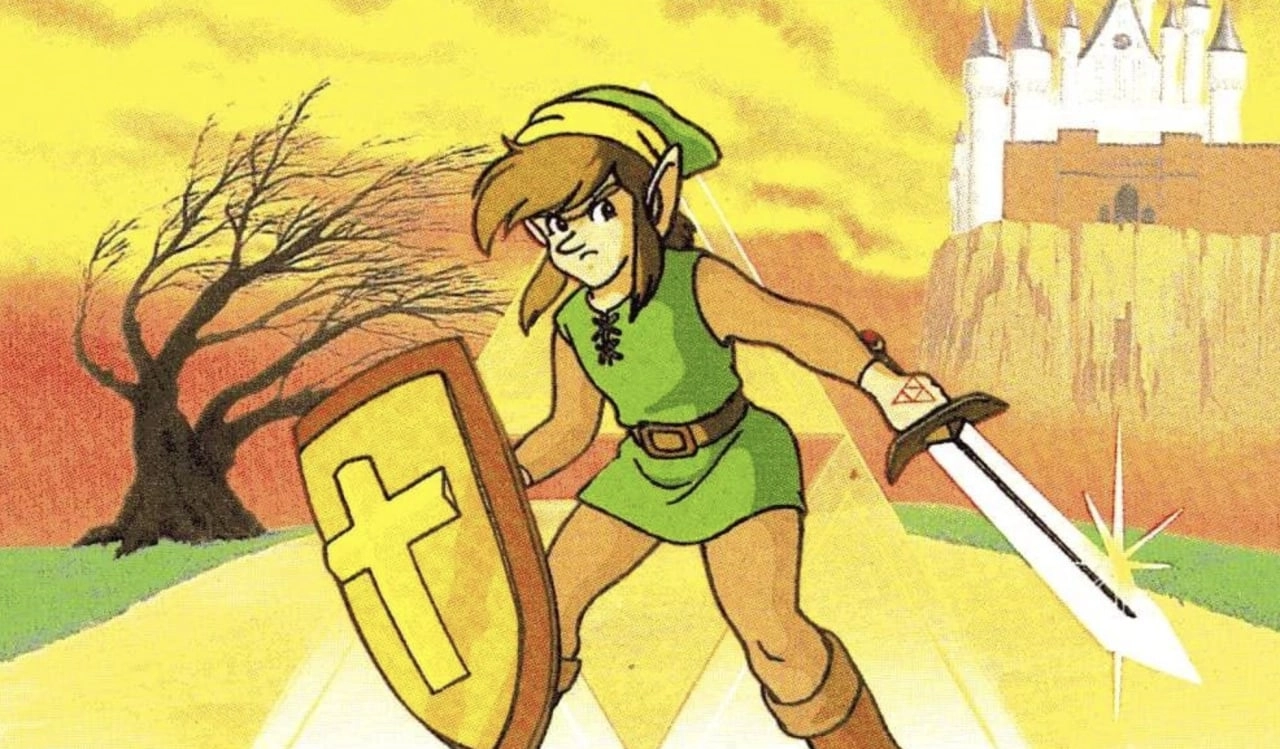
Shigeru Miyamoto is a name synonymous with some of the most beloved video games of all time, including The Legend of Zelda and Super Mario series. His work has spanned over several decades, establishing benchmarks in game design and leaving an indelible mark on the industry. But even legends like Miyamoto are not immune to occasional missteps in their illustrious careers. Interestingly, Miyamoto has openly expressed his disappointment in one of his earlier works, particularly the Famicom Disk System version of "Zelda II: The Adventure of Link."
Back in 2013, during an interview around the launch of "Pikmin 3" for the Wii U, games journalist Stephen Totilo brought up an intriguing question to Miyamoto — had he ever felt he made a bad game? The answer was both unexpected and honest: Miyamoto admitted to having reservations about "Zelda II: The Adventure of Link," especially the version released for the Famicom Disk System.
For context, the Famicom Disk System was an add-on for Nintendo's Famicom console, the Japanese counterpart to the North American Nintendo Entertainment System (NES). It was designed to utilize less expensive magnetic disk media instead of the more costly cartridge technology of the era. However, this supposed cost-saving measure came with drawbacks, one of which Miyamoto deeply regretted: long load times.
When "Zelda II: The Adventure of Link" was ported to the Famicom Disk System, players encountered these frustrating load times, which significantly impacted the gaming experience. The disk-based media, although innovative at the time, simply couldn't match the swift access speeds of traditional game cartridges. Despite the advanced platform, it was this aspect of the technology that left Miyamoto feeling that he had not delivered to his standards.
The original "Zelda II: The Adventure of Link" for the NES has its defenders and is still fondly remembered by many fans as part of the storied Zelda franchise. However, the Famicom Disk System version remains a sore point for Miyamoto due to its technical limitations. It’s particularly telling that a game design heavyweight like Miyamoto considers this title to be his most regrettable work, which speaks to the high standards he sets for his projects.
Miyamoto's transparency about the game's issues underscores a culture within Nintendo and among video game designers in general: a continuous pursuit of innovation coupled with a desire to deliver the best possible player experience. No creation process is perfect, and even the most successful designers have faced challenges and learned from their less-successful endeavors.
It's worth mentioning that "Zelda II: The Adventure of Link" was a departure from the gameplay mechanics that fans had come to love in the original "The Legend of Zelda." Instead of the top-down perspective and free exploration, "Zelda II" introduced side-scrolling elements and RPG-like features such as a more complex leveling system. This experimental direction may have contributed to mixed reception among the community, but such risks are characteristic of Miyamoto's approach to game design — constantly pushing the boundaries and exploring new ideas.
Although Miyamoto may harbor regrets about the Famicom Disk System version of "Zelda II," the game's existence is a reminder of the evolution of game design and technology. It stands as a testament to the industry's progress, from the early days of disk drives to the modern era of instantaneous digital downloads. Moreover, the reflections on this game show that even legends like Miyamoto are not above critique — even of their own work — as they strive to craft memorable and enjoyable experiences for gamers around the world.
The legacy of "Zelda II: The Adventure of Link" is complex. To some, it's an adventurous sequel that bravely dared to be different. To others, including its creator, it's a title marred by technological constraints that hindered its potential. Regardless, it's a fascinating chapter in the annals of gaming history and a marker of Shigeru Miyamoto’s enduring quest for perfection in the art of video game design. It serves as a potent reminder that the road to success is often paved with trials, and even the brightest minds in the field are not without their share of regrets.

You must be logged in to post a comment!
