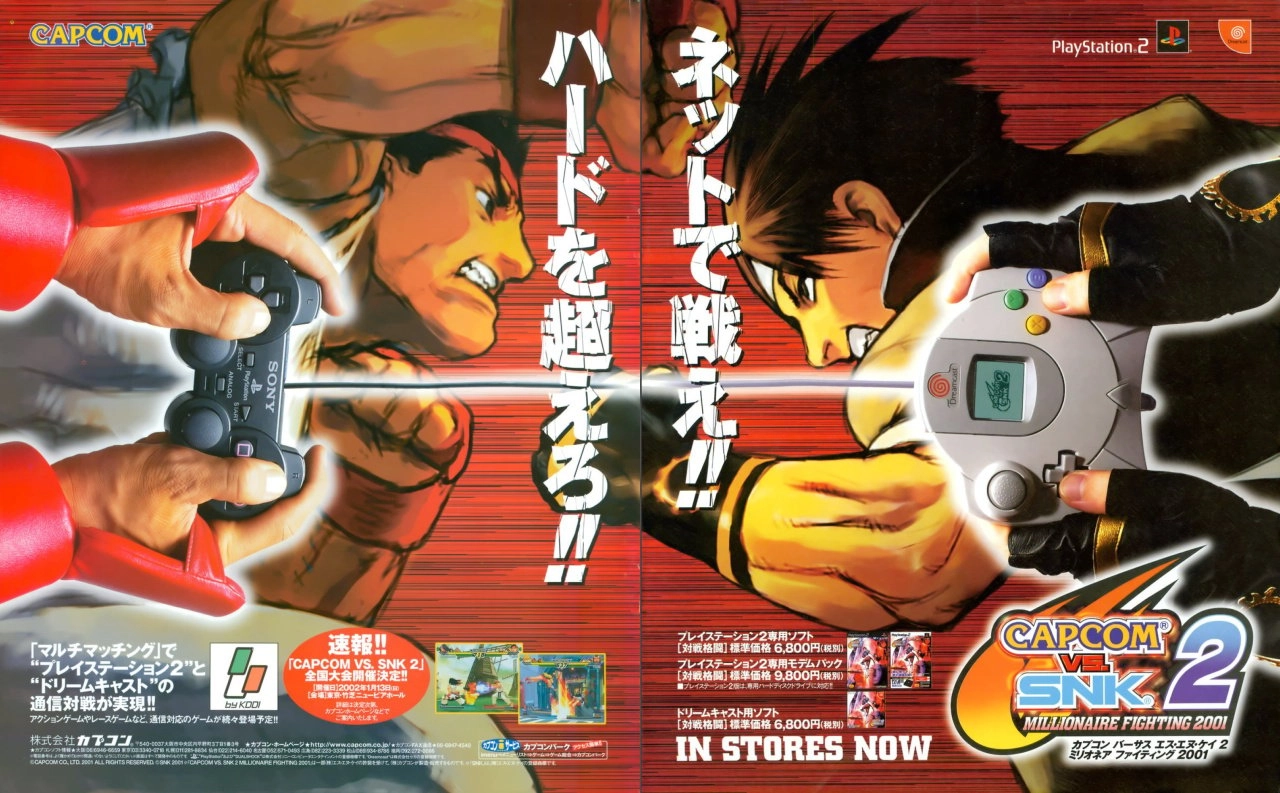
In the world of video gaming, the ability for players on different consoles to compete against one another, known as cross-play, is often seen as a modern advancement. However, this feature was actually pioneered over two decades ago, in 2001, when two of the biggest gaming consoles of the time, the Sega Dreamcast and the Sony PlayStation 2 (PS2), enabled gamers in Japan to engage with each other across platform lines. This was made possible through Capcom’s fighting game, Capcom vs. SNK 2: Mark of the Millennium 2001.
Capcom vs. SNK 2 was a unique game for several reasons. Firstly, it was released on both the Dreamcast and PS2 on the same day, which was highly unusual at the time. More notably, it included a feature that allowed players on the Dreamcast to compete against players on the PS2 via an online connection. This was groundbreaking because it was one of the very first instances of cross-play, which is now a common feature in many of today’s multiplayer games.
The impetus behind this innovative feature was largely due to Sega's decision to discontinue the Dreamcast. By early 2001, Sega had announced that it would cease production of the Dreamcast and withdraw from the console hardware market. This led them to implement more open strategies like supporting cross-play to maintain value for their existing user base in Japan. As a part of this approach, Sega developed what they called the OpenDice framework, which facilitated online interactions between different consoles.
Capcom vs. SNQ 2 wasn't the only game to utilize this technology. Other games, such as Guru Guru Onsen 2 and 3, also featured capabilities for cross-console play between the Dreamcast and corresponding versions on the PS2. The third game in the series, Dai Guru Guru Onsen, allowed Dreamcast players to connect and play with those who had the PS2 version of the game.
Despite these innovative developments, the cross-play functionality between Dreamcast and PS2 was not embraced worldwide. The feature remained exclusive to Japan, where both consoles had significant player bases who could benefit from such interactions. Western audiences, unfortunately, did not receive this functionality, largely due to differing market strategies and perhaps also the imminent decline in Dreamcast's global presence.
Over the years, the conversation around cross-play has evolved significantly. Nowadays, cross-play is a standard feature expected in many multiplayer games, especially those that are popular and have long lifespans online. Modern games such as Fortnite, Call of Duty: Modern Warfare, and Rocket League all support cross-play across multiple platforms, including consoles from different generations and PCs.
Reflecting on the early cross-play capabilities of Capcom vs. SNK 2 provides a fascinating glimpse into the past, showing that today’s gaming advancements often have roots that go back further than one might expect. It demonstrates the gaming industry’s long-standing pursuit of connectivity and community, regardless of the platform. While the technology and infrastructure in 2001 were not as developed as they are today, the attempt to bridge players from different systems was a forward-thinking move by Sega and Capcom. This not only enhanced the gaming experience for users but also set a precedent for the future of multiplayer gaming.
Looking back at these developments provides a richer understanding of how far gaming technology has come and what may be possible in the future as barriers between different gaming platforms continue to break down. This historical insight highlights the creativity and innovative spirit of the gaming industry, which continues to evolve and adapt, aiming to deliver the best possible experiences for gamers around the world.

You must be logged in to post a comment!
