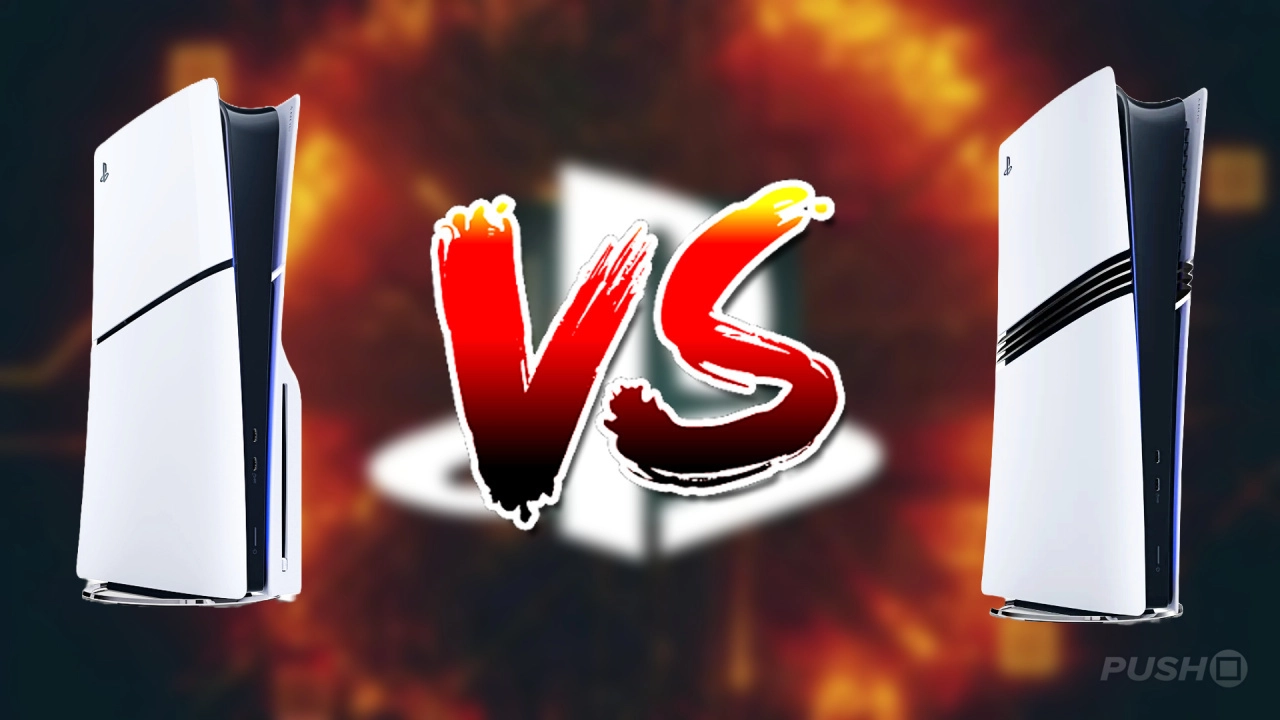
The gaming world is abuzz with the release of Sony's PS5 Pro, a newer, more powerful version of the already popular PlayStation 5. Many gamers are eager to know if the enhanced features of the PS5 Pro justify its higher price tag compared to the base model of the PS5. Both consoles promise to deliver superior gaming experiences, but they do so with different capabilities and hardware specifications.
Starting with the main engine of any gaming console, the central processing unit (CPU), both the PS5 Pro and the original PS5 are equipped with 8x Zen 2 Cores. However, the similarity in CPU specification doesn't tell the whole story. The real difference comes into play when looking at the graphical processing unit (GPU). The PS5 Pro boasts a robust GPU of 16.7 TFLOPs, using AMD Radeon’s RDNA graphics engine, a noteworthy improvement compared to the PS5’s 10.28 TFLOPs. This enhancement indicates a substantial increase in raw graphical power, which translates to sharper, more detailed, and smoother visuals in games.
Another key aspect to consider is GPU architecture. While both models use RDNA technology, the PS5 Pro uses an advanced iteration which allows for significantly better ray tracing capabilities. Ray tracing simulates the way light interacts with surfaces within a virtual environment, greatly enhancing realism and visual fidelity. This means that the PS5 Pro can handle more complex lighting and shadow effects, which can quite literally change how games are seen and experienced.
When it comes to memory, both consoles are equipped with 16GB of GDDR6 memory, but the PS5 Pro also includes an additional 2GB of DDR5 memory. This extra memory can be particularly useful for keeping more applications in the background without affecting the speed and responsiveness of the primary game being played.
The storage solutions of the two consoles also differ. The PS5 Pro comes with a 2TB Solid State Drive (SSD), providing ample space for installing multiple high-end games which often require a lot of storage. In contrast, the base PS5 includes a smaller 825GB SSD, which might necessitate more frequent management of installed game files.
Both consoles support expandable storage through an NVMe SSD slot and external storage via USB HDD support. However, it’s the implementation of AI upscaling where the PS5 Pro takes another significant leap forward. The PS5 Pro includes PlayStation Spectral Super Resolution Upscaling (PSSR), which is not available on the original PS5. PSSR uses artificial intelligence to enhance the resolution and frame rate of games, providing a noticeably smoother and visually enhanced gaming experience even if the game doesn't natively support higher resolutions or frame rates.
In terms of physical dimensions and weight, the PS5 Pro is slightly more compact but lighter than the PS5, making it a bit easier to fit into entertainment centers and gaming setups. The PS5 Pro measures 388mm x 89mm x 216mm and weighs 3.1kg, whereas the PS5 measures 390mm x 104mm x 260mm and weighs 4.5kg.
Price is another significant factor. The PS5 Pro is priced at $699.99, which is significantly higher than the PS5, which costs $499.99 for the standard edition with a 4K UHD Blu-ray drive. For gamers on a budget, this price difference can be a deciding factor, although the enhancements in the PS5 Pro might be worth the investment for those seeking the best possible performance and gaming experience.
Ultimately, the PS5 Pro does indeed offer a more powerful gaming experience compared to the original PS5. With its advanced GPU capabilities, additional memory, larger storage, and AI-driven upscaling, the PS5 Pro caters to gamers who crave the best visual and performance enhancements available. However, for those who are satisfied with the current gaming experience provided by the base PS5, the upgrade might seem less essential. Whether to invest in the PS5 Pro or stick with the original PS5 will largely depend on one's budget and desire for cutting-edge technology in their gaming setup.

You must be logged in to post a comment!
