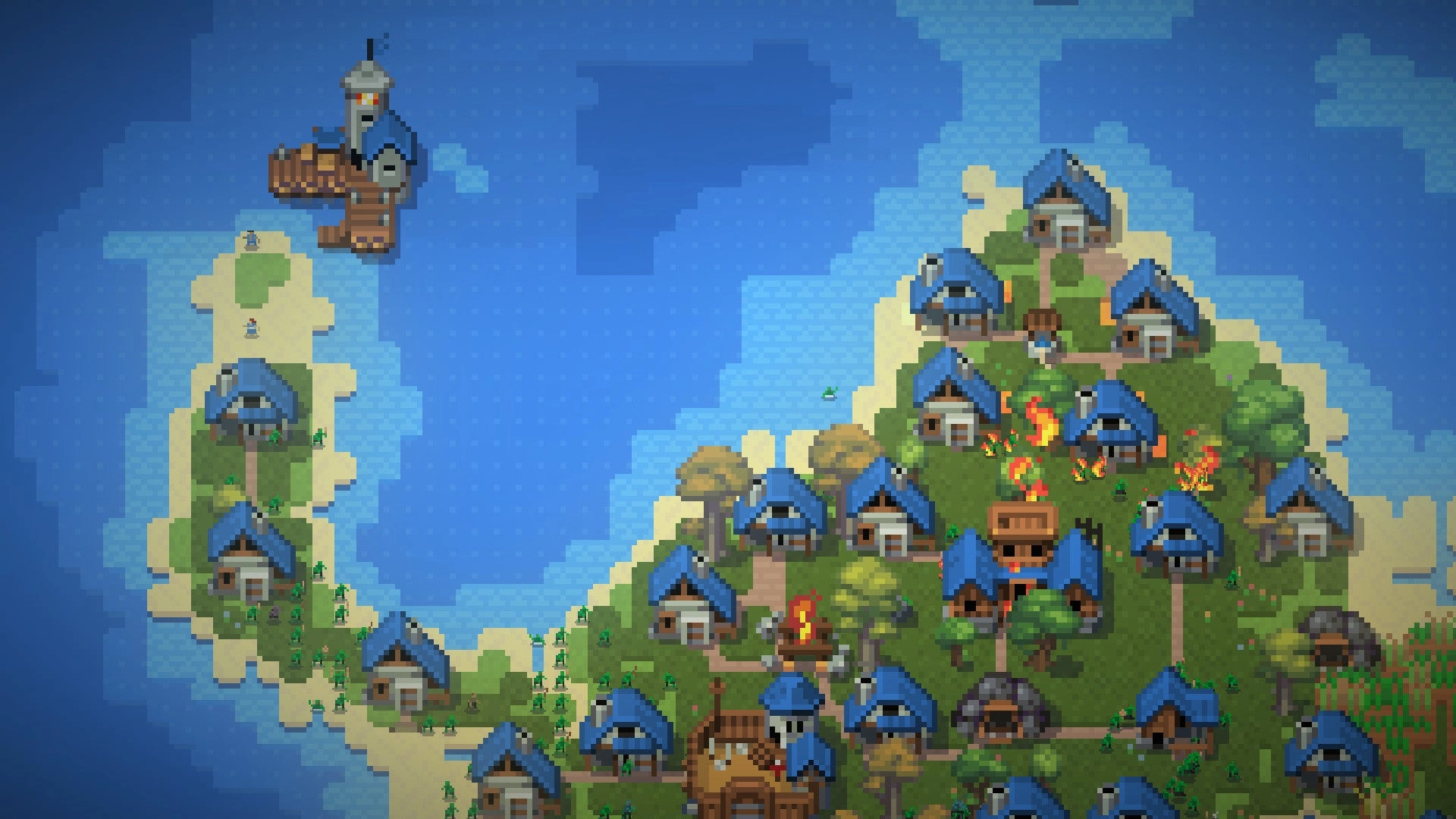
WorldBox, a charming and seemingly simplistic god game in early access, is making significant strides to outdo its completion in the niche genre. The game, known for its adorable toy-like aesthetic and creative gameplay, is about to receive an update that promises to inject a new level of depth to its simulation. This update introduces a system to track the lineage of the game world's inhabitants through generating complex family trees.
Developers of WorldBox have disclosed on their Steam platform about the upcoming features. A new interface will allow players to delve into the ancestral lines and relationships of individuals within their simulated worlds, spanning both human and animal populations. That means you could witness the rise and fall of dynasties, or track the bloodline of your favorite creatures across generations.
Furthermore, an “interesting units” tab is set to make an appearance, allowing users to spotlight unique characters within their worlds. This feature is designed to help identify and follow exceptional entities, those who are the surviving members of fallen cultures or kingdoms, providing a narrative-rich element to the player's godly intervention.
In addition, WorldBox is ramping up its statistical tracking with a new Graphs tab. Players can utilize this analytical feature to review detailed information about various aspects of their worlds, including conflicts, alliances, territorial expansions, and cultural developments. The update aims to grant users a clearer understanding of the complexities and histories of their ever-evolving creations.
WorldBox offers an engaging sandbox for those who enjoy the omnipotent role of shaping and influencing civilizations. Players are granted the ability to craft a world, populate it with beings, distribute resources, and then stand back to observe the emergent societies as they form, clash, and either wither or conquer. The beauty of WorldBox lies in its open-ended design; there are no set objectives, leaving the player free to manipulate the environment as they see fit. This might involve blessing a kingdom with abundant resources, or cursing it with natural disasters and monsters based on one’s divine whim.
The game resonates well as a casual, secondary activity that can be left running, only to be intermittently interacted with—for instance, when one wishes to survey the progress of a particular clan or to confirm the status of an isolated territory. Its simplistic gameplay loop makes it an ideal choice for both children and adults, with the former finding joy in both the creative and destructive powers at their disposal.
Each update that WorldBox receives enriches the baseline simulation, increasing the gamut of player interactions within the virtual world. Even though the methods of influence are relatively straightforward, part of the entertainment comes from probing into the game’s detailed statistical data.
Looking ahead, the next update is not only adding previously mentioned features but also teasing the inclusion of another significant new feature. This hints at further ambitions for WorldBox, suggesting that the developers are on a path that might eventually culminate in a full 1.0 release version of the game. This progress signals excellent news for fans and god-game aficionados, as WorldBox’s continued expansion indicates a thriving life for a genre often considered marginal.
As WorldBox gradually evolves, it is crafting a narrative of its own within the gaming industry—a narrative of an early access game that continues to enrich its content and captivate its audience with continued development and imaginative features. With the addition of family trees and enhanced character tracking, the game unfolds new layers of engagement, inviting players to not only watch but understand the intricate dance of life and legacy within their digital realms.

You must be logged in to post a comment!
