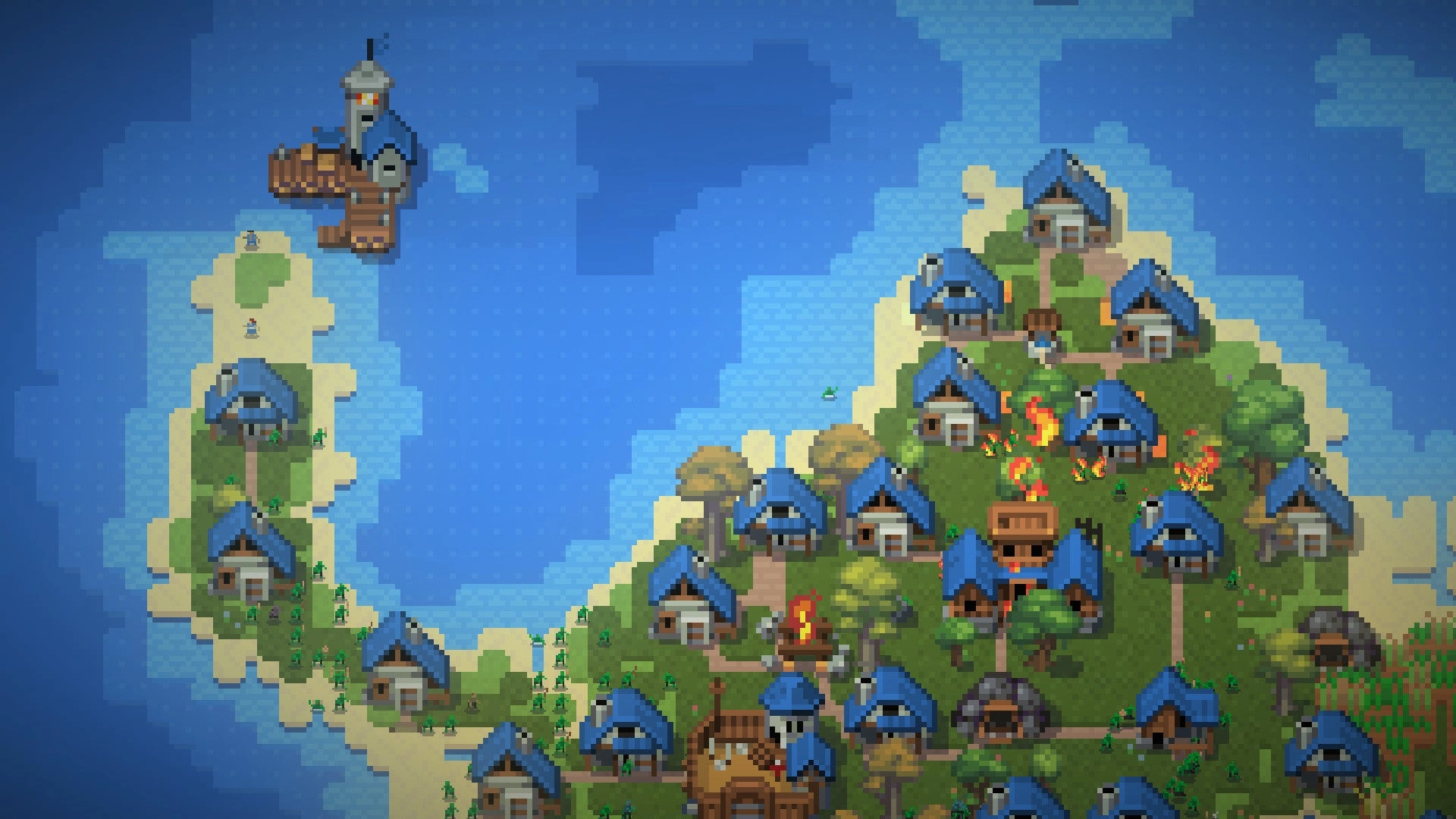
In the domain of god simulation games, WorldBox has been making waves as a continuously evolving title. Despite the sad fate of some titles in the genre, WorldBox, with its charming and toy-like appearance, is set to introduce an array of exciting new features in its forthcoming update which promise to add further depth to its already rich gameplay.
A recent announcement has shed light on the addition of family trees, a feature that is stirring enthusiasm within the WorldBox community. The upcoming update will allow players to delve into the genealogical backgrounds of the beings they've created—be they human inhabitants or the multitude of animals that roam the generated worlds. Tracing lineages and discerning the threads that connect family members, both past and present, is poised to become an integral part of the game.
More than just mapping out the bloodlines, the update will introduce a novel way for players to navigate through their world's history. A special tab for "interesting units" shall make it easy to identify and monitor the unique characters within the game, including the last surviving members of a fallen culture or extinct kingdom.
In tandem with these enhancements, the addition of a new Graphs tab will serve as a robust analytical tool. Here, players will be able to scrutinize a character's life through various metrics, from their connections to wars and alliances, to the rise and fall of cities, cultures, families, and even sub-species. The degree of granularity promised by this feature is something that is likely to appeal not only to players with a penchant for detail but also to those who seek to understand the broader strokes of how their interventions alter the game's world.
WorldBox isn't just a game—it's a canvas where players have the power to shape ecosystems and civilizations. By unleashing people and resources into worlds of their own creation, players observe the unfolding of organic stories—societies clash in wars, empires are forged and crumbled, and the cycle of life and death dances to the tune of the player's whims. And while the game doesn’t set specific objectives, as a god-like figure overseeing these miniature worlds, the player influences the outcome through subtle manipulations or cataclysmic events.
WorldBox presents an almost meditative experience, where one can leave the game running in the background, occasionally returning to make incremental adjustments or to marvel at the intricacies of a spontaneously developing society. From observing the survival strategies of isolated communities to confirming if an island of monkeys has successfully staved off outside threats, the game offers a multitude of engaging scenarios.
Catering to a wide audience, WorldBox is as much a strategic sandbox for adults as it is a fascinating educational tool for children. The younger demographic is found to revel in the dual aspects of creation and destruction, from fostering civilizations to unleashing chaos with dragons or nuclear weaponry.
The promise of an expanded simulation within the next update is a welcome one. While WorldBox currently offers rather straightforward in-game interactions, a significant portion of its charm lies in the exploration of its expansive data sets, uncovering the stories and legacies left behind by the player’s actions.
Looking ahead, the forthcoming feature mentioned in the announcement is adding layers of anticipation to the mix. Though details are sparse, the community buzzes with speculation on what this major new feature could entail, particularly as it appears to herald a significant step towards WorldBox's full release.
WorldBox is more than just a god game—it's a continuously evolving narrative crafted by the player, offering endless possibilities for creativity, strategy, and discovery. The anticipation surrounding the incoming update is a testament to the game's engaging world-building experience, and better yet, it is an indication of even greater enhancements that lie ahead on WorldBox’s horizon.

You must be logged in to post a comment!
