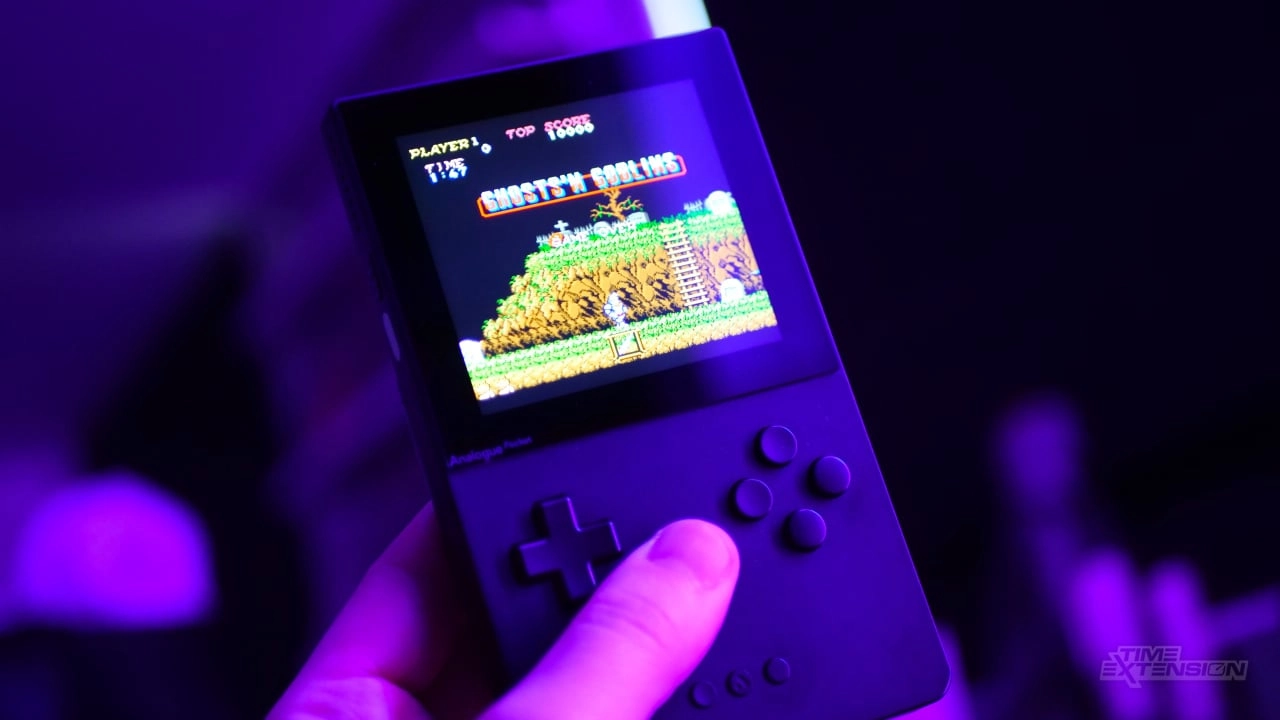
The resurgence of retro gaming has brought with it a myriad of devices designed to cater to nostalgia while leveraging modern technology. Among these, the FPGA Analogue Pocket stands out as a celebrated piece of hardware known for its precise game replication. However, even with its high praise, there remains one feature that significantly hinders my complete shift to solely using this device: the limited availability of save states across its supported platforms.
Save states, unlike traditional in-game saves, allow players to save their game at any point and return to it exactly as it was left, regardless of whether the original game supported saving. This modern enhancement is especially crucial for retro games, which often feature challenging gameplay without the generous save systems seen in current games. For someone with a tight schedule, save states offer a practical solution to enjoying these classics in short bursts, picking up right where one left off without needing to replay lengthy parts or leave the system running.
The Analogue Pocket indeed supports save states but only for a handful of systems such as the Game Boy line and Sega's Game Gear and Master System. The issue arises with many other popular systems accessed via the Pocket’s OpenFPGA framework, which currently lack this essential feature. This limitation significantly impacts the utility of the Pocket for more extensive system coverage.
The technical challenge behind implementing save states on FPGA devices lies in the need to design the hardware logic to support freezing and capturing the state of potentially thousands of digital circuits at any moment, a non-trivial task that requires considerable foresight in hardware design and software support. Developers like Adam Gastineau have pointed out the complexity involved, highlighting the resource-intensive nature of the task. According to Gastineau, while it is not impossible to implement save states on platforms like the SNES core within the Analogue Pocket, the effort and potential feasibility make it unlikely that widespread support will arrive soon, if at all.
Despite these challenges, other FPGA developers like Robert Peip have made progress in this area for different cores, suggesting that while difficult, advancements could still be on the horizon. However, given the mixed results and technical barriers, the feature's universal application across all platforms Analogue Pocket aims to support remains uncertain.
This limitation leads me to maintain a collection of other devices alongside my Analogue Pocket. Devices such as the Nintendo 3DS, various Android-based systems, and emulator handhelds from companies like Anbernic or Miyoo, while not matching the Pocket's level of accuracy in game replication, do offer robust save state functionality across a broader range of systems. This flexibility makes them indispensable for my gaming needs, ensuring I can enjoy a few minutes of retro gaming without the frustration of losing progress.
The preference for emulator handhelds over the Analogue Pocket, despite the latter's superior build and fidelity to original hardware, underscores a crucial aspect of gaming technology: the importance of user convenience and practicality. As much as purists appreciate authenticity in hardware emulation, the practicalities of everyday use and the need for features like save states play a significant role in determining a device's utility.
The ongoing development within the FPGA community gives hope that broader support for save alteration may eventually materialize. Until then, the Analogue Paocket, while a magnificent tool for emulation enthusiasts, will have to be part of a more extensive arsenal of devices catering to the needs of modern retro gamers. This situation illustrates the complex balance between preserving the past and embracing the convenient features of the present, a continuous challenge in the retro gaming scene.

You must be logged in to post a comment!
