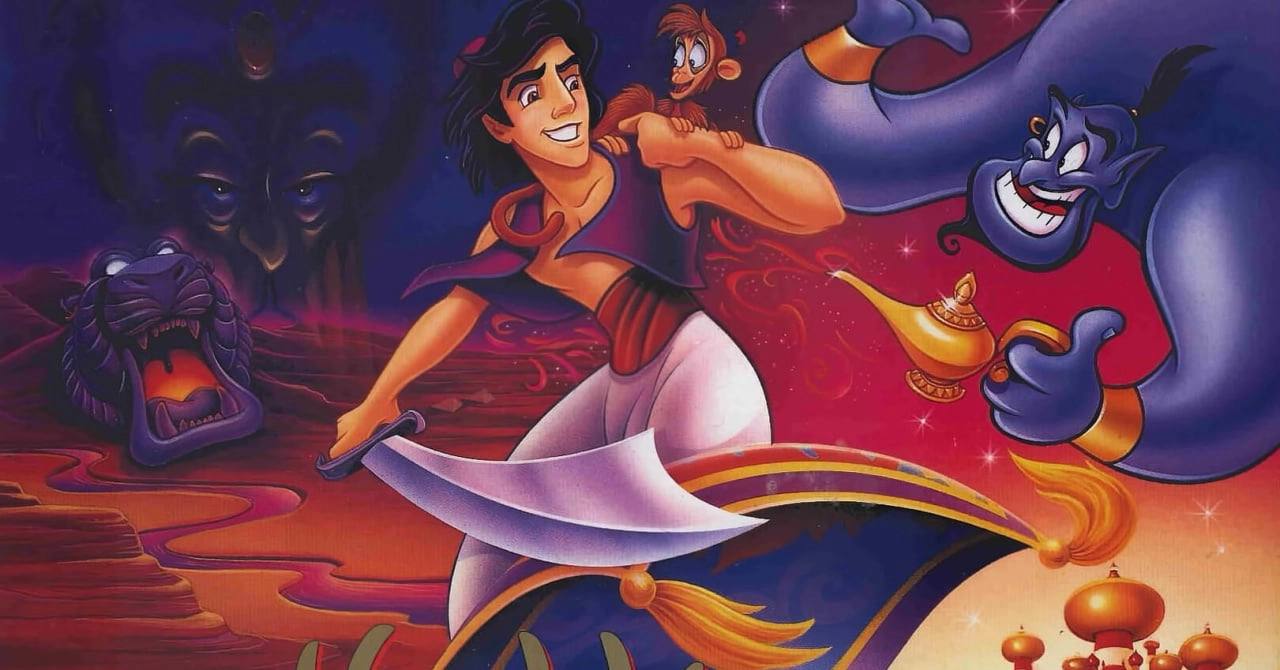
The world of video game adaptations can often lead to interesting and varied interpretations of popular media, especially when different developers handle the same source material on different platforms. This was particularly evident in the early 90s when Disney’s Aladdin was adapted into video games by both Capcom for the Super Nintendo Entertainment System (SNES) and by Virgin Games for the Sega Mega Drive/Genesis. However, one notable difference in these adaptations was the presence of a sword in Sega's version, while Capcom’s version featured a swordless Aladdin.
The reason for this significant difference stems from the distinct visions that the guiding teams had for the game’s character portrayal and gameplay mechanics. Capcom’s version of Aladdin did not wield a sword; instead, the gameplay focused on agility and evasion, with Aladdin needing to jump over enemies to defeat them. This approach was markedly different from the Sega version, where Aladdin could use a scimitar to directly engage his enemies.
Noah Dudley, who was the producer for The Magical Quest Starring Mickey Mouse and also supervised Disney’s projects including the SNES Aladdin game, shared insights into why Capcom's game lacked a sword. According to Dudley, Disney decided to license out the Aladdin game to both Capcom and Sega but wanted to ensure that there was no crossover or sharing of game design ideas between the two. To achieve this, Disney established what Dudley referred to as a "Chinese wall" - a barrier meant to keep each team's ideas and developments confidential and independent of one another.
Under this arrangement, both teams worked in isolation, which led to them developing their games based on their own interpretations of the Aladdin story and character. Dudley managed the Capcom team and envisioned Aladdin not as a swashbuckling fighter but as a clever and athletic character who uses his wits and physical agility to overcome challenges. This concept influenced the decision to exclude a sword from Capcom's gameplay design.
However, as development progressed, Capcom became aware of Sega's version, which included a sword as part of the gameplay. This knowledge led to tensions and discussions, with Capcom questioning why their version could not include a sword if Sega’s could. Dudley recalled having to intervene several times to reinforce the decision to keep the game sword-free, citing that this was more in line with their vision for the character and the game's style.
The issue escalated to the point where higher-level discussions were held with Disney's decision-makers in Japan, including some producers of the Aladdin movie and higher-ups in the Disney corporation. Ultimately, it was decided that Capcom's version would proceed without a sword, aligning with the initial vision of a more athletic and agile Aladdin who avoids combat rather than engaging directly.
Interestingly, despite these challenges, Dudley later reflected that Capcom’s swordless version might have turned out to be a better game. He believed that the constraints imposed by the lack of a traditional weapon forced Capcom’s designers to be more creative with the gameplay mechanics, focusing on enhancing the platforming elements and Aladdin’s agility, which in turn led to a unique and engaging gaming experience.
The differing approaches to Aladdin's character between Capcom and Sega's games highlight how gameplay design and character portrayal can be influenced by the creative visions of different teams, even when working from the same source material. The decisions made by Dudley and his team resulted in a game that embraced a non-violent, more puzzle and agility-focused style, which differentiated it from other games of the time and left a lasting impact on how the Aladdin story could be adapted into a video game format.

You must be logged in to post a comment!
