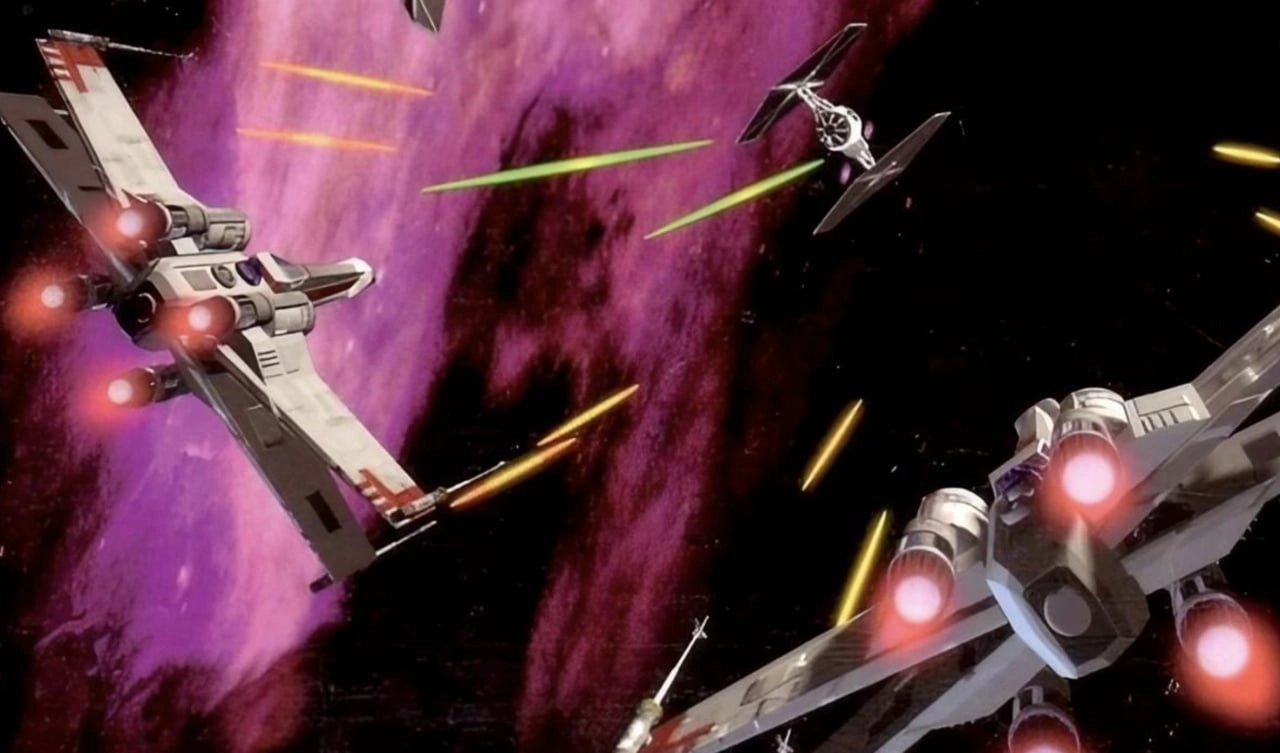
Back in 1993, LucasArts released what would become a stalwart title in the pantheon of Star Wars video games: Star Wars: X-Wing. This game inserted players into the sleek cockpit of the T-65B X-wing starfighter, a vessel as vital to the Star Wars mythos as the lightsaber or the Millennium Falcon. A blend of space simulation and immersive adventure, X-Wing was groundbreaking for its time, with its 3D graphics considered top-of-the-line.
The aim of the game was straightforward: pilot your starfighter to victory against the malevolent forces of the Empire. It was no easy task, yet perfectly aligned with the escapist fantasy of becoming an interspatial hero in a galaxy far, far away. Video gamers of the early '90s eagerly took up the challenge, buckling themselves into virtual pilot seats with zeal. However, those starry-eyed pilots were to confront an obstinate challenge they hadn't predicted.
At a recent retrospective at the Game Developers Conference—as relayed by PC Gamer—David Wessman, who played a significant role in the game’s creation, especially as a mission designer, reflected on what made the series distinct. Yet, he also acknowledged a flaw: the game's notorious difficulty, particularly on certain missions that may have been too ambitious in their challenge level.
The series, as Wessman pointed out, aimed to replicate the true experience of space combat. It required players to master several skills that a real pilot would need: from managing energy systems to maintaining situational awareness in the heat of battle. It was a serious approach, resistant to the easy thrills of action arcade games, demanding players to sharpen their abilities through relentless practice and repeated trial and error.
This rigorous demand for skill is where the retrospective turned to reminisce about a specific mission that became the bane of many players' existence: Mission 4, "Protect Medical Frigate." It was, according to feedback they received, unrelentingly hard. So much so that letters poured in from players expressing their frustrations. Among these letters, one stands out—a player was so infuriated he famously destroyed his X-Wing game discs, cutting them into pieces and sending the fragments to LucasArts as proof of his defeat and frustration.
This extreme act was symptomatic not of a mere video game misstep, but of what happens when the bridge between challenge and impossibility is too precariously thin. The game’s difficulty was calibrated to the developers' seasoned expertise, gamers who had honed their skills over countless hours of testing and playing. They were so adept at the game that their perspective on what was a reasonable level of difficulty had lost touch with the average player's ability. In a gaming era devoid of cheats or shortcuts, a player's single option was to conquer a mission or confront failure.
Wessman's story illuminates a crucial tenet of game design: balancing difficulty so that while challenging, it remains within the bounds of what is enjoyable rather than punitive. The Protect Medical Frigate mission stood as a testament to an era when meeting the player where they were in skill and experience was not as deeply understood or embraced as it might be today.
Nevertheless, the game and its sequels, including TIE Fighter, X-Wing vs. TIE Fighter, and X-Wing Alliance, have left a lasting legacy. They’ve captured the imaginations of flight and Star Wars enthusiasts alike. They were pinnacles of the genre, setting standards for space combat simulators.
This tale from X-Wing's history not only encapsulates the gritty reality of early '90s game development and player expectations but also serves as a peculiar slice of gaming folklore. Even in frustration, perhaps especially so, a community of players became indelibly connected through shared struggle and strife. Indeed, the 'Protect Medical Frigate' mission ensured that Star Wars: X-Wing would be remembered not just for its ambitious design and complex playstyle, but for embodying the passion, and sometimes fury, that video games can evoke.
As is often the case with fandom, what is a source of frustration can also become an endearing part of the narrative—the story of the player who sent in his destroyed game discs is as much a part of Star Wars gaming history as the mission that caused that reaction. This incident highlights the importance of community feedback in game development, an area that has greatly evolved over the years. Developers now have more resources and methods to gauge player response, ideally leading to games that are challenging yet fair, and fun for all.

You must be logged in to post a comment!
