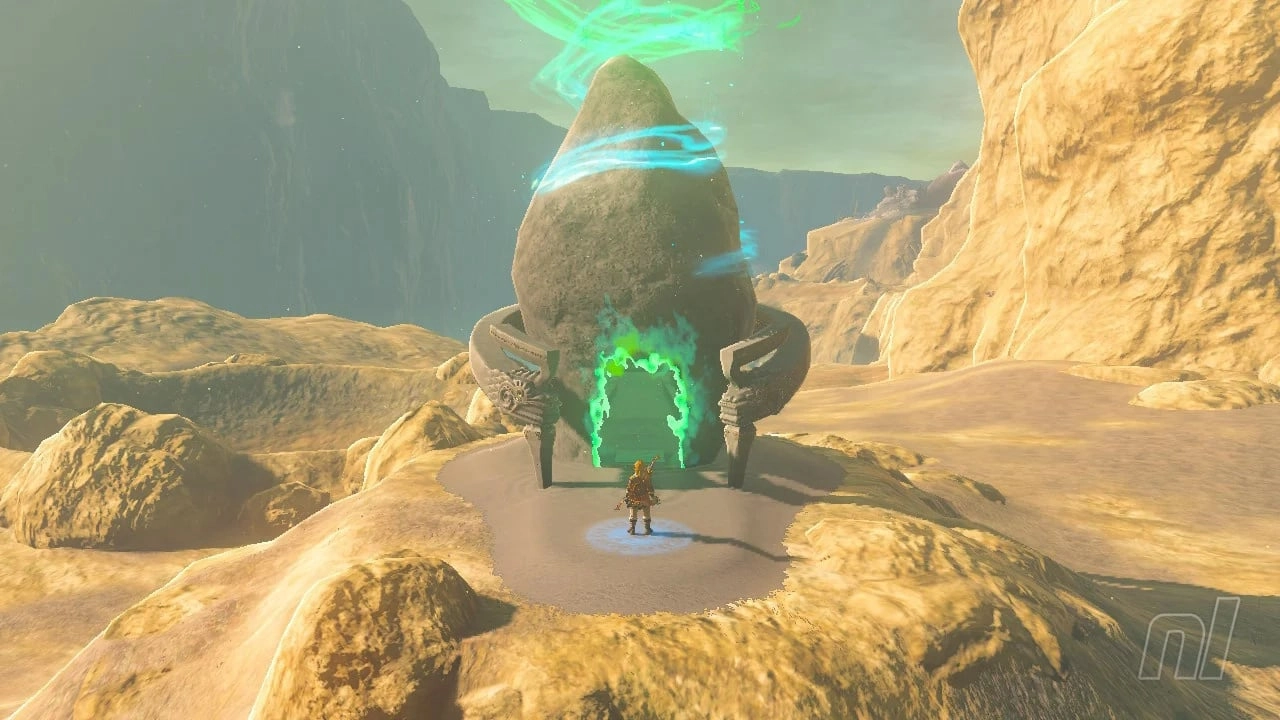
The enchanting world of Hyrule, familiar to fans of The Legend of Zelda video game series, has always held a deep and intricate lore that captures the imagination. In "The Legend of Zelda: Tears of the Kingdom," this lore goes a step further with new details emerging straight from the game's director, Hidemaro Fujibayashi, who shed light on the mysterious role of Hyrule's Shrines in an interview with Japanese magazine Nintendo Dream. According to Fujibayashi, the Shrines are not mere relics of the past but serve an essential purpose in maintaining peace in Hyrule.
The game's Shrines, previously thought to be just challenging puzzle rooms for players to conquer, were initially created long before the establishment of Hyrule by Rauru, a key figure in the series' mythology. Back then, before the notorious Demon King Ganondorf rose to power, evil beings roamed the land, and it was Rauru, with the aid of Sonia, who traveled across the region to quell the darkness. They placed Shrines precisely where demons had been vanquished to prevent their return, which explains the beacon of light that spills forth whenever a Shrine is activated.
When adventurers like the game's protagonist, Link, complete the trials within these Shrines, they are not only proving their worthiness or acquiring helpful items. They are also participating in an ancient ritual of sorts, being bathed in the remnants of the Shrines' power. This acts as a cleansing process, purifying Link from the demonic magic that pervades Hyrule's darker history.
The director goes on to reveal that even Hyrule Castle, a central location in the game recognized for its majestic beauty, was strategically built as a component of a larger barrier. This barrier's purpose is to amplify Rauru’s purification efforts against evil magic. Thus, the castle's prominence is not just for its commanding view of Hyrule Field but also as a sentinel standing against the resurgence of Ganondorf.
The collective fascination with the background stories of The Legend of Zelda games is palpable among fans, and Fujibayashi, together with Eiji Aonuma, further delve into Hyrule's past in the interview. They discuss the significance of Rauru's seal and elaborate on the process behind naming elements within the game, such as the Lightroots. Their conversation forms a vast tapestry of lore that enriches the entire gaming experience and provides a more profound understanding of the elements players often take at face value.
As we dissect these new insights, it becomes clear that there are layers upon layers of history and symbolism interwoven into the gameplay. The Shrines, once perceived as mere puzzles or checkpoints, are now viewed in a completely different light, as silent protectors that continue to shield the land and its inhabitants from ancient demonic threats. This revelation adds a rich narrative depth to the game, transforming each Shrine encounter into a step towards maintaining the peace and balance that defines Hyrule.
The information disclosed by Fujibayashi not only enhances the engagement with the game's narrative but also provides fertile ground for fan theories and discussions. It encourages players to look beyond the surface of their favorite games and to appreciate the thought and detail the creators have poured into the world-building. These insights lend a certain gravitas to each player's actions, as each victory within a Shrine takes on a new significance beyond personal achievement, contributing to the larger collective effort of preserving the land of Hyrule.
The Legend of Zelda: Tears of the Kingdom, therefore, stands not just as a vessel for entertainment and adventure, but also as a portal into an ages-old saga wherein every element serves a purpose in the grand tapestry of its lore. This fine blend of gameplay and storytelling is what elevates the game to a mythic status, continuing to captivate its audience and promising to do so for years to come. Such depth in narrative design is a reminder of the power of video games as a medium for storytelling and myth-making, capable of creating worlds that are not only immersive in their gameplay but also rich in their history and significance.

You must be logged in to post a comment!
