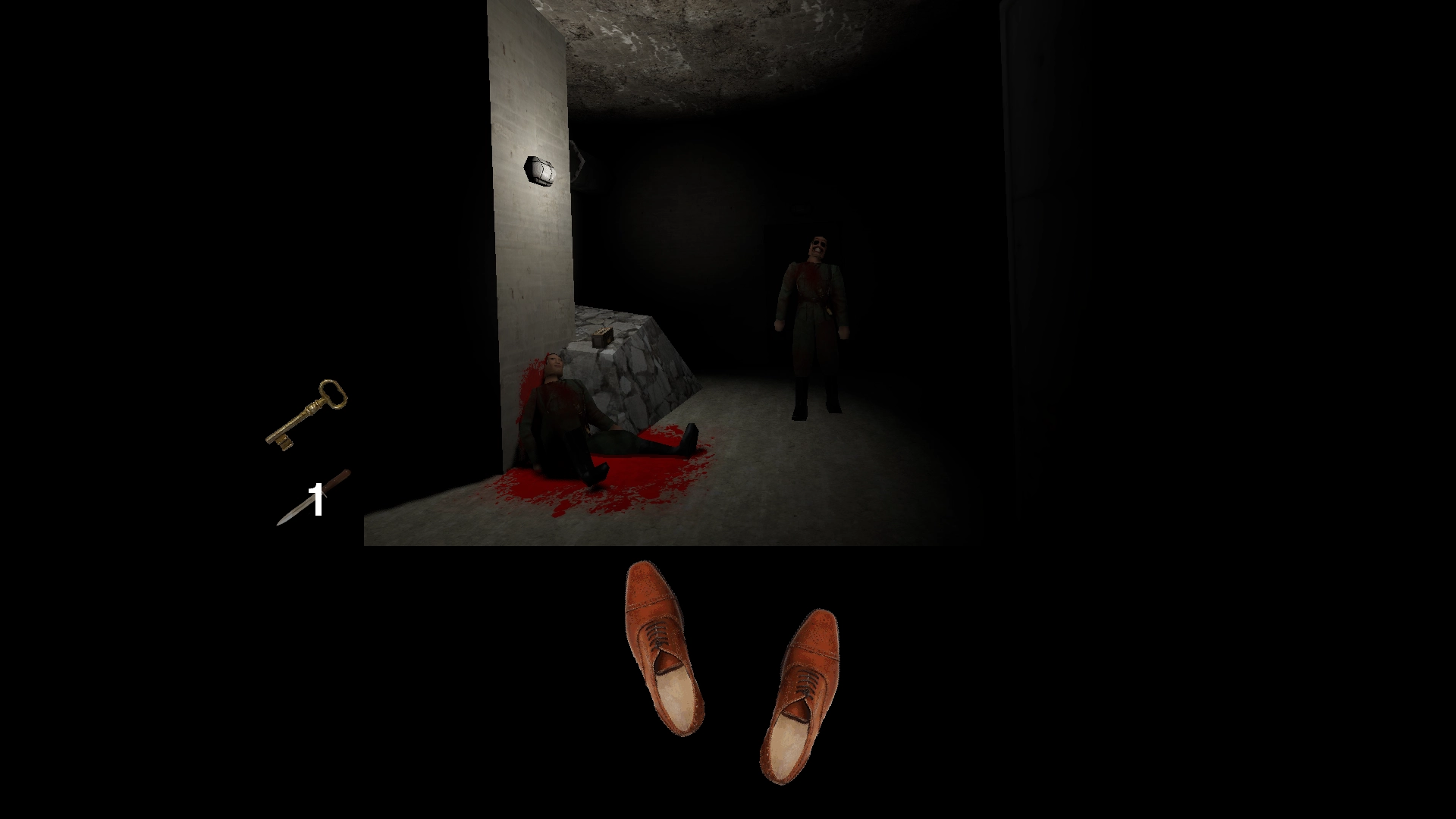
Imagine being trapped in a dark, unsettling research bunker built by Nazis, now overrun with monstrous entities. This is the setting of the latest free experimental survival horror first-person shooter (FPS), Neural Parasite, where the premise is as unique as its gameplay. Traditional keyboard controls are thrown out the window, and every movement and action depends on one thing: your ability to click.
This isn't your average FPS adventure; the familiar WASD keys are replaced with static images of left and right shoes at the bottom corners of the screen. It’s through these images that players navigate the eerie corridors of the game. The left shoe propels you forward, the right shoe inches you back, and speed builds as you deftly alternate clicks between the two. This innovative mechanic drastically changes how one interacts with the game environment, redefining the player's mobility and presenting a fresh layer of challenge.
Navigating turns is handled through clickable arrows on the screen's edges, continuing the point-and-click theme of the game. When it comes to weapons, the game maintains its click-centric design. A revolver serves as your trusty sidearm, which you both draw and fire with the click of your mouse. But it's not as simple as pointing and shooting; reloading is a step-by-step affair, demanding precision as you eject each spent shell and individually refill the chambers. This process can be unnerving, especially under pressure from the grinning, zombified monstrosities pursuing you.
Despite the potential for complexity, the game remains an approachable experience focusing on exploration, finding keys, and opening doors, all while dealing with enemies. Its challenge doesn't stem from tough-to-beat levels but from its insistence that players throw away years of FPS experience and adapt to a completely new control system, which disrupts muscle memory and demands intense concentration for even the most basic actions.
The panic that ensures when fumbling with controls adds to the game's horror element. Mistakes in the heat of the moment, such as accidentally moving towards an enemy rather than away or botching a crucial reload, are common. As a silver lining, the game offers knives for close-quarters defense – these instakill tools automatically find their way into the skulls of any enemy too close for comfort, giving players a fighting chance to regain control.
However, Neural Parasite doesn’t reach the same level as the Wolfire’s Receiver games, which are known for their intricate gun mechanics controlled by numerous keys. While Receiver immerses players quickly, allowing for a sense of mastery and cool-headedness when performing complicated tasks like reloading during a fight, Neural Parasite's simpler mechanics focus more on learning and adapting to a new playstyle under mild stress.
The true enjoyment of Neural Parasite lies in its novelty and how this is sustained throughout the gameplay. It’s a title that knows its limits, and the gaming experience concludes before the unique control system can lose its charm or become a source of frustration.
Neural Parasite is accessible to players worldwide through the Itch.io platform and is compatible with Windows operating systems. Interestingly, the game was launched on Christmas Day, adding to the bizarre and unexpected nature of the game's release.
After experiencing Neural Parasite, players may be prompted to revisit other classic games or check out Car Game, the game that inspired Neural Parasite and is also freely available. In drawing to a close, Neural Parasite stands as a testament to the creative potential within the game development community, where even the simple act of controlling a character’s movement can be reimagined into a fresh, immersive experience.

You must be logged in to post a comment!
