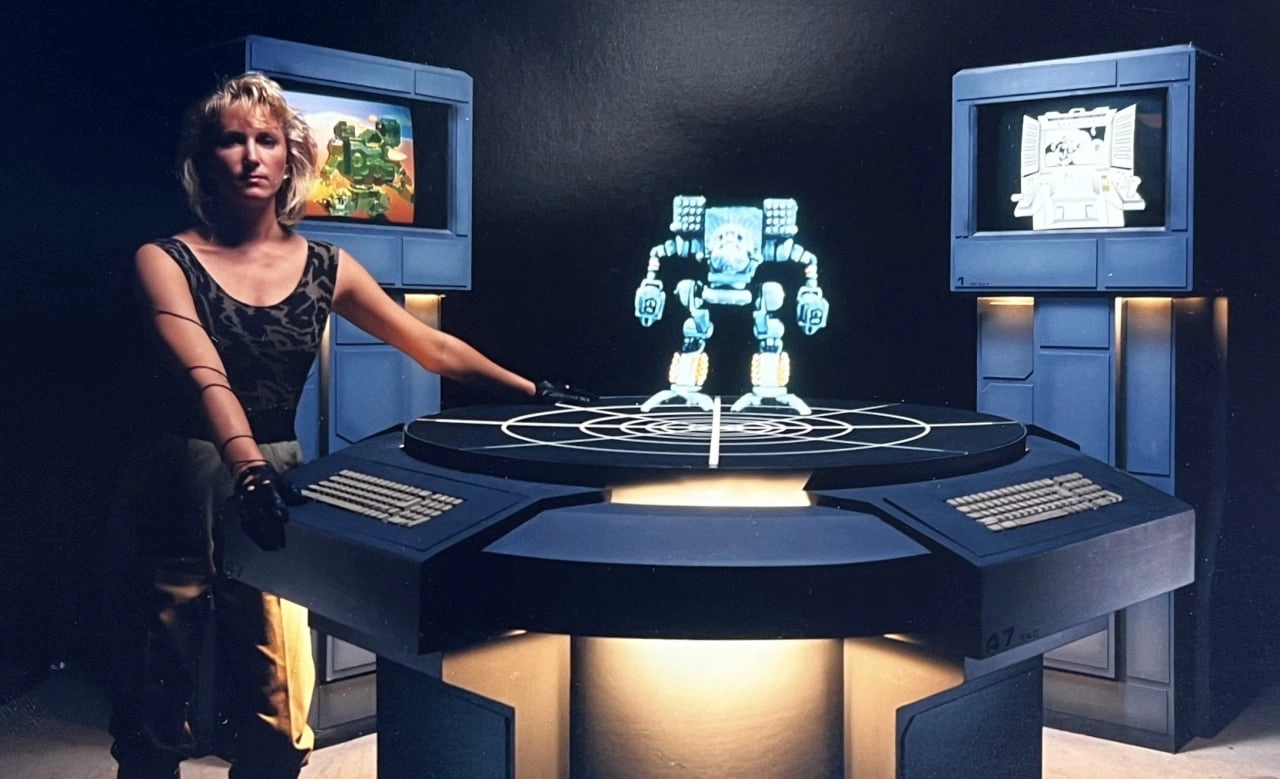
During the 1990s, a remarkable gaming phenomenon was taking shape, far ahead of its time. Known as the BattleTech Centers, these establishments offered an unparalleled experience for gamers. Imagine stepping into a cockpit of a mech—a towering robotic war machine, complete with monitors, joysticks, pedals, and an array of switches and lights. These simulators weren’t just local; they allowed players to compete with others across the room or even on the other side of the world. This was a concept largely unfamiliar to the masses who were just getting to know the "World Wide Web."
The mastermind behind these futuristic battle arenas was Jordan Weisman, a serial entrepreneur captivated by the world of theme parks and the creator of several successful franchises, including BattleTech. His journey began at the US Merchant Marine Academy, where a $50 million bridge simulator intended to train ship pilots inspired him to change the course of entertainment. With youthful optimism, Weisman left the academy, went home, and attempted to construct his very own bridge simulator designed for starships, using two Apple II computers.
Despite the initial challenges, he persevered with the conviction that networked microcomputers would be the future for these types of simulations. He envisioned a setup reminiscent of Star Trek, where each person manned a different station on the starship bridge, working collectively to master the simulation. When his quest for venture capital yielded no fruit, due to his lack of experience and college credentials, Weisman did not falter. Instead, he turned to the tabletop RPG space to fund his ambitious project, creating the board game BattleTech by capitalizing on the mecha figures from waning Japanese shows.
BattleTech rapidly grew in popularity following its launch, leading to the MechWarrior tabletop RPG that further expanded the universe. The success of these games provided Weisman and his company, FASA Corporation, with the resources needed to revisit the original vision and create the BattleTech Centers. In partnership with Incredible Technologies, they developed advanced 3D simulators that could be networked together, creating a shared battleground for players.
The first display of this technology was at GenCon in 1988, but the cost of development far exceeded initial expectations. To fill the financial void, side projects like creating laser tag venues and driving simulators for shows were undertaken. Weisman's design for the BattleTech pods was heavily influenced by his desire for sensory and information overload. The pods were equipped with multiple screens showing different aspects of the mech's operation, challenging players to process and respond to the deluge of data.
The simulators operated on custom-built hardware, including an Amiga computer boosted with additional graphics and memory cards, and a custom image generator based on a Texas Instruments chip. But Weisman knew that more than graphical prowess was needed for an immersive experience. Thus, the BattleTech Centers were also designed to incorporate theatrical elements, much like Disney rides that he adored. Before and after missions, players were engaged in pre-show briefings and post-show discussions accompanied by score printouts.
The BattleTech Centers achieved a milestone in gaming by connecting players across the globe via ISDN cables for international battles. These centers were the precursors of eSports, hosting tournaments that combined the social excitement of competition with the intimacy of community-centered locations. The centers evolved over time, upgrading the technology in the pods with the advancements in computer graphics and audio, and eventually, transitioning to operate within established arcade chains like Dave & Buster’s.
Despite their eventual fade from the mainstream due to high costs and changing market dynamics, the BattleTech Centers left an indelible mark on the history of gaming. They fostered a dedicated community that still cherishes and maintains these pods for gaming events. Jordan Weisman, a visionary in every sense, continued contributing to the gaming and entertainment sector through various successful ventures. His belief in the power of storytelling, socialization, and mechanics has endured as the fundamental pillars of his career.
Even though the BattleTech Centers are now part of gaming history, their legacy continues to influence the industry. They exemplify what passion, vision, and perseverance can achieve, and how sometimes, the future of entertainment is glimpsed in endeavors that are far ahead of their time.

You must be logged in to post a comment!
