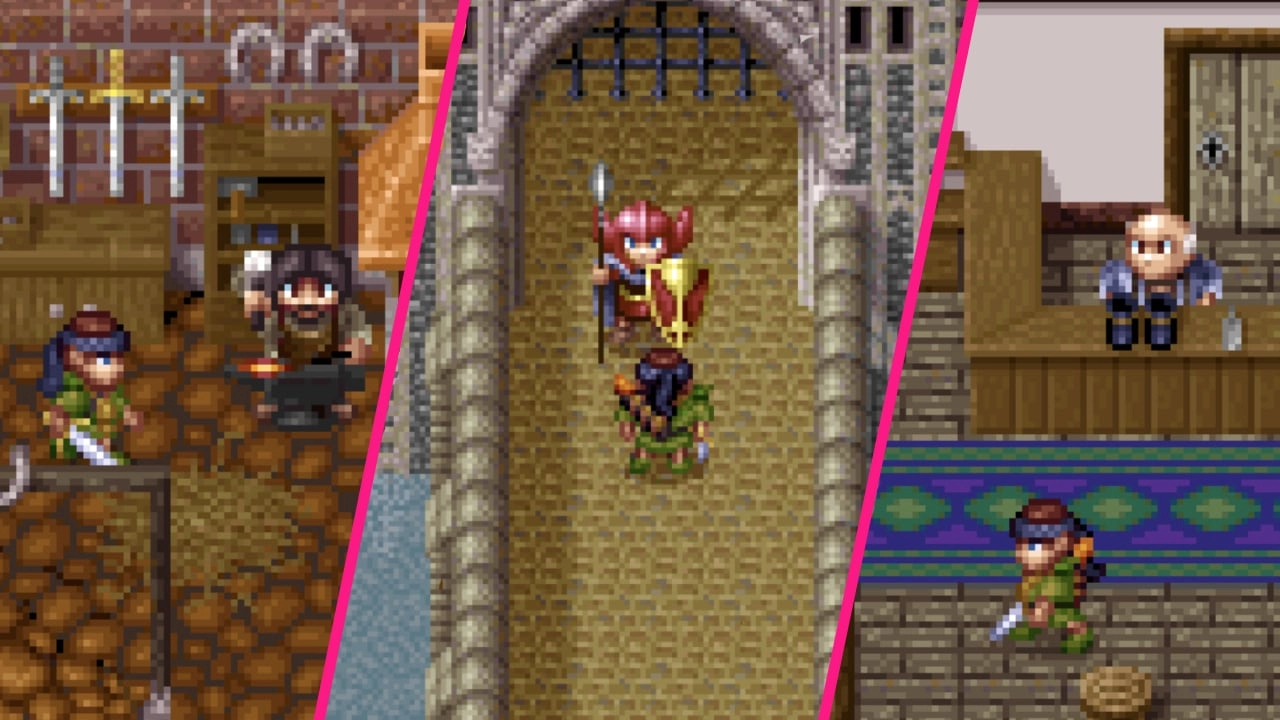
In 1994, a game development company named Team17 based in Wakefield embarked on an ambitious journey to create a role-playing game that could potentially surpass the popular Legend of Zelda series in finesse and detail. Their endeavor was Witchwood, an RPG following a brave young adventurer's battle against an evil witch. The announcement of Witchwood generated considerable excitement among gaming enthusiasts, eager to see Team17's interpretation of the RPG genre.
Initially, Witchwood was planned for a PC release, but there were discussions about versions for the Amiga, Playstation 1, Sega Saturn, and Atari Jaguar. However, just a few years after its announcement, the development ceased without a public explanation, and the game faded into obscurity. This led to limited information available about the title, leaving gamers only with screenshots and mentions in old gaming magazines.
A ray of hope shone in 2012 when a VHS trailer resurfaced online, followed by a playable tech demo and a comprehensive video from YouTuber Perifractic in 2019. These glimpses into the game offered insights into what Witchwood could have been but overlooked a crucial detail—Team17 were not the primary developers. Instead, a smaller company named Synergy Software, from Fleet, Hampshire, was steering the project.
Two former developers from Synergy Software, programmer Colin Surridge and artist Martin Severn, were key figures in bringing Witchwood to life. They opened up about the game's origin, the collaboration with Team17, and the reasons behind its cancellation.
Witchwood's inception traces back to Synergy Software's formation in 1991. Severn founded the company with his brother, Andy, after their previous company, Interceptor Micros, shut down. From the beginning, their goal was to keep their team of programmers and artists employed through various work-for-hire projects.
Witchwood was envisioned as Synergy's first major original project, inspired by the success and enjoyment of The Legend of Zelda: A Link to the Past. The game was designed to improve upon common issues seen in contemporary RPGs, such as unintelligent AI and unchanging worlds with repetitive NPC dialogues.
The development of Witchwood began in early 1994 with an original storyline and gameplay mechanics intended to distinguish it from Zelda. The antagonist was a witch who, after being executed, returned as a malevolent tree transforming the environment. Players were to assume the role of a hero named Pip and set forth to undo the witch's dark enchantments and restore balance.
Despite the promising start, the game remained a PC-only project, countering claims that it was being developer for various platforms. Surridge and Severn attested to the fact that development was firmly focused on PC, with the potential ports to Amiga or Atari systems being only hypothetical.
The game was steeped in British folklore, attempting to capture a "very British" Legend of Zelda vibe. The plot involved a tale of revenge as the witch cursed the townsfolk for her execution. The hero, Pip, had to navigate through mutated lands to confront the witch, with gameplay elements like classic RPG inventories and in-world shops.
However, the development of Witchwood encountered numerous hurdles. Team17, after becoming the game's publisher, was concerned about the progress and had Synergy move into their Wakefield offices for closer supervision. This led to more direct input from Team17, including contributions to cutscenes and music. Renowned musician Bjørn Lynne joined the project, composing an extensive soundtrack with eclectic influences.
Despite these efforts, the game suffered from feature creep, and the story and content remained elusive. With the burgeoning success of Team17's Worms franchise, resource allocation became a crucial business decision, which eventually led to Witchwood's cancellation. The burgeoning Worms brand overshadowed the unreleased RPG, and by 1995, Witchwood was officially axed.
The Synergy developers agreed that while their ambition for Witchwood was strong, the lack of clear project milestones and the financial success of Worms meant Team17 had to make a difficult decision. Following the cancellation, Synergy's staff dispersed to other companies, closing the chapter on Witchwood.
Witchwood still surfaced in gaming magazines into 1996, but behind closed doors, the project was dead. Fortunately, the once-lost tech demo and additional materials have since become accessible through online archives, offering a glimpse into what could have been an RPG epic with a distinctively British charm.
Witchwood's tale is a reminder of the complexities of game development, the challenges of living up to industry giants, and the sometimes bittersweet fate of ambitious projects that go unrealized.
You must be logged in to post a comment!
