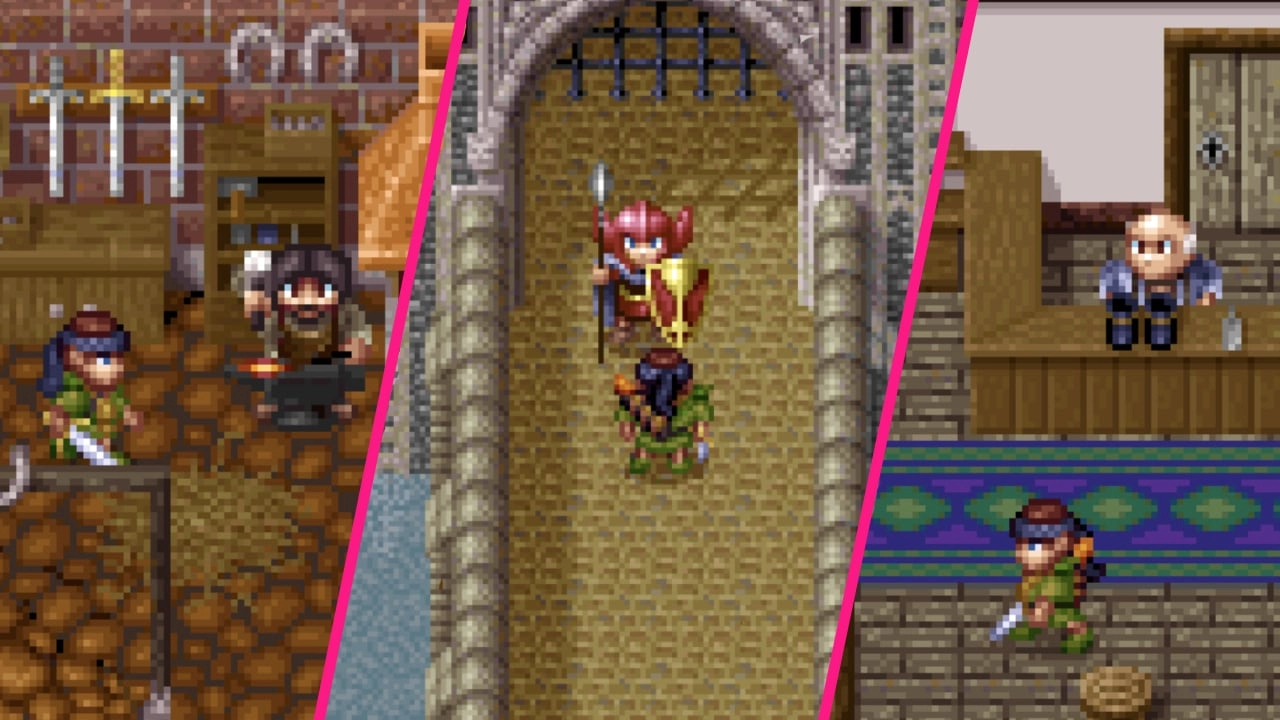
In the early 1990s, Team17, a game developer and publisher based in Wakefield, sparked interest with the announcement of an RPG named Witchwood. It aimed to emulate and surpass the success of the acclaimed Legend of Zelda series. Witchwood's tale revolved around a young adventurer confronting an evil witch and promised to be a significant release for PC, with potential versions for Amiga, Playstation 1, Sega Saturn, and Atari Jaguar.
The game appeared in gaming magazines, suggesting great potential and creating a buzz among gamers who eagerly awaited Team17's take on the RPG genre. But just as quickly as it emerged, Witchwood vanished, with Team17 silently shelving the project by 1996 without an explanation. For years, information trickled scarcely, leaving many to ponder what Witchwood could have been until 2012 when a VHS trailer and later a playable tech demo emerged, offering glimpses into the project's promising yet unfinished state.
Surprisingly, it was revealed that Team17 was not Witchwood's sole developer. Instead, a small company called Synergy Software, located in Fleet, Hampshire, was steering the project. Founded by Colin Surridge and Martin Severn after their previous company, Interceptor Micros, closed, Synergy Software was formed to keep their colleagues employed following the closure. Witchwood was to be Synergy's first big independent venture, brainstormed after the team had played The Legend of Zelda: A Link To The Past and decided to take on the challenge of developing a PC RPG.
Witchwood's development began early in 1994, fueled by the team's ambition to address the frustrations they experienced with console RPGs. They envisioned smarter AI, dynamic NPCs, and a persistent world. At some point, Synergy showcased the project to Martyn Brown, co-founder of Team17, and secured a publishing deal. Despite this support, reports of console ports were inaccurate as Synergy only focused on developing for PC.
Intended to incorporate British folklore and history, Witchwood's storyline featured a witch unfairly executed by villagers, who returns as a tree to wreak havoc on the town. The hero, named Pip, was tasked with battling mutated beasts and uncovering the witch's past. Unlike traditional RPGs, the gameplay loop did not strictly follow a set path, allowing for various decision trees based on player choices.
Development continued smoothly until 1995 when issues began to surface. Team17, impressed with but concerned about the prolonged development, relocated Synergy into its Wakefield offices for closer collaboration. Subsequently, Team17 became more involved, assigning its own staff to assist with cutscenes and music production. Despite these efforts, the project suffered from feature creep and lacked a clear plan, leading to delays and uncertainty regarding the game's completion.
At the same time, Team17's attention shifted to the unexpected success of Worms, a franchise that soon dominated the company's focus due to its widespread acclaim and profitability. Faced with the reality of constrained resources and priorities, Team17 made the difficult decision to cancel Witchwood, a promising but unfinished venture, to concentrate on its flagship franchise.
The Synergy team expressed understanding over the game's cancellation, acknowledging the project's unresolved endpoint and Team17's need to focus on successful ventures. In the wake of Witchwood's termination, Synergy's developers found opportunities at other prominent gaming companies, but the RPG remained a 'what might have been' legend.
Despite its cancellation, Witchwood left behind a legacy of ambition and creative thinking in the RPG space. Its cancellation story, uncovered through the efforts of dedicated individuals and the gaming community, remains a poignant reminder of the challenges and uncertainty in game development. With the demo now available on archive.org, players can experience a fragment of the game and ponder the missed opportunity of what Witchwood might have offered.

You must be logged in to post a comment!
