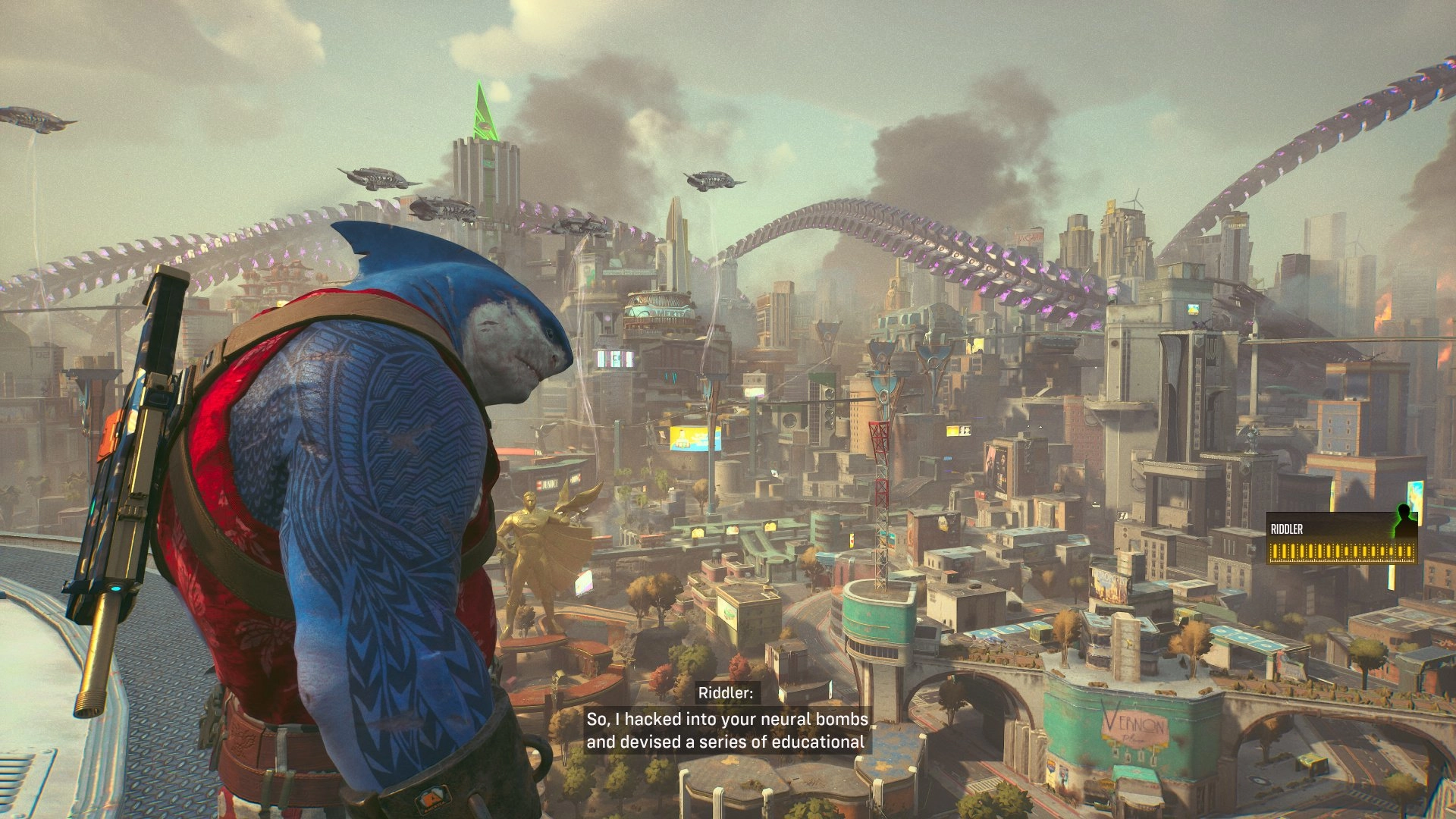
Rocksteady Studios' newest game, Suicide Squad: Kill The Justice League, arrived amidst a whirlpool of skepticism. Predictions of disaster loomed. Critics had their concerns about the shift from the studio's established success in single-player games to a game-as-a-service/looter shooter model. But as the saying goes, the proof of the pudding is in the eating. Against odds and expectations, the result was not only palatable but delicious.
I approached the game with a mix of excitement and dread, as a fan eager for another taste of Rocksteady's craftsmanship, yet wary of the potential for disappointment. To my delight, the looter shooter elements, which could have spelled a decline in quality, instead melded perfectly with the intricate mechanics, narrative depth, and addictive action that fans have come to expect from this developer.
Indeed, looter shooters often bear the brunt of criticism for their perceived shallow nature. Games in this genre typically string players along by their love for loot, continually drawing them into sometimes monotonous cycles of gameplay to unlock that next piece of gear or weapon. But Rocksteady's execution within this framework is exceptional. The satisfaction derived from looting, the dopamine rush of acquisition, was anticipatory pleasure made real.
Nine years of waiting culminated in a game that not only meets Rocksteady's standards but elevates the looter shooter genre. If you have an affinity for this style of gameplay, and sprinkle in an adoration for the superhero lore, you're in for a treat.
Each character brought to life by Rocksteady offers a unique playstyle. Boomerang dashes and controls crowds, Harley Quinn grapples and brawls with satisfying brutality, Deadshot provides an accessible jetpack-powered introduction, and King Shark brings surprising speed to his sheer power. They offer diverse methods of engagement, both in ranged combat and up-close melee.
The combat system, intricate and renowned, shines through in the gunplay which is unexpectedly delightful. Each shot feels substantial, each impact resonates, and the festive loot drop mechanism never gets old. The characters stand out individually through their diverse special moves and melee attacks, which also reflect their personalities and comic-book origins.
Traversal, so vital to the superhero experience, is a joy. Learning to seamlessly chain movements, maximize momentum, and navigate the environment contributes an engaging substance to the game that goes beyond merely getting from point A to point B.
The game fosters cooperative play naturally without forcing it. Teamwork arises from the improvements and perks each hero brings to the table, without constant cutaways or scripted moments. This restraint allows each player more freedom and continuous action during battles.
Furthermore, Rocksteady demonstrates attentiveness to player feedback by rolling back some of the more contentious looter shooter conventions. Loot is plentiful, microtransactions are kept cosmetic, and while there's depth to gear systems, it's not mandatory to dive deep to progress, making for an enjoyable experience even for those less invested in numbers and optimization.
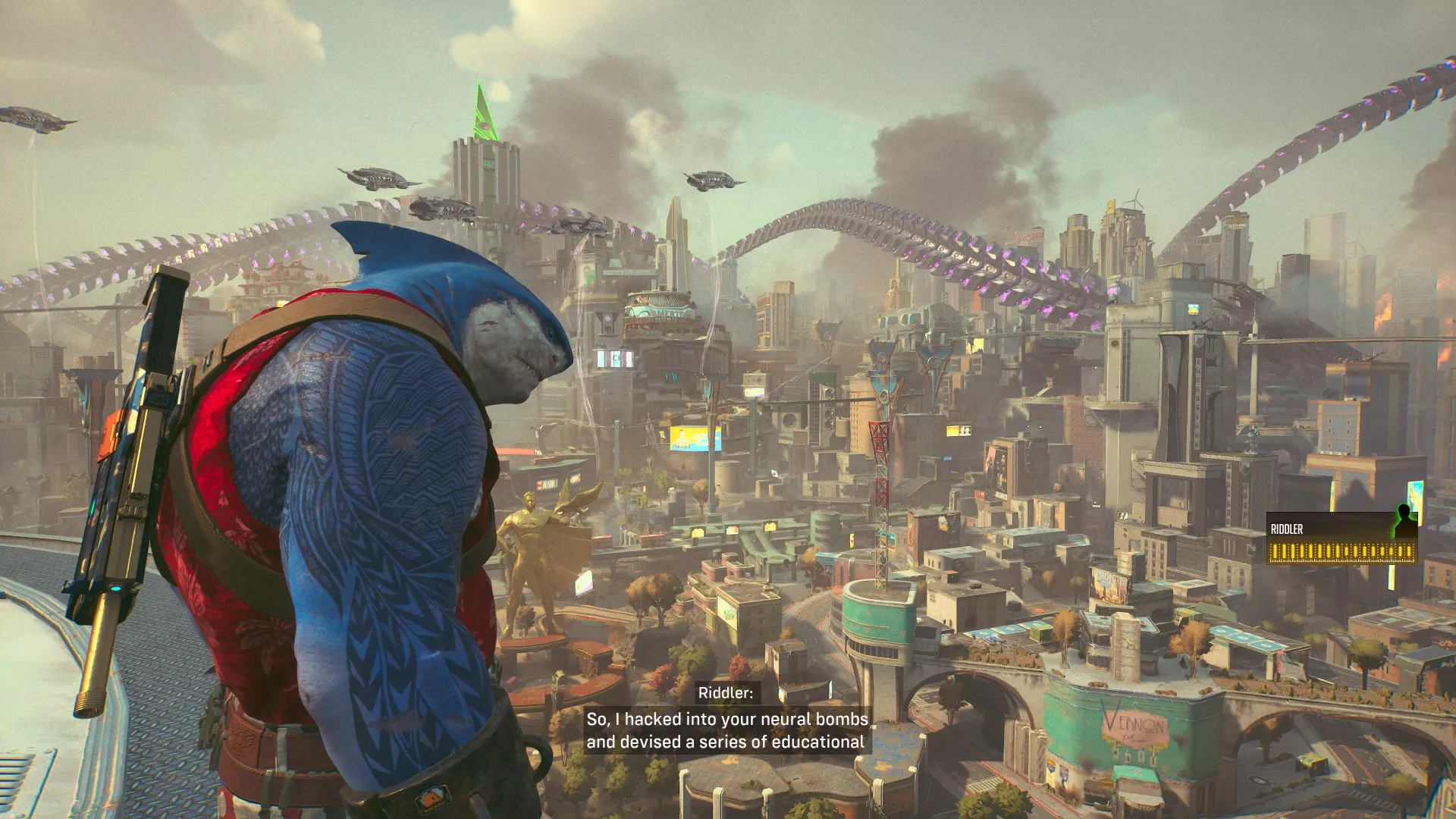
The city of Metropolis also feels like a true successor to Rocksteady's Gotham. It brings a sense of familiarity that fans will relish, with nods to previous entries manifesting in the return of characters like the Riddler and more. It's a city that beckons exploration and offers the same allure that Arkham did.
Nevertheless, the game isn't without faults - it's a looter shooter, after all. Familiar genre tropes of mission repetition and grind are present. However, they're offset by strong world-building, intricate combat design, and authentic superhero indulgence.
The Suicide Squad ambiance is nailed with the performances, voice acting, and narrative which strike a chord with both newcomers and DC enthusiasts. The story unfolds satisfactorily, with clever twists on superhero conventions and reverent echoes of the Arkham series.
In essence, Rocksteady's game stands up well against the critique and establishes itself as a strong contender in both the superhero and looter shooter arenas. It reconciles fan expectations with genre demands and presents a foundation ripe for future content and characters.
The game manages to remain engaging despite the innate weaknesses of its chosen genre. It's a testament to the studio's capability to deliver compelling content for fans and newcomers alike and makes a convincing case for itself amidst a saturated market.
Suicide Squad: Kill The Justice League is a commendable reflection of Rocksteady's legacy in gaming, and as the curtains close on the main story, there's a thrill in anticipating where this adventure will go next.

You must be logged in to post a comment!
