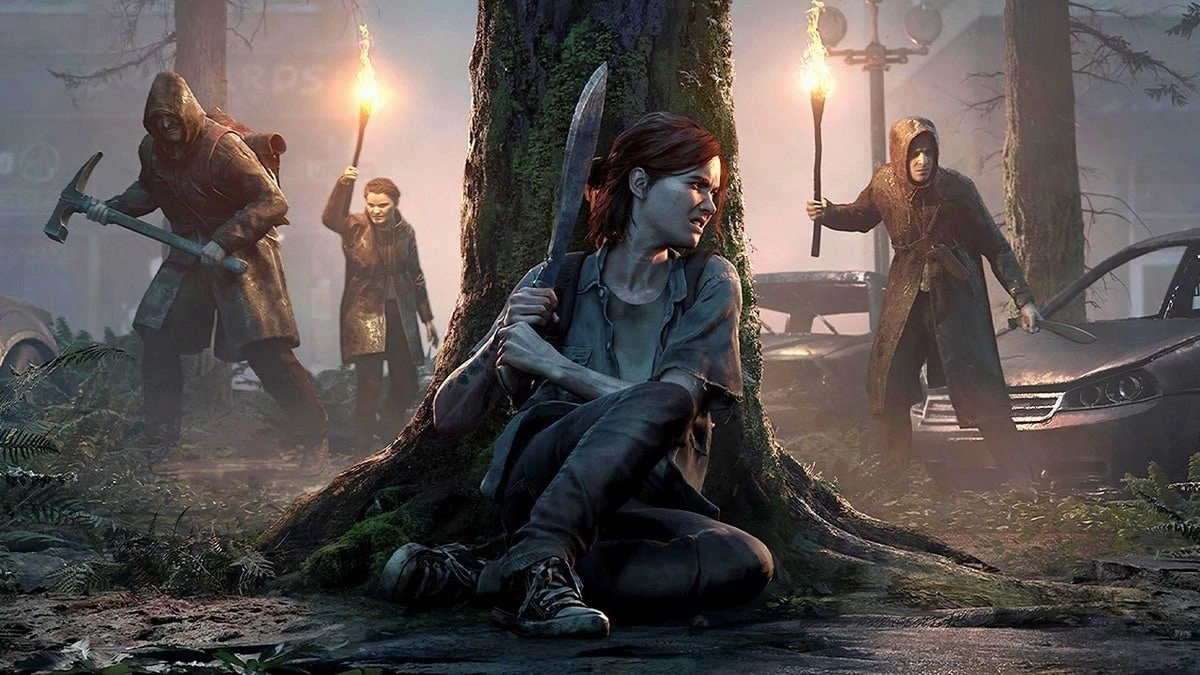
When it comes to beloved video games, few have captured the hearts and minds of players quite like Naughty Dog's The Last of Us Part II. Yet, fans were recently treated to some startling revelations about the game's early development stages, evoking images of a significantly different experience than the one they know.
According to the documentary "Grounded II: Making The Last of Us Part II," the game we eventually received underwent substantial changes from its original concept. Naughty Dog had initially envisioned the game as an open-world adventure with a heavy emphasis on melee combat, drawing inspiration from the critically acclaimed Bloodborne, a title known for its challenging gameplay and dark, Gothic atmosphere.
Neil Druckmann, the creative force behind Naughty Dog's storytelling prowess, had pushed for the team to consider dramatic shifts in gameplay style. He encouraged them to be "very ambitious about changing the game almost entirely." In the words of co-game director Anthony Newman, the earliest vision for the sequel was something akin to an open-world game, putting melee combat at the forefront.
However, these transformative ideas didn't occur in isolation. Emilia Schatz, a lead game designer at the studio, shed light on how the team also explored adopting a non-linear exploration approach similar to the one that Bloodborne and other games by FromSoftware employ. Schatz expressed admiration for the rewarding sense of environmental mastery that such a design afforded players. The interconnected and expansive world would not only support exploration but become an intrinsic part of the experience, almost like a character in its own right.
While the idea of navigating a vast world and engaging in skill-based combat seems intriguing, it ultimately did not align with the narrative-driven essence Naughty Dog wanted to preserve. Storytelling has always been a cornerstone of their design philosophy, and the open-world concept struggled to mesh with the intimate and character-focused journey they sought to deliver.
Despite the shift away from the open-world melee design, echoes of this ambitious vision remain apparent in the final product. With the Seattle portion of the game, players can experience a taste of what might have been, as this section offers a more expansive environment that deviates from the otherwise linear progression of the game's plot.
This revelation has naturally sparked discussion among fans, prompting debates on what an open-world The Last of Us might have looked like. Could this melee-centric and exploration-heavy direction have brought an entirely different dimension to the franchise? How would these mechanics have changed the way we perceive the characters and their struggles? These are questions that fans can only speculate on now.
Beyond this curiosity about untraveled paths, Naughty Dog's transparency in sharing their creative process provides a rare and invaluable glimpse into the complexity of game development. It underscores that the creation of a game, particularly one as celebrated as The Last of Us Part II, is an evolutionary journey—brimming with ideas that are constantly considered, revised, or abandoned in service of the story's heart and soul.
Fans might wonder if these initial design concepts will ever resurface, possibly influencing future projects at Naughty Dog or elsewhere in the industry. Could there be a parallel universe where gamers got their hands on a Bloodborne-style Last of Us experience? It's an alluring thought.
Regardless of what could have been, The Last of Us Part II we have today stands as a testament to Naughty Dog's adaptability and deep commitment to their vision. What started as an idea inspired by another game's mechanics transformed through various stages of development into a title that many consider a masterpiece in its own right. Whether you're exploring every nook and cranny of Seattle or engaging in heart-pounding combat, the game we received is every bit the product of a journey—both for its creators and for the players who walk its harrowing, beautiful path.

You must be logged in to post a comment!
