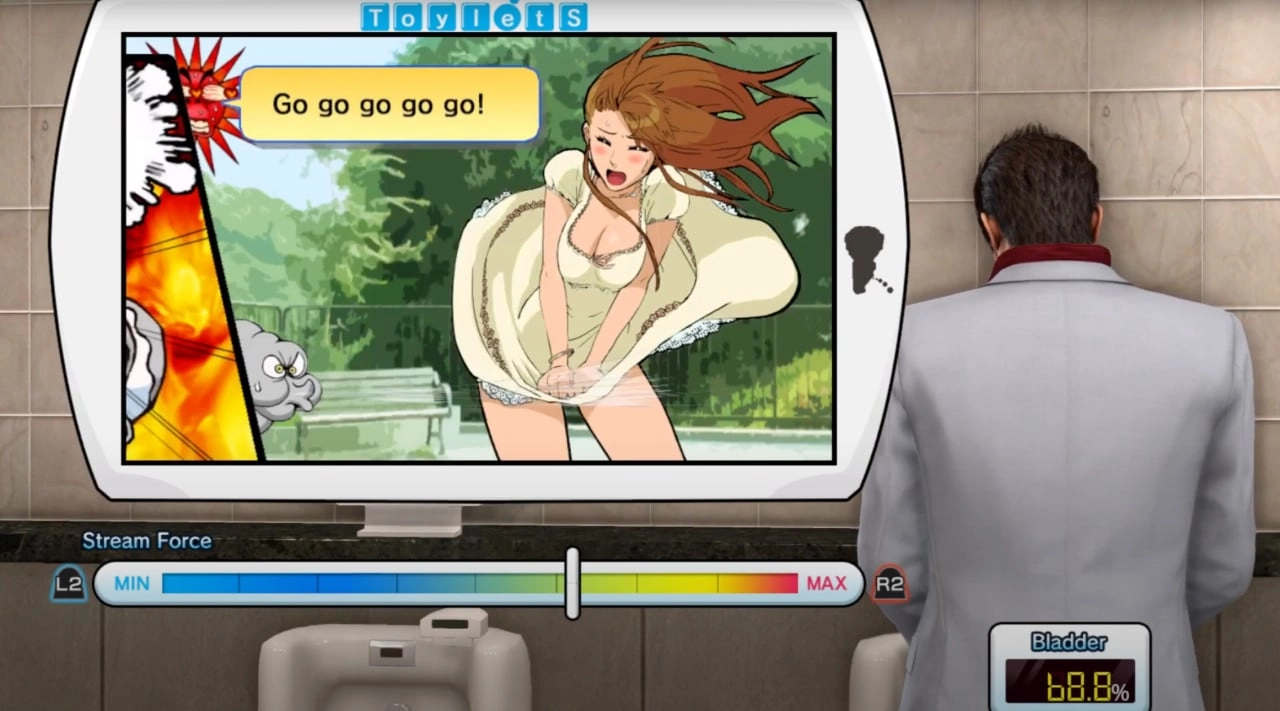
In 2011, Sega introduced the Toylet, one of the most unconventional products ever devised by the company's Research and Development team. The concept was simple yet bizarre: transform a routine bathroom visit into an engaging gaming experience. This was achieved by installing an LCD screen, a motion-tracking sensor, and a urine flow sensor above a urinal, turning urination into gameplay. Sega aimed not only to entertain but also to maintain cleaner restroom facilities by encouraging accurate aim.
The Toylet system allowed users to play games by controlling the stream of urine. The device measured the speed and volume of the user’s urine and translated it into in-game actions. The games ranged from extinguishing bombs to creating gusts of wind strong enough to lift a girl’s skirt, with the primary aim to keep players focused and thus reduce restroom cleaning needs.
This unusual gadget also included competitive elements; for instance, it enabled users to save their high scores on a USB drive. Throughout its availability, the Toylet supported eight different games, including various quirky titles such as "Milk Jet Battle" and "Panel Quiz Chou Nyo-ryoku."
Despite these novel features, Sega halted production of the Toylets in 2016 and ceased aftersales support by 2021. This discontinuation raised questions about the longevity of the installed devices and their current operational status.
A Tokyo-based retailer named BEEP Shop recently investigated how many Toylet units were still functioning around the city. Their inquiry revealed that, surprisingly, quite a few units are still up and running in some stores. Although certain devices have fallen into disrepair—likely never to be fixed due to the lack of support from Sega—others continue to provide a bit of fun and a competitive edge to an otherwise mundane activity.
BEEP Shop’s research was confined to Tokyo and nearby Kanagawa, indicating that their findings might represent only a fraction of the Toylets' continuing legacy across Japan. This search unveiled a fascinating aspect of Japanese gaming culture, where even restroom visits can be gamified. However, for those wishing to locate these units, the challenge remains. No comprehensive directory exists, and privacy norms discourage patrons from photographing and sharing images of the facilities in which Toylets are installed.
The continued usage of Toylets, despite the absence of official support, illustrates a unique facet of both Sega's innovation and Japanese society's acceptance of playful technology in every aspect of life, including personal hygiene spaces.
For now, these machines are relics of a time when entertainment sought to infiltrate every corner of daily life, offering a diversion even during the most private moments. Whether or not new units will ever be produced, the existing Toylets still mark a peculiar point in the timeline of interactive entertainment—a testament to Sega's creative endeavors beyond traditional gaming.

You must be logged in to post a comment!
