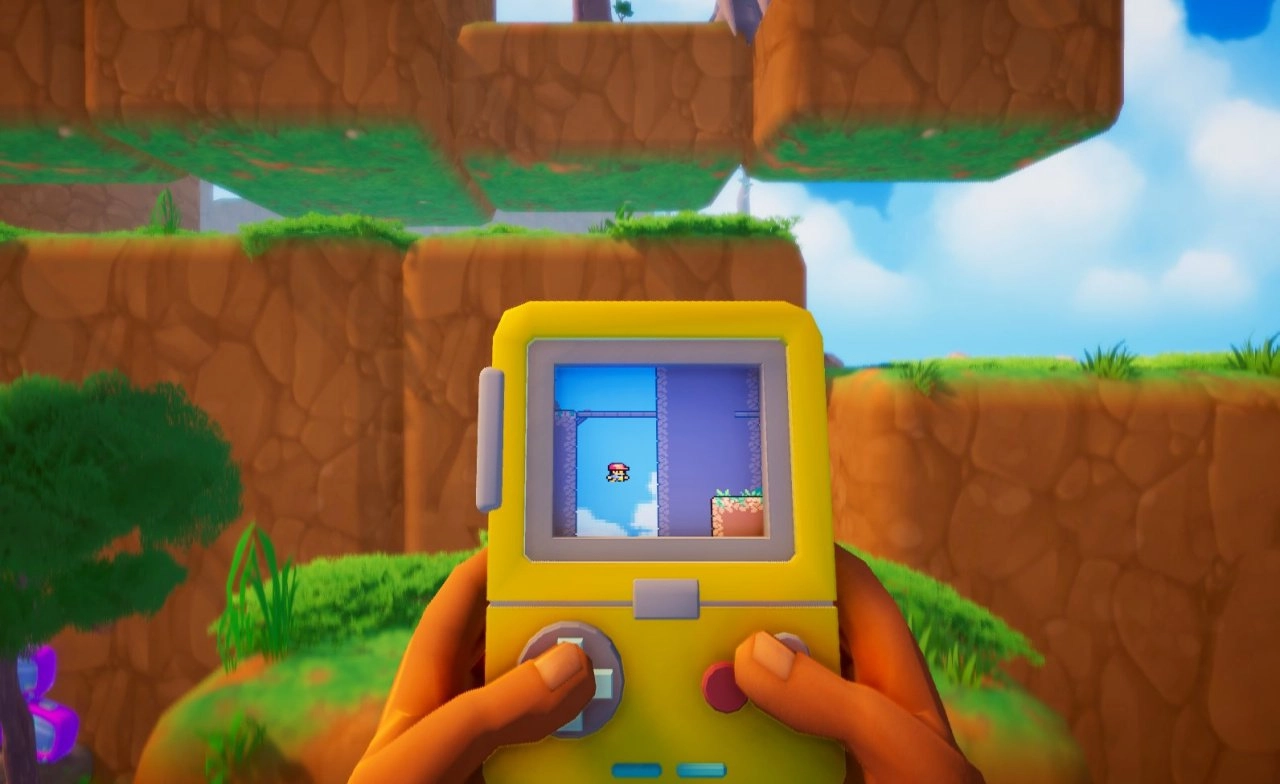
Video games have often pushed the boundaries of creativity and concept, and a new addition to this inventive landscape is Screenbound, a platformer that brings a whole new twist to the gaming experience. This intriguing puzzle platformer, announced earlier this year for PC, promises to provide gamers a chance to dive into an immersive world of multitasking and distraction management, something many of us can easily relate to.
The premise of Screenbound is refreshingly unique. Players find themselves navigating a 3D-generated environment, while simultaneously controlling a 2D character on a device reminiscent of the classic Game Boy, all with the same set of controls. The fascinating catch is that the player must keep an eye out for hazards and obstacles in both realms. The game literally operates on two dimensions, offering a fresh take on the platformer genre that demands both attention and coordination.
One of the intriguing features coming to Screenbound is the level editor, as showcased in a tweet from the game's official account. This editor seamlessly converts 2D design into the 3D world, broadening the scope for creative gameplay and user-generated challenges. The game is also set to include classical FPS (first-person shooter) controls and a range of enemy characters to defeat, making for a diverse and engaging gaming experience.
The developers at Stereochromia along with their colleagues at Unicellulargame and CM_Games are utilizing the Unity game engine to bring their vision to life. The development process appears to be an evolving journey, with the team constantly brainstorming and testing new gameplay elements. An example provided was the concept of dimensional pressure platforms—stepping on a plate in the 2D world would cause a corresponding effect in the 3D world, creating an inventive puzzle mechanism that players would need to strategize around.
Despite the enthusiasm generated by the initial announcements and teases, much of Screenbound remains shrouded in mystery. The game has no fixed release date as of now, and potential players will have to wait a while longer to get their hands on a playable demo. However, those eager to follow its development can track updates through the game's Twitter account (@screenbound) or the individual accounts of the developers.
What Screenbound appears to promise is a game that isn't just about quick reflexes or precise controls; it's about the very human challenge of managing distractions. In a culture brimming with multitasking, rife with devices vying for our attention, Screenbound transforms a common human dilemma into a central gameplay mechanic. It's not hard to see this concept resonating with those who have tried to juggle gaming with the myriad distractions of the outside world or even with another screen in hand.
In the broader context of video gaming, Screenbound continues the tradition of titles that fold players' real-life experiences into their design. It's a game that's as much about its meta-commentary on our divided attention spans as it is about being a solid puzzle platformer. If the developers can nail the balance between the 2D and 3D challenges while keeping the game engaging, Screenbound could very well find itself a niche among indie game enthusiasts and those looking for an extraordinary gaming experience.
The landscape of independent video gaming is often where we find the boldest experiments and freshest ideas, and Screenbound seems set to join those ranks. As it stands, the promise of its dual-dimension gameplay hints at both a metaphorical and literal exploration of our screen-bound lives. For now, we watch with eager anticipation to see how Screenbound evolves and whether it can ultimately deliver on its ambitious and metaphorically rich premise.

You must be logged in to post a comment!
