Amidst a sea of releases, Square Enix brings back a classic with Romancing SaGa 2: Revenge of the Seven. This title revisits a 1993 role-playing favorite, now reimagined for modern platforms with noticeable enhancements and setbacks.
Romancing SaGa 2: Revenge of the Seven, released for the Nintendo Switch, maintains the core gameplay that made the original remarkable. It centers on the Emperor of Avalon and their dynastic struggle against the Seven Heroes, characters who once saved the world but have since been corrupted by dark forces. The storyline extends across a millennium, transitioning rulership from Emperor Leon to his son Gerard, and subsequently to future heirs, each decision-making forming the non-linear skeleton of the narrative.
The game’s structure is unique, offering players choices in how they expand their empire by tackling different world problems in exchange for allegiance. Whether it’s extinguishing a rampaging volcano or navigating perilous whirlpools, each decision unfolds new paths, enhancing the game's replayability.
Side quests enrich the environment, with our favorite involving a detailed underwater search sparked by a mermaid's request—a compelling addition that feels separate from the main storyline yet integral to the world's expansiveness.
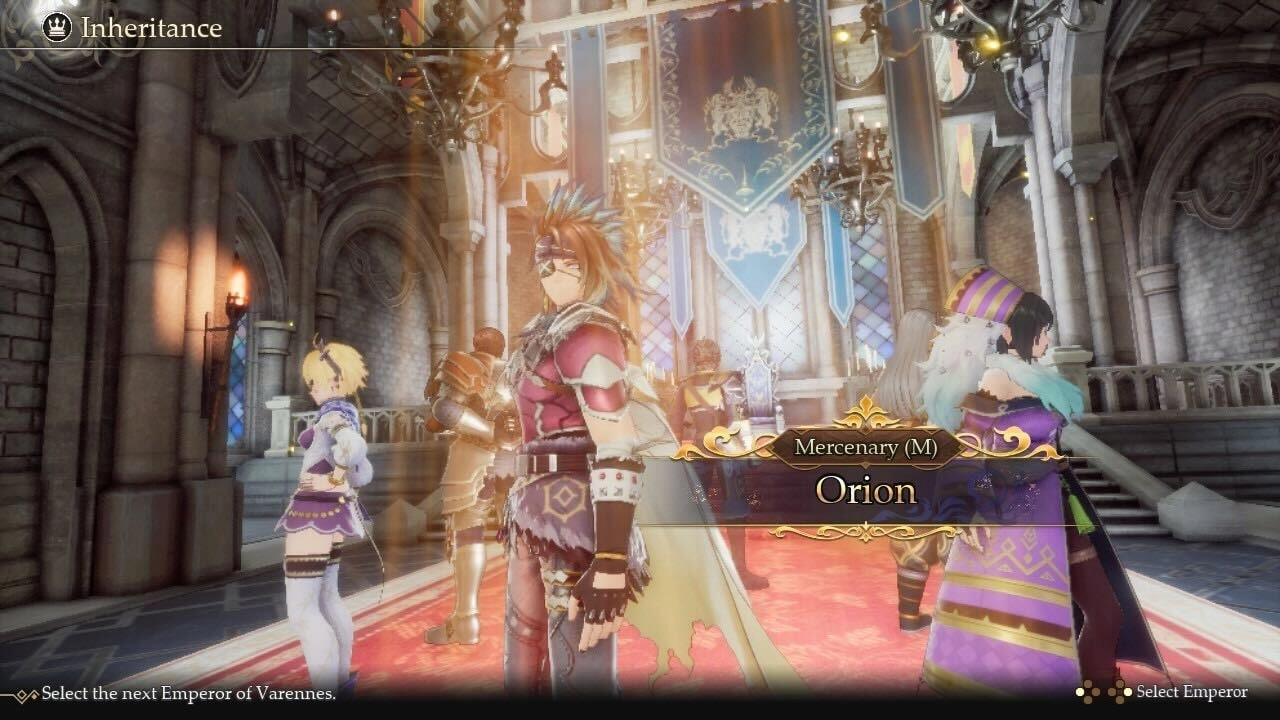
However, the generational mechanic brings mixed feelings. On one hand, it distinguishes the game through the inheritance of skills and leadership. Successive leaders take over a more developed realm, benefitting from enhanced facilities like magic schools and smithies, carrying over and improving the capabilities of their forebears. This continuity adds a strategic layer to managing the empire’s growth.
The downside lies in character development. New characters lack depth and nuanced personalities, functioning more as placeholders than integral elements of the story. They bolster the empire's strength but fail to evoke emotional engagement, leaving the gameplay feeling somewhat hollow during story progressions.
Contrasting its predecessor and sibling title, SaGa Emerald Beyond, Revenge of the Seven employs a simplified turn-based battle system. While both use a BP system where actions cost points, Revenge of the Seven’s system feels less strategic. It reduces to exploiting enemy weaknesses to fill an Overdrive gauge for powerful attacks—a method reminiscent of traditional RPG battles but lacking the strategic depth seen in contemporaries like Octopath Traveler.
Graphically, the game fails to impress. Despite operating on a modern console, the visuals offer little in terms of artistic innovation. The switch from the pixel art of the original to three-dimensional models results in a game that feels visually dated and lacks charm. The handheld mode on the Switch experiences occasional frame rate drops and long load times, exacerbating these issues.
However, the progression system in Revenge of the Seven shines. Characters develop by mastering weapons and unlocking new techniques, adding a satisfying layer of depth to combat training. This mechanic, coupled with quality-of-life improvements like adjustable difficulty settings and post-battle health regeneration, make the game accessible to newcomers and less frustrating for veterans.
In essence, Romancing SaGa 2: Revenge of the Seven admirably attempts to balance homage with innovation. While it succeeds in evolving some gameplay mechanics, it stumbles in its presentation and depth, leaving fans of the original with a nostalgia that might feel only partially fulfilled. Despite these shortcomings, the game remains an engaging venture for those interested in strategic empire building and a testament to the enduring charm of the SaGa series.

You must be logged in to post a comment!
