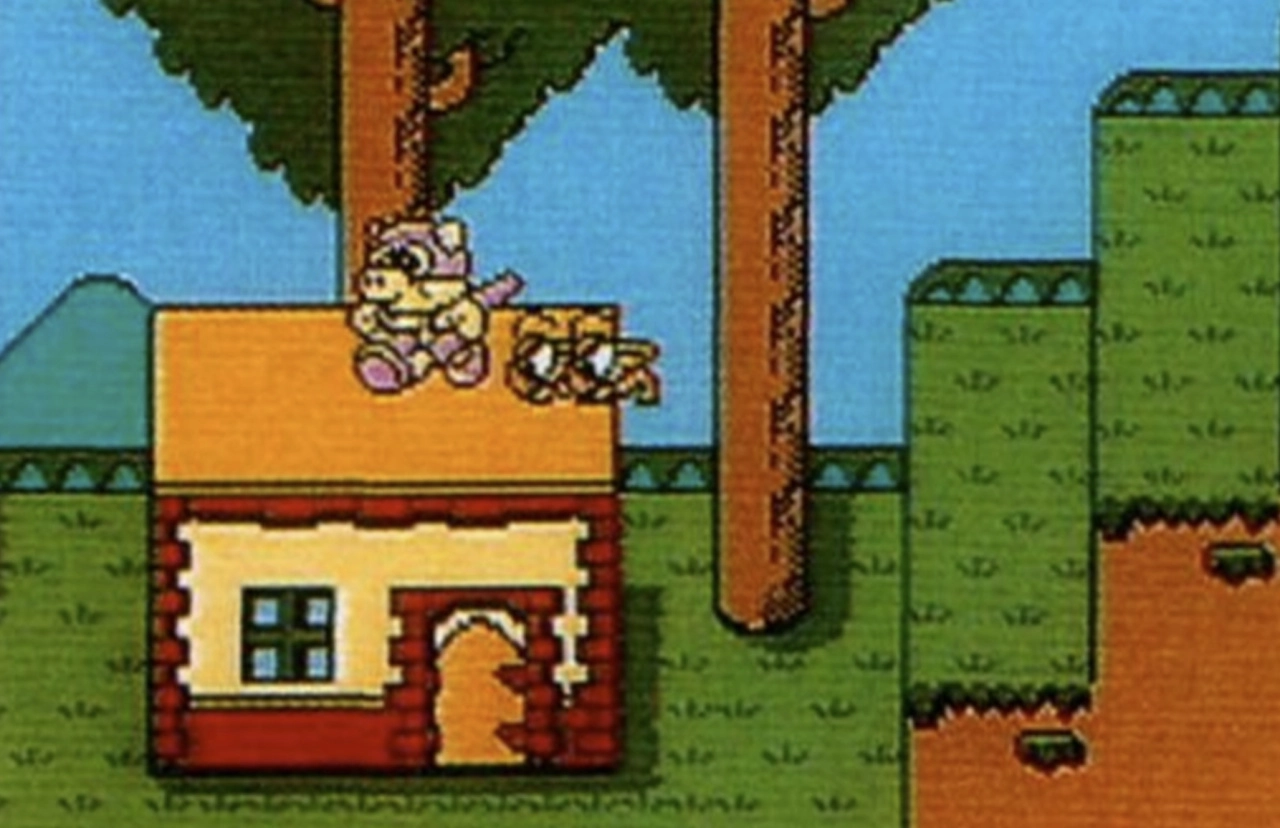
In the world of video game history, the rediscovery of lost or canceled games often sparks excitement amongst gaming communities and historians. One such event recently occurred with the discovery of a playable cartridge of Moeyo Butaman, a Famicom game that was in development in 1992 but never saw the light of day. This game, developed by Sigma Enterprises, features an intriguing blend of vertical and horizontal scrolling action, marked by its humorous and unique attack styles.
The character behind this quirky game, a pig-like hero, was designed by Gen Sato, an anime artist known for his work on The Quartz Dragon for the Famicom Disk System. Moeyo Butaman boasted a host of comical attacks, such as snorting, farting, and inducing earthquakes, making it a peculiar but engaging title in the realm of 2D platformers. It was showcased in Japanese gaming magazines, creating a buzz among the gaming community of that era. Unfortunately, due to unspecified production company issues, the project was axed, and the game never made it to store shelves.
For many years, all that remained of Moeyo Butaman were some scattered artworks and a few magazine screenshots, archived and discussed among the niche circle of Famicom enthusiasts. The mystery of why the game was canceled and what it fully entailed added to its allure, making its recent rediscovery all the more significant. The rediscovery was made by none other than Gen Sato himself, who found the game cartridge while sorting through old belongings, an artifact from his time at Sigma Enterprises. According to Sato, the prototype cartridge was utilized for debugging during development, which means it contained a playable version of the game.
The moment Sato announced the existence of the cartridge, interest in Moeyo Butaman was reignited. The gaming community, particularly those who cherish video game history and the preservation of games, saw this as a monumental find. It represented not just the unearthing of a playable piece of gaming history but also a personal relic of the past for Sato. His casual revelation about the game on social media platforms was met with enthusiasm and curiosity, as followers eagerly inquired about the possibility of the game being dumped online for public access.
Preservationists in the gaming industry see great value in these findings. Efforts to catalog and preserve video games, especially those that were canceled or lost, serve as important cultural work. They ensure that even games that never made it to market are remembered and studied, providing insight into the development processes and challenges of past gaming eras. As such, the preservation community is hopeful that Gen Sado might agree to make the game content accessible, contributing an invaluable piece to the global archive of video game history.
Moreover, this discovery echoes a broader trend in the gaming industry where interest in retro games is growing, not just among players but also among researchers and historians. These games are not only a testament to the technology and design ideas of their time but also offer a window into the cultural contexts in which they were created. While Moeyo Butaman might not have been a blockbuster hit or a game-changer in its day, its peculiar premise and the story of its cancellation and eventual rediscovery contribute to the rich tapestry of gaming history.
This particular finding also highlights the importance of individual collectors and developers in the preservation of video games. Without Sato's inadvertent retention of the debugging cartridge, the playful and innovative essence of Moeyo Butaman might have been lost to time. Now, standing at the intersection of personal nostalgia and collective memory, both Sato and the wider gaming community are at a pivotal point where decisions made about this game's future accessibility could enrich or impoverish our understanding of gaming heritage. This serves as a detailed reminder of how every piece of the past, preserved with care, can add significant insights to our understanding of technological and cultural development in the video gaming sector.

You must be logged in to post a comment!
