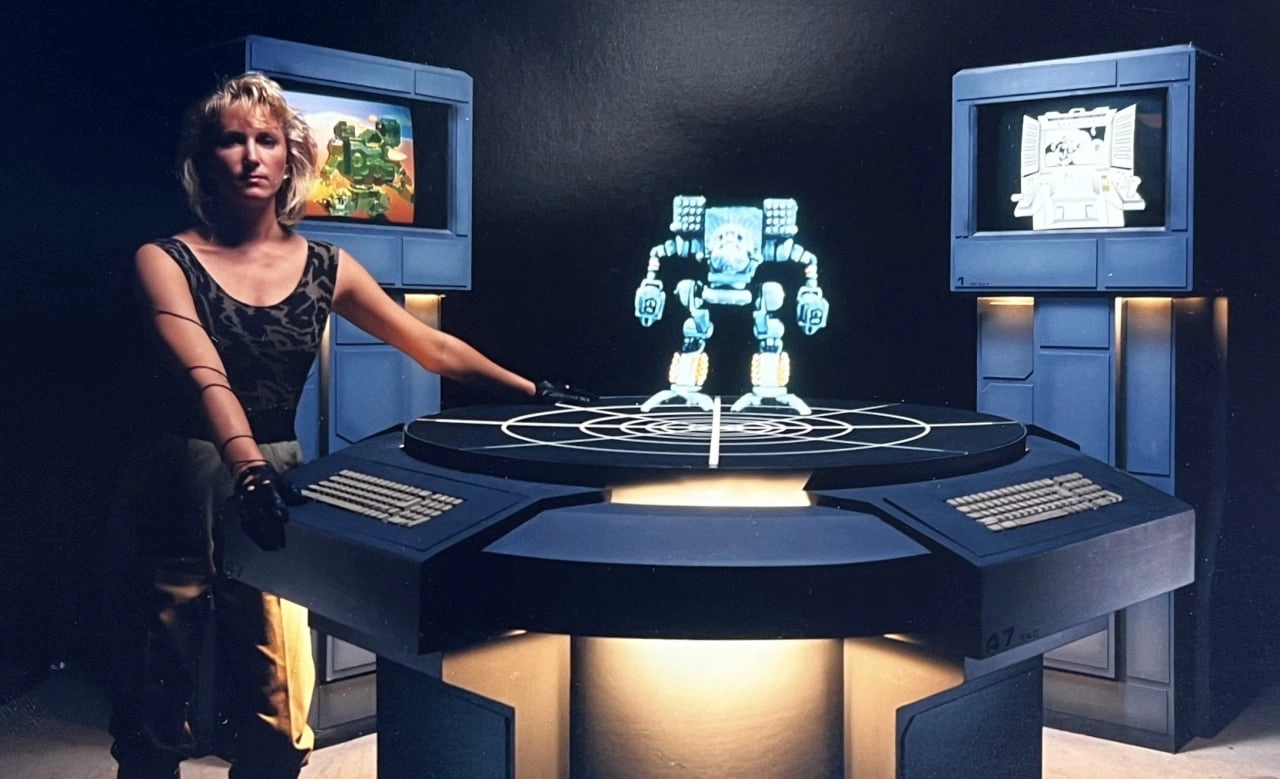
It's the late '80s and early '90s: home computers are a luxury, the internet is a mystery to the masses, and arcade games reign supreme. Yet, on the horizon, a new kind of entertainment is brewing, one that combines the thrill of gaming with the excitement of competitive sports. This unique concoction is given life by Jordan Weisman, an ambitious entrepreneur and academy dropout, who sees the future of entertainment rooted not in traditional arcades, but in networked microcomputers simulating high-stakes, futuristic battles.
Inspired by a state-of-the-art ship simulator and the notion of Star Trek’s starship bridge, Weisman sets out to create an experience that embodies sensory and information overload. He visualizes a place where players, surrounded by blinking lights, switches, and the hum of machinery, can become pilots of giant mechanical behemoths, battling it out in three-dimensional landscapes far more complex than anything 16-bit consoles of the time could imagine.
The dream culminates in the creation of BattleTech Centers, ambitious ventures scattered across the United States, Canada, and Japan. These centers, standing proud as theme parks for gamers, beckon aspiring mech pilots with their siren calls. Each player is ensconced within a 'pod'—a sophisticated cockpit simulator crammed with monitors, joysticks, pedals, and a dizzying array of controls. These battles take place not only among the players in the same room but are also beamed across continents, allowing for a level of interactivity and competition the world had never seen.
The genesis of this idea dates back to Weisman's times at the US Merchant Marine Academy in Kings Point, New York. A colossal $50 million bridge simulator serves as a muse for his vision, but Weisman believes he can achieve something similar for far less, using the relatively modest technology of Apple II computers. The initial attempt ends in failure, but it is merely a stumbling block for the tenacious Weisman, who reimagines his concept within the realm of tabletop RPGs—a decision that would set him on the path to eventual success with the creation of BattleTech, a franchise that takes the gaming world by storm.
With the success of BattleTech as a board game, expansion into the virtual realm becomes viable. Weisman partners with companies like Incredible Technologies to turn his vision into reality. Assembling custom hardware and cutting-edge 3D simulators, he creates a gaming experience unlike any other, debuting it at GenCon in 1988. What follows is a journey of innovation, trial and error, and much-needed investment—all in pursuit of immersive entertainment.
The BattleTech Centers are a blend of the technological edge of game development and the spectacle of Disney-esque theme parks. Pre-ride briefings and thematic décor transport players into the 31st century, setting the stage for an immersive adventure. This multi-sensory experience is identical to something right out of a sci-fi blockbuster. Yet, it is not just about playing a game. It’s about social interaction, bonding over shared adrenaline rushes, and capturing memories through game-printouts that players treasure and collect, akin to trophies of digital valor.
Post-launch, the centers link through ISDN cables for intercontinental mech warfare. Curiously, this novel feature initially fails to excite players, a mystery resolved when Weisman realizes the lack of connection these warriors feel to unknown adversaries. The solution materializes in the form of leaderboards, interviews, and tournament broadcasts, effectively sowing the seeds of eSports, long before the term becomes part of the gaming lexicon.
The technology powering these epic battles evolves over time, moving from the use of Amiga computers to PCs and transitioning from fake 3D to flat polygons and eventually fully textured environments. Upgrading from mono to stereo and then to surround sound adds to the immersion, tricking players into believing the graphics, too, have been enhanced.
Despite the initial success, the high costs of producing and maintaining such elaborate setups eventually lead to the decline of BattleTech Centers. As they become part of larger arcades, such as the Dave & Buster's chain, some of the magic fades. Yet, the financial pragmatism of this move, essential for the survival of the concept, sadly erodes part of the intimacy and community that made the centers so unique.
The physical centers may have vanished, but the spirit of BattleTech lives on. Loyal fans preserve the legacy with refurbished pods, keeping the dream alive in the gaming community. And for Weisman, the journey through the world of BattleTech is an illustration of his career philosophy—a trinity of storytelling, socialization, and mechanics, always in service of an immersive and shared experience, whether through theme parks, games, or any interactive endeavor.
It was this vision that ignited the gaming world of the '90s, laying the groundwork for the virtual landscapes we navigate today, proving that innovation not only changes the way we play but remains in our collective imagination, inspiring new generations of creators and gamers alike.

You must be logged in to post a comment!
