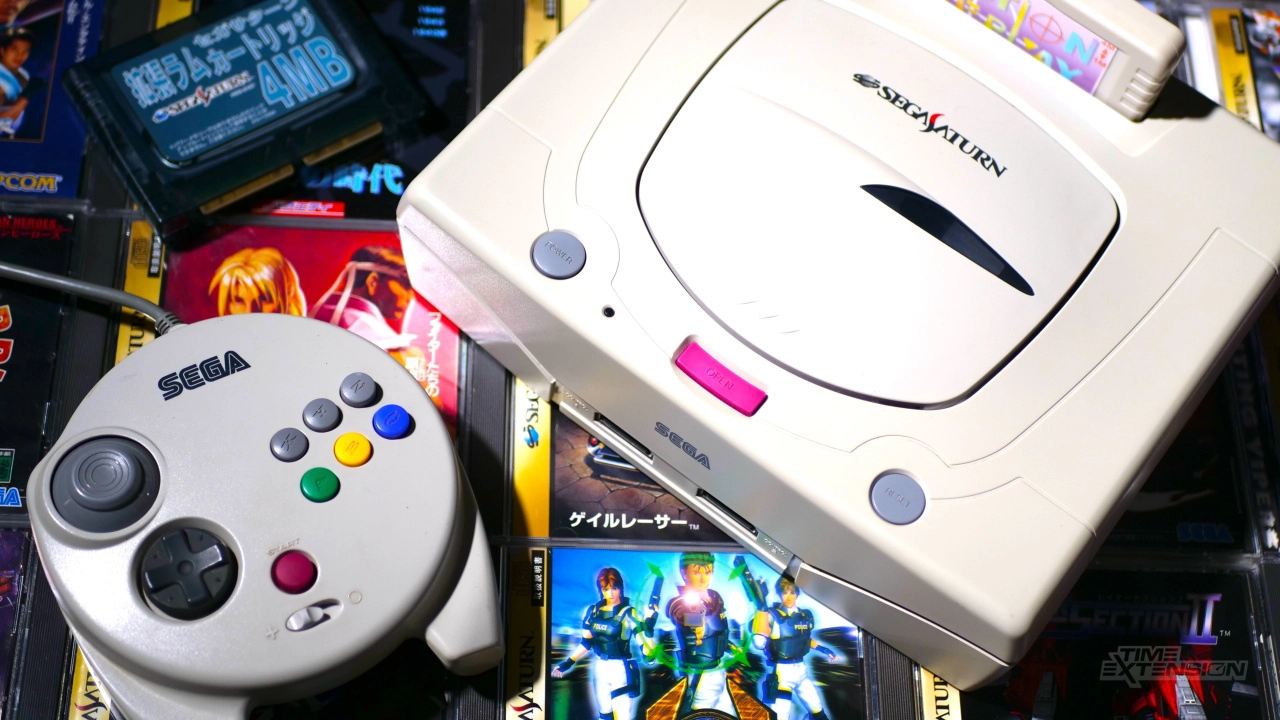
The Sega Saturn, released in 1994, originally received a lot of expectations from both fans and its creator, Sega. This anticipation was built on the success of its predecessor, the Mega Drive/Genesis, which was a formidable opponent against Nintendo's offerings and sold 30.75 million units worldwide. When the Saturn was unveiled, Sega hoped to dominate the market once again, leveraging popular arcade titles like Virtua Fighter and Daytona USA. However, this was also the period when Sony introduced the PlayStation, which dramatically altered the gaming landscape.
The PlayStation swiftly became the leading console of the 1990s, selling a tremendous 102.49 million units globally. In this new competitive context, the Sega Saturn struggled significantly in sales, managing to sell just 9.26 million units. This was far below the figures of its predecessor and a fraction of what the PlayStation achieved. Commercially, the Sega Saturn seemed relegated to the annals of gaming history as a notable failure, and is often cited as a contributing factor to Sega's eventual withdrawal from the hardware market.
Despite its commercial outcomes, the narrative that the Sega Saturn was a complete flop doesn’t capture the full picture. Contrary to this prevailing view, the Saturn was home to a magnificent library of games, boasting over 1000 titles. This is more than twice the number of games released on the Nintendo 64. Among these were some truly iconic games such as Panzer Dragoon Saga, Virtua Fighter 2, and Radiant Silvergun.
A closer look at the functionality and game offerings of the Saturn reveals its prowess in handling 2D graphics, making it the preferred platform for many fighting games from top developers like Capcom and SNK. The console's architecture, complemented by additional RAM cartridges, allowed it to deliver near-perfect arcade ports that were technically superior to those on the PlayStation, which often suffered from longer load times and frame rate issues.
In terms of market performance, while it's true that Saturn did not perform well in the West compared to its competitors, it was more successful in Japan and had a dedicated following. This was especially true amongst the hardcore gamers who valued the Saturn’s capabilities in specific genres like fighting and adventure games. Many of these games were only available in Japan, which meant that owning a Saturn provided a unique gaming experience inaccessible to those with other consoles.
In the years following its discontinuation, there has been a tendency among younger gamers and commentators on platforms like YouTube to label the Saturn as a failure, often overlooking its achievements and the context of its time. Fortunately, there are enthusiasts and gaming historians who continue to challenge this oversimplified view. Initiatives like the video from the Sega Saturn fan site, SEGA SATURN, SHIRO!, encourage people to rethink the console's legacy by showcasing its strengths and unique contributions to gaming.
The video juxtaposes the critical initial reception and price competition with Sony against a montage of the Saturn’s gaming highlights, advocating for recognition of the console’s value beyond mere sales figures. It underscores a sentiment that rings true for many gaming consoles and games throughout history: commercial success is not the sole indicator of a platform’s worth or the quality of its library.
In essence, while it cannot be disputed that the Saturn did not achieve the commercial heights reached by some of its competitors, such an assertion does not completely encompass the console's contribution to gaming. The Sega Saturn offered extraordinary games and experiences that were ahead of its time, making it a treasured platform among those who had the opportunity to experience its library. As time passes and narratives evolve, it becomes crucial to acknowledge that the Saturn, much like other underappreciated platforms, played a pivotal role in shaping gaming culture and deserves to be recognized for its innovation and breadth of offerings.

You must be logged in to post a comment!
