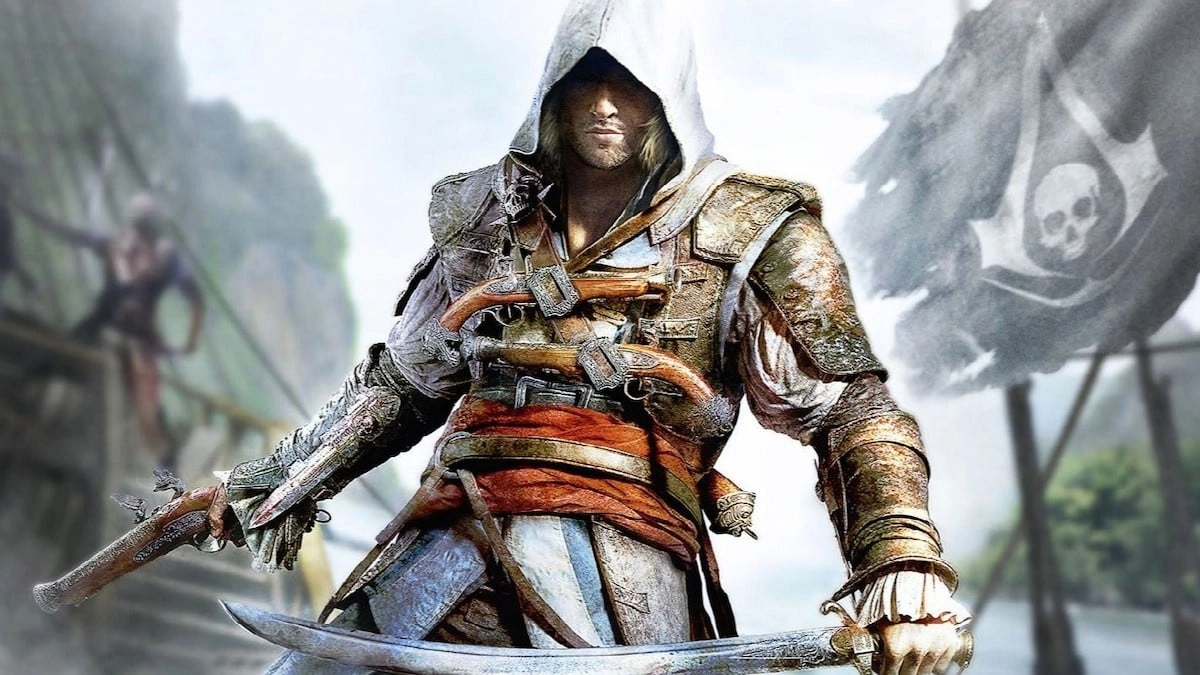
In a remarkable twist within the gaming community, the recent release of Skull and Bones has led to an unexpected resurgence of interest in an earlier pirate-themed game, Assassin's Creed IV: Black Flag. On the eve of Skull and Bones' launch, only 971 players were concurrently enjoying the seafaring adventures of Black Flag. However, the very next day, that number jumped to 1,662 and continued to rapidly climb in the following days.
Published by Ubisoft just like its indirect successor, Black Flag had been adrift in the ocean of gamers' memories since its peak popularity about a decade ago, when it hit an all-time concurrent player count of 16,000. However, Skull and Bones' entrance into the market seems to have raised all ships, triggering a wave of nostalgia or curiosity among the gaming community, leading to a new peak. The number of concurrent players reached 3,594 within roughly a week of the release of Skull and Bones, a significant resurgence for such an aged title.
Skull and Bones, developed by Ubisoft Singapore, has been a topic of much discussion even before it hit the virtual shelves. Anticipation for the game was high, and many had expected it to be a spiritual successor to Black Flag due to the shared theme of high-seas piracy. The lengthy development period of Skull and Bones, coupled with high expectations from gamers who had savored the naval battles and pirate lifestyle in Black Flag, set a difficult course for the new title to navigate.
This surge in Black Flag's popularity could be attributed to various factors, not least among them players' comparison of the new game with their cherished memories of Black Flag. While Skull and Bones has indeed introduced noteworthy naval gameplay, it hasn't been immune to criticism. Some have remarked that their experience with Skull and Bones underscored what they loved about Black Flag, leading them to revisit the older game. The anticipation for a new pirate adventure may have rekindled their fondness for Ubisoft's previous foray into the golden age of piracy.
Adding to the complexity of Skull and Bones' reception is the fact that it's been released as an Epic Store exclusive, which makes it challenging to accurately gauge the game's success. What’s more, Ubisoft has notably marketed the game as a "AAAA" title, setting high expectations with its $70 price tag. Despite this, sources at Ubisoft have noted around 850,000 players have tried the game, buoyed in part by those taking advantage of the eight-hour free trial offered by Ubisoft.
The gaming community's response to Skull and Bones has been a mixed bag of enthusiasm, critique, and nostalgia. Some players express a renewed interest in Black Flag due to the similarities and differences between the games. In contrast, others simply wanted to relive the pirate experience that they already knew and loved. Additionally, because player numbers are not readily available from console users, the full impact of Skull and Bones on Black Flag's resurgence is likely more substantial than PC data alone indicates.
This phenomenon does beg the question of how a new game can, perhaps unintentionally, breathe new life into its predecessors. It showcases the effects of gaming nostalgia and the powerful connection players have with their past gaming experiences.
As the digital seas calm from the recent storm of activity surrounding the release of Skull and Bones, one thing remains clear: gamers' love for pirate-themed adventures is as strong as ever. Whether it's the latest title with cutting-edge graphics and gameplay mechanics or a classic that captures the romanticism of the pirate era, titles like Skull and Bones and Assassin's Creed IV: Black Flag continue to captivate and engage player’s imaginations, hoisting the Jolly Roger for fans old and new alike.

You must be logged in to post a comment!
