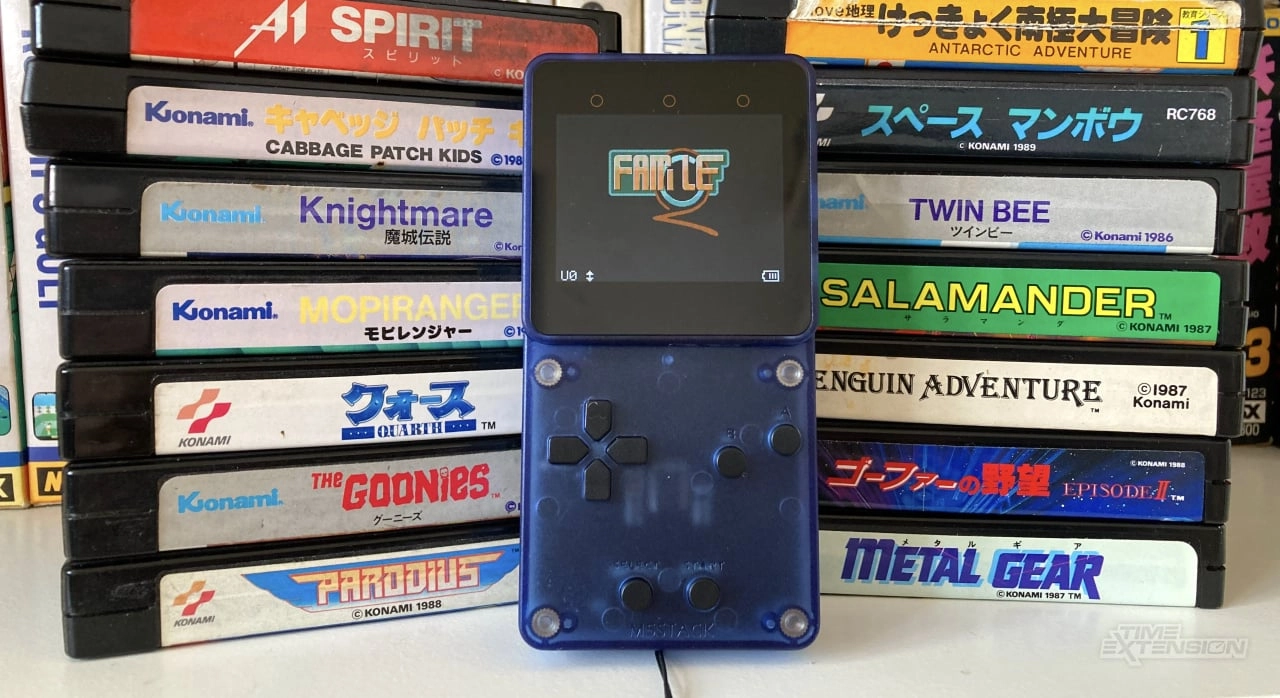
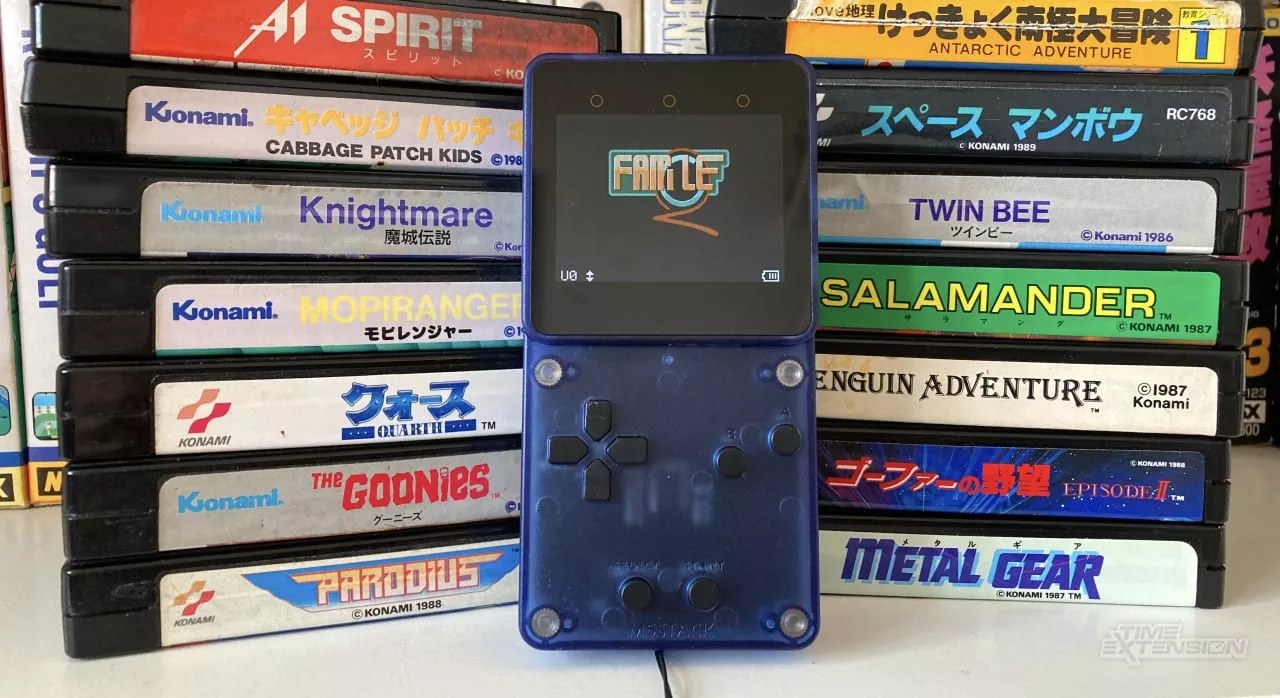
The MSX computer line, which began in 1983, was initially designed as a standardized system that various manufacturers could produce while adding unique features to their versions. After decades, the MSX3 project was announced with one of its elements—the MSX0 Stack handheld—now available for import as a development kit.
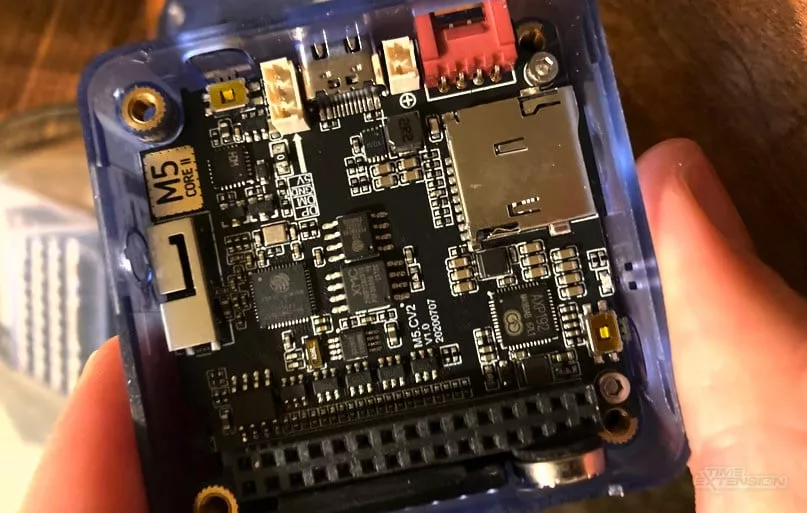
With the MSX0 Stack being the first portable MSX, it comes designed in collaboration with M5 Stack, which specializes in modular computing. This partnership aims to push the boundaries of what a handheld MSX can achieve, integrating potentials like IoT capabilities for broader connectivity.
From an unboxing perspective, the MSX0 Stack arrives with several components and additional games provided by the Japanese video game retailer BEEP, alongside a pre-loaded micro SD card filled with essential MSX software. This setup suggests readiness for immediate use, but the reality of its operation reveals a more complex scenario.
Upon startup, users are greeted with the classic MSX interface. However, the new hardware includes a touch screen and customizable interface which potentially runs different operating systems or applications simultaneously. Despite being intriguing, the technology proves more experimental than functional, placing early adopters in the role of testers rather than end-users.
The primary selling point of the MSX0 Stack, its game-playing capability, has unfortunately been its greatest disappointment. Compatibility issues abound, with the already limited pool of pre-loaded games showing problems such as graphical glitches or lack of enjoyable gameplay. Moreover, adding new games has proven difficult due to a firmware setup that does not straightforwardly support loading new ROMs without complex workarounds.
For those interested in expanding their game library, the MSX0 Stack has partnered with Project Egg, a platform for distributing classic Japanese games. Although this partnership allows access to certain games, the process involves buying games, which subsequently need to be loaded onto the system through a firmware update, awkwardly transforming the MSX0 Stack to play only one game at a time.
Despite these innovative approaches, user experiences have highlighted several flaws. The touch screen sometimes loses sensitivity, and the system setup can lead to accidental misconfigurations. Besides, the tangible controls like the gamepad face unit, while functional, emit a clicking noise that might be bothersome to users and those around them.
The concept of a portable, expandable MSX system is ambitious and aligns with the inventive spirit of the original MSX line. Yet, the execution reflected in the MSX0 Stack is currently far from achieving its potential. The device's modularity and dual-operating system capability suggest a future where the device could seamlessly switch between being a gaming console and a practical computing tool.
However, the current state of MSX0 Stack requires purchasers to have considerable technical skills or the patience to navigate its unfinished ecosystem. This makes it suitable only for the most dedicated enthusiasts or developers interested in exploring its capacities rather than casual users looking for a ready-to-use system.
Until significant improvements are made, particularly in user interface design and game compatibility, the MSX0 Stack will remain a niche product. Prospective buyers might consider waiting for further developments or looking into other retro gaming solutions that offer a more reliable and enjoyable experience right out of the box. Meanwhile, the vision of a revived, modern MSX system remains an exciting but unfulfilled promise.

You must be logged in to post a comment!
