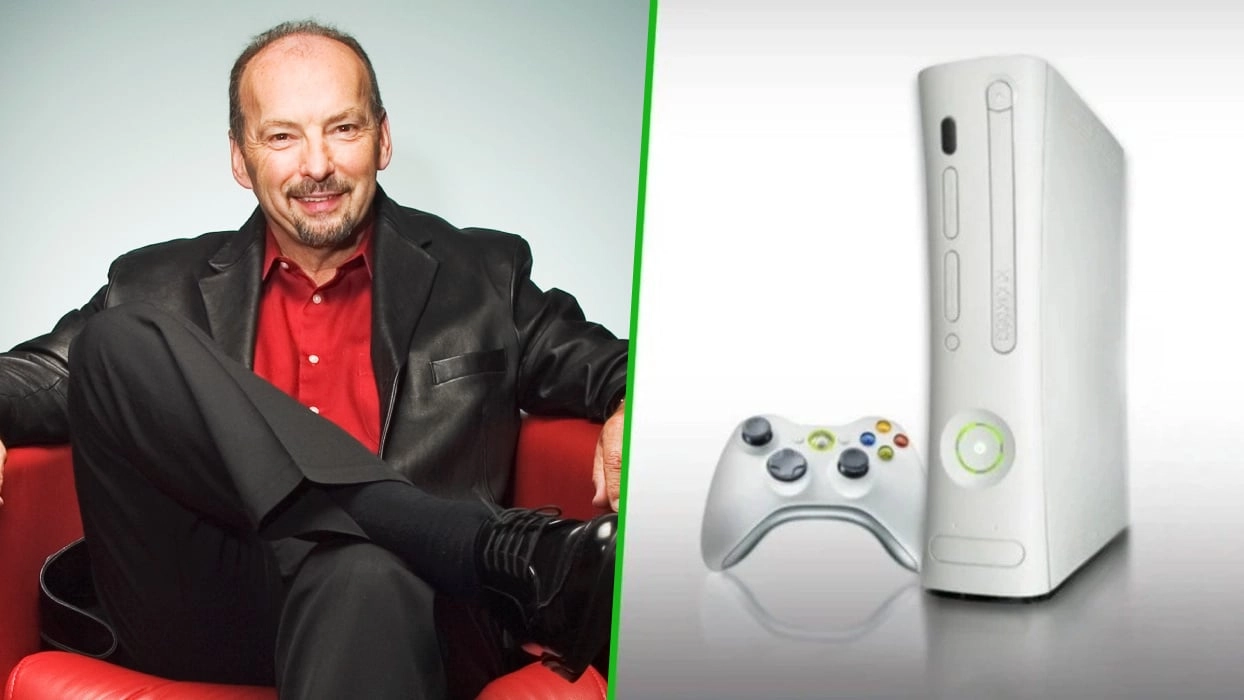
The video gaming industry has witnessed an extraordinary evolution over the past few decades, marked not just by graphics improvements or gameplay innovations, but also by a changing landscape in how games are delivered and played. Part of this evolution involved the recurring question about the continuation of console gaming—a speculation that has existed as long as consoles have been around. Interestingly, this question wasn’t just a debate among gamers and analysts, but also a concern within the gaming industry’s leading companies, notably including Microsoft during the Xbox 360 era.
Former Xbox boss Peter Moore recently spoke about internal deliberations at Microsoft during his tenure, dating back to as early as 2007. At that time, the potential demise of console gaming was a hot topic. The discussion centered around whether the Xbox 360, a console that had just a few years under its belt since its 2005 launch, would be one of the last of its kind. The team at Xbox was contemplating the future of gaming hardware and its sustainability, trying to anticipate the next big shift.
Moore, in his conversation with the media, expressed that during the mid-2000s, there was genuine concern over the longevity of console cycles. With usually five to six years between new console releases, they speculated about future advancements. Would televisions soon be equipped with chips robust enough to run games, eliminating the need for a separate console? Would the personal computer experience a resurgence, becoming the primary platform for gaming instead? Or perhaps, the gaming world would shift towards an entirely new paradigm that would make traditional console hardware obsolete.
The worries at Microsoft were underpinned by a broader debate about technological convergence, where multiple forms of media and technology platforms gradually blend into a single device that could meet all consumer needs. In this predicted future, dedicated gaming consoles could very well become a redundant piece of technology as televisions or even smartphones evolved to offer comparable gaming experiences.
Despite these concerns, the gaming community has seen continued interest and investment in console gaming. Microsoft went on to release subsequent generations of consoles, including the Xbox One and the more recent Xbox Series X and S, highlighting that the demand for dedicated gaming consoles has not waned as much as some in the early 2000s feared. These systems have brought significant advancements in processing power, graphics, and gameplay experiences, pushing the boundaries of what is possible in-home gaming.
Even as Microsoft prepared for the continuation of the console market, it also began exploring alternate gaming futures, embracing the growing shift towards digital distribution and cloud gaming. Services like Xbox Game Pass and Project xCloud (now part of Xbox Game Pass Ultimate) reveal Microsoft’s adaptation to a multifaceted gaming ecosystem where consoles coexist with other platforms, rather than being replaced entirely.
Moreover, these services have initiated a transition that strikes a balance between traditional console gaming and new cloud-based solutions, gradually moving the gaming industry towards a more hybrid model. The cloud-only gaming future that Microsoft hints towards might become more prominent, but it is clear that, at least for now, it would not render consoles obsolete. Instead, the role of consoles might shift as part of a broader, interconnected gaming environment.
Evidently, while the demise of console gaming has been speculated numerous times over the years, the market has shown resilience and adaptability. Current trends suggest that a future where gaming is entirely independent of hardware is still distant. The dedication of companies like Microsoft to keep producing powerful consoles, coupled with their efforts to explore online and cloud gaming services, points to an industry that is not choosing one avenue over another, but rather expanding in all directions to cater to a diverse gaming audience.
The actions of Microsoft, as well as those of its competitors, indicate that the gaming industry is headed toward a future where options and accessibility are king. Whether a player prefers the traditional console in their living room, a compact handheld device on the go, or streaming games from the cloud to their mobile phone, the ultimate goal seems to be to keep gaming inclusive and variable, responsive to the many preferences and lifestyles of gamers around the world.
Thus, while the discussions that took place within Microsoft in 2007 are an interesting footnote in the history of gaming, they also serve as a reminder of the rapidly changing nature of technology and consumer habits. It seems that for every prediction of an end, there is simply a new beginning, and in the world of gaming, the only constant is change itself.

You must be logged in to post a comment!
