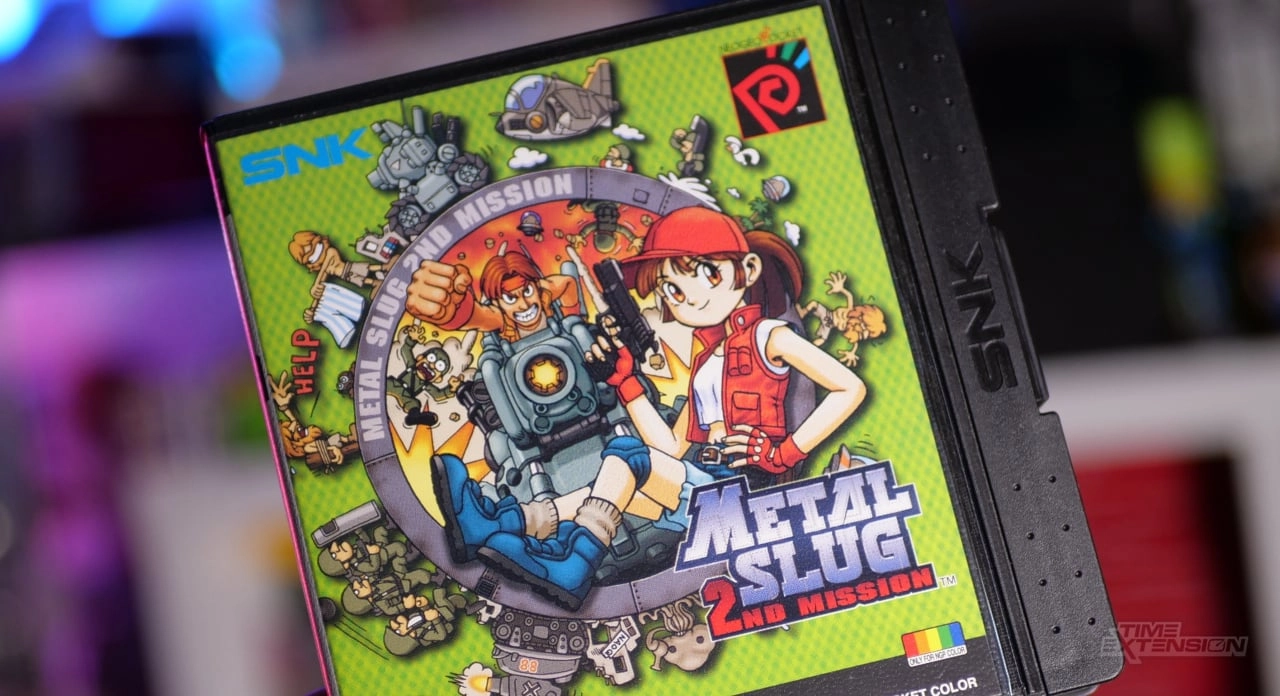
The technology of Field-Programmable Gate Arrays (FPGA) has become a beacon of hope for preserving the digital legacy of old gaming systems. Leading this technological nostalgia is Jotego, an esteemed FPGA developer, who has recently shared an update that has piqued the interest of retro gamers and tech enthusiasts alike. He has been deeply engrossed in creating an FPGA core for the Neo Geo Pocket, a task he describes as both challenging and enlightening.
Two turbulent years have passed since Jotego embarked on this project. Throughout this time, he has experienced the peaks and valleys of FPGA development. The core, which is designed for use in platforms like the MiSTer and Analogue Pocket, has encountered several roadblocks, not least of which is the emulation of the Toshiba 900H CPU – a cornerstone component of SNK's compact gaming device.
Jotego has openly disclosed that the journey has been rough. The Neo Geo Pocket core development stands as the project with the longest 'time to market' in his career. He remembers dedicating entire months to the project, only to face setbacks that seemed insurmountable. Efforts to collaborate with other developers yielded little to no progress. Despite the considerable effort and time vested, the project reached a point of stagnation due to persistent crashes and elusive bugs, prompting Jotego to take a two-month hiatus to reassess the situation.
The core problem, according to Jotego, centers around accurately replicating the unique Toshiba 900H CPU. This 16-bit CISC CPU is described as a "hypervitaminated" Z80, a reference to one of the most widely used CPUs in the history of computing, albeit significantly more complex. The encoding of the Toshiba CPU's instructions was notably diverse, complicating the project further. Every time a new feature was integrated, it became increasingly difficult to wrap one’s head around the sprawling design. This led to unease and a stark realization – he was slowly losing control over the complex task at hand.
In the face of these difficulties, Jotego found himself at a crossroads. A new approach was required – one that favored development time and the ability to debug over the sparing use of FPGA resources. Contrary to the traditional hardware engineering mindset that usually focuses on minimizing resource usage, Jotego understood that from a user's perspective, the percentage of FPGA resources consumed by a core was irrelevant.
With renewed determination, Jotego reconsidered the CPU architecture, opting instead for a microcoded approach. Such a design would enable the CPU to be assembled from a series of simpler hardware components, all guided by a control logic following a sequence that resembles software. This strategic shift not only simplified the hardware but also sparked a positive change in Jotego's outlook toward the project. The once daunting and complex operations could now be broken down into manageable and sequential combinations of smaller tasks, which substantially eased the development process.
This pivotal redesign process took Jotego approximately two weeks. He is currently transitioning to the testing phase, promising to furnish another update in the following two weeks. Furthermore, showcasing the diversified nature of his projects, Jotego also mentioned that his JT1942 MiSTer core is now available on the Analogue Pocket. This core supports three of Capcom's earliest successes: 1942, Pirate Ship Higemaru, and Vulgus.
The FPGA community and retro gaming aficionados are closely monitoring Jotego's endeavors. His dedication to overcoming the intricate challenges presented by older gaming systems is not merely an act of passion but a vital effort in preserving a slice of gaming history. Every breakthrough means more than just technical success; it represents the revival and sustenance of the collective memories enshrined in these retro gaming consoles. As Jotego continues with his work, the community waits with bated breath for the next breakthrough that will bring the nostalgic experience of the Neo Geo Pocket back to life through modern emulation techniques.

You must be logged in to post a comment!
