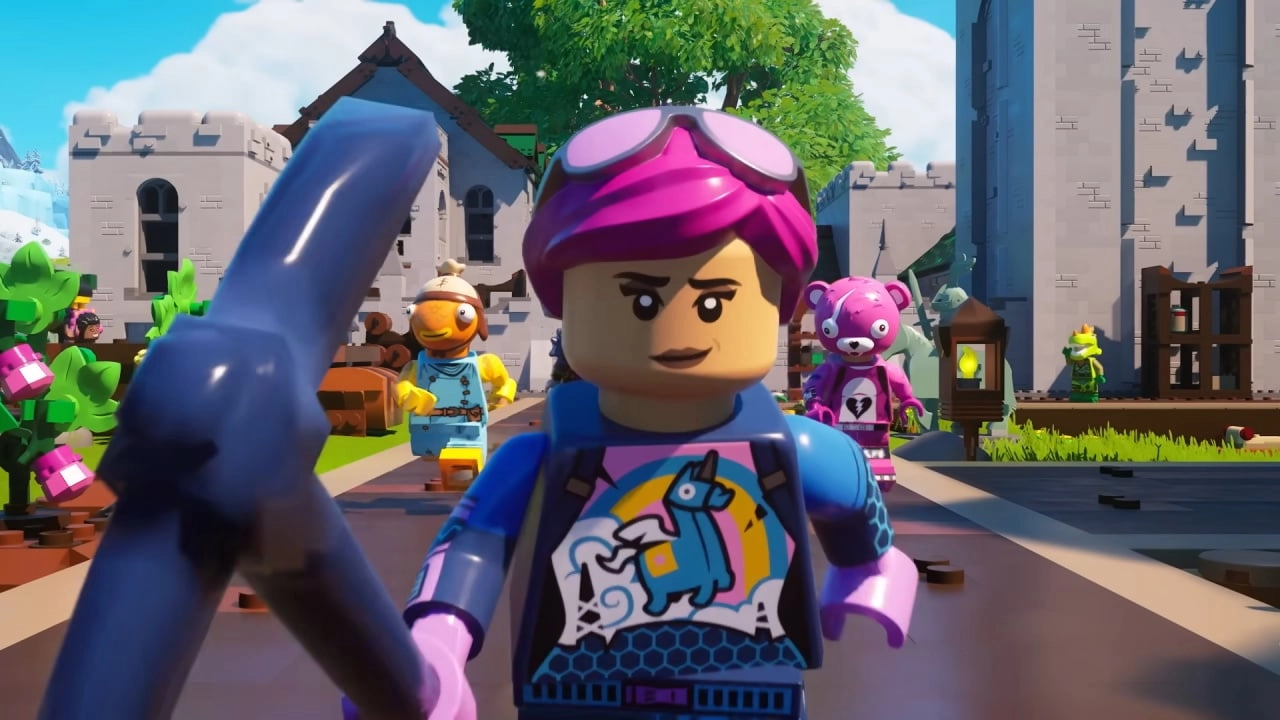
In the constantly evolving world of video games, collaborations between established franchises can generate a great deal of excitement, as well as debates about game design choices. One of the latest gaming crossovers, LEGO Fortnite, which integrates the playful essence of LEGO with the dynamic gameplay of Fortnite, has sparked considerable discussion online about its mechanics and features.
However, Cristina Ramos, a former senior designer at Epic Games, recently expressed her disappointment with a design choice surrounding the game, specifically regarding the exclusion of a combat mechanic deemed "too hardcore." Ramos, who was integral to the development of the game, has since moved on and is now working with The Game Kitchen, the studio behind Blasphemous.
Her words made waves when she took to Twitter in response to a comparison made between LEGO Fortnite and the notoriously challenging Dark Souls. Acknowledging the commendations for the combat in LEGO Fortnite, she highlighted the irony in Epic Games' decision to exclude the Z-targeting feature, a method designed for players inexperienced with 3D gaming environments, originally developed by Nintendo for The Legend of Zelda: Ocarina of Time in 1998.
Z-targeting essentially allows players to lock onto targets, streamlining combat and navigation, and has since become a staple in many action-adventure games. In the context of LEGO Fortnite, an open-world adventure game that includes elements such as combat and dodging, the absence of such a feature can be particularly felt.
Despite the fanfare surrounding LEGO Fortnite's polished presentation, Ramos indicated that not all the weapons in the game were fully realized. She stated that only "temporary prototype versions" were developed and suggests that more refined iterations never reached completion.
This inside look prompts the gaming community to reflect on what might have been if Z-targeting had been incorporated. Notably, LEGO Fortnite has experienced immense popularity, boasting a peak of 2.45 million concurrent players recently.
The game's success is accompanied by changes in other Epic Games properties too, like Rocket Racing's introduction and the recent modification to Rocket League's trading policies, aligning with their approach to game cosmetics and item shop policies—to mixed reactions from the player base.
In light of Ramos's comments, many fans and players are left pondering whether the absence of Z-targeting in a game like LEGO Fortnite denotes a trend toward simplifying game mechanics for broader accessibility, or if it's simply a missed opportunity to enhance the gaming experience for players.
While Epic Games has not openly responded to these statements, and it remains unknown if they will reconsider such design choices in the future, the dialogue around what makes a game "too hardcore" continues to unfold. The debate not only addresses accessibility concerns but also preservation of depth and complexity that many gamers appreciate in their experiences.
Aside from LEGO Fortnite's inner workings, a broader horizon of gaming updates and releases continues to capture interest. Games like Disney Dreamlight Valley welcome new updates, and the Nintendo Switch system persistently evolves with new titles and features. Meanwhile, the gaming community stays vigilant, not just enjoying current offerings but eagerly discussing and dissecting the intricacies and decisions that mold their favorite pastimes.
As LEGO Fortnite enjoys its place in the limelight, the discussions stemming from Ramos's revelations serve as a reminder that gaming is as much about the features we see on the screen as it is about the choices made behind the scenes. Whether or not Z-targeting was too hardcore for LEGO Fortnite may be subjective, but it opens up a larger discourse on game design philosophy and player expectations, keeping the industry dynamic and the conversations around it ever engaging.

You must be logged in to post a comment!
