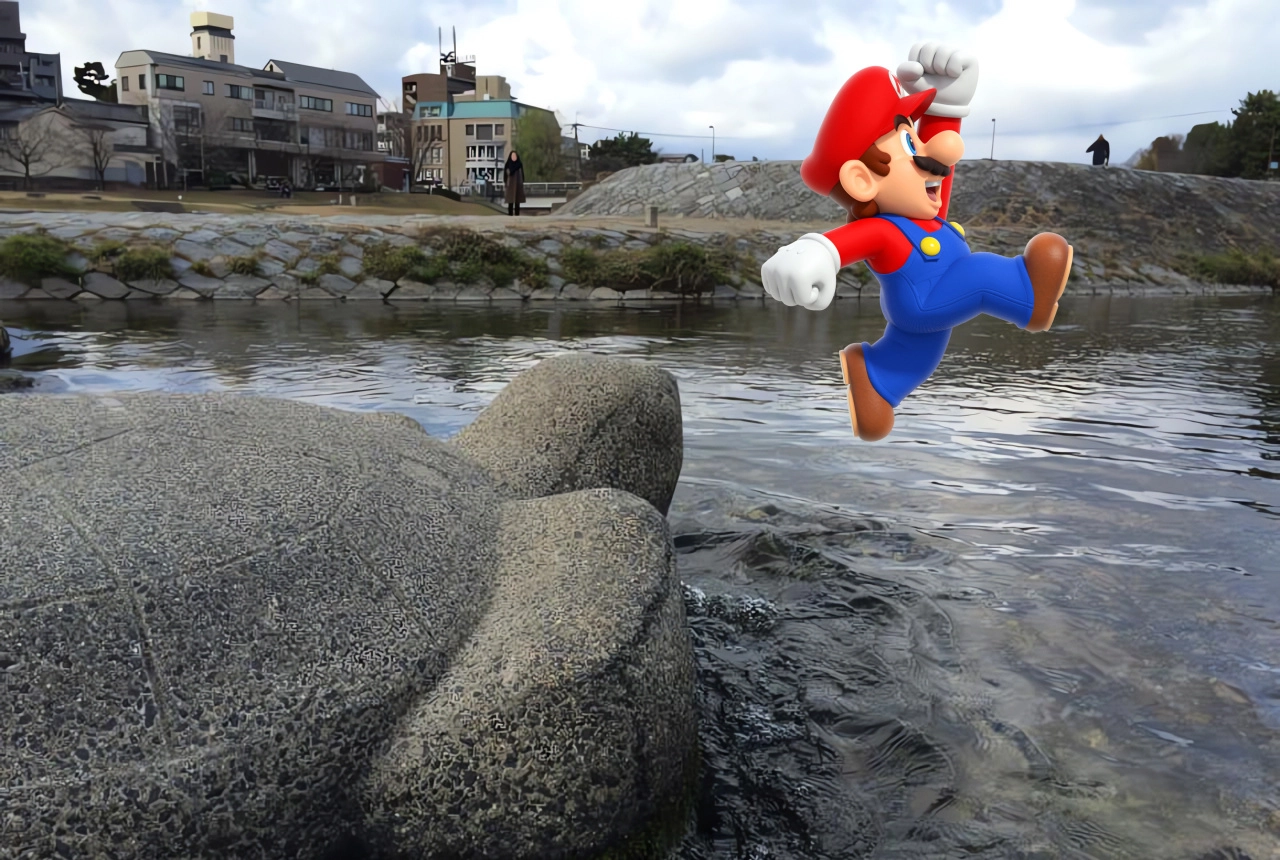
The city of Kyoto, known as the birthplace of Nintendo, houses an interesting feature - turtle-shaped stepping stones across its canals. Drawing connections between these real-world structures and the virtual world of Super Mario Bros. has intrigued many, including former games journalist Frank O'Connor. This curiosity stems from the question: Did these stones in any way influence the creation of one of the world’s most beloved video games?
Frank O'Connor's relationship with these turtle stones began during a trip to Kyoto connected to a Nintendo competition. Walking along the river near his hotel, O'Connor discovered these stepping stones. As a gamer and journalist, he couldn't help but draw parallels with the process of hopping across these turtles to crossing hazards in the iconic Super Mario Bros., where players would jump on digital turtles to progress through levels. This realization created a peculiar and possibly significant connection between Kyoto’s physical landscape and the digital realm innovated by Nintendo.
Such comparisons invite speculation on whether there is an actual link between the steppers and the gaming powerhouse's creation. Shigeru Miyamoto, the legendary game designer behind Mario, has acknowledged his childhood explorations in forests and caves around Kyoto as inspiration for his work. However, whether these particular stones inspired the turtles in Mario is not well documented.
Delving into the history, we find that both O'Connor and David Sheff, in his book "Game Over," highlighted Miyamoto's childlike discovery and wonder spurred from playing outdoors. This sentiment trickles into the world of Mario, where players are whisked away to magical kingdoms filled with bizarre creatures and enchanting landscapes.
The significance of the stepping stones, however, remains a puzzle. It was proposed that they may have been installed as a playful homage to the prevalent Nintendo culture within Kyoto. Yet, concrete data was necessary to substantiate such claims. This quest for verification led to an inquiry with the Kyoto City Tourism Association, who clarified that the turtle stepping stones were installed around 1992 or 1993, long after the release of Super Mario Bros. The structures, they explained, were created to protect the river's bottom and offer recreational spaces for residents. They were a part of river environment improvements and not a tribute to any game.
Nonetheless, the intrigue around these steppers does not diminish their charm. They serve as an amalgamation of functionality and artistic design, intentionally or not evoking reflections of the digital turtles kids and adults alike have jumped on for decades in the Super Mario series. The stones symbolize more than a civil engineering project; they represent the fusion of urban design with cultural iconography, regardless of their origin.
While the exact connection between Kyoto's turtle stepping stones and Mario remains elusive, what stands undeniable is the city’s magical quality that can incite a sense of nostalgia and association with video game culture. The link might be coincidental or even speculative, but it is a rich addition to the tapestry of gaming folklore. Whether it was a conscious choice by designers or a happy accident, the resemblance feeds the human appetite for discovering patterns and connections, often blurring the lines between reality and the virtual worlds that games permit us to venture into.
The story of the turtle stepping stones serves as a reminder of how sometimes life and art are intertwined in ways that may never be fully unraveled. Yet, this mystery is what makes the exploration of their origins so compelling. Every block and every turtle carry a possibility, whether it's a riverbed stabilizer or an inadvertent nod to a cultural phenomenon; they help cultivate a sense of unity between the fantastical escapades in games and the quaint charm of reality. For visitors and locals of Kyoto, these stones are not just a means to cross the river but stepping stones to the imagination, where game, history, and life converge.

You must be logged in to post a comment!
