There's a special kind of magic in the dark, beeping arcades that many of us remember from our childhoods. While technology has leaped forward, bringing us stunning graphics and virtual worlds we can explore from our living rooms, there's still a nostalgia for the arcade's unique tactile experience. Understanding this sentiment, a creative Japanese gamer has found a way to recreate some of that arcade allure within the comforts of their own home.
Transforming familiar games into larger-than-life experiences often requires two things: a creative vision and a technical ability. This Japanese gamer, using the Twitter handle @noguo_, demonstrated a plethora of both. They have taken the Nintendo 3DS game, After Burner II, and elevated it beyond its handheld origins by combining modern tech with a retro gaming feel.
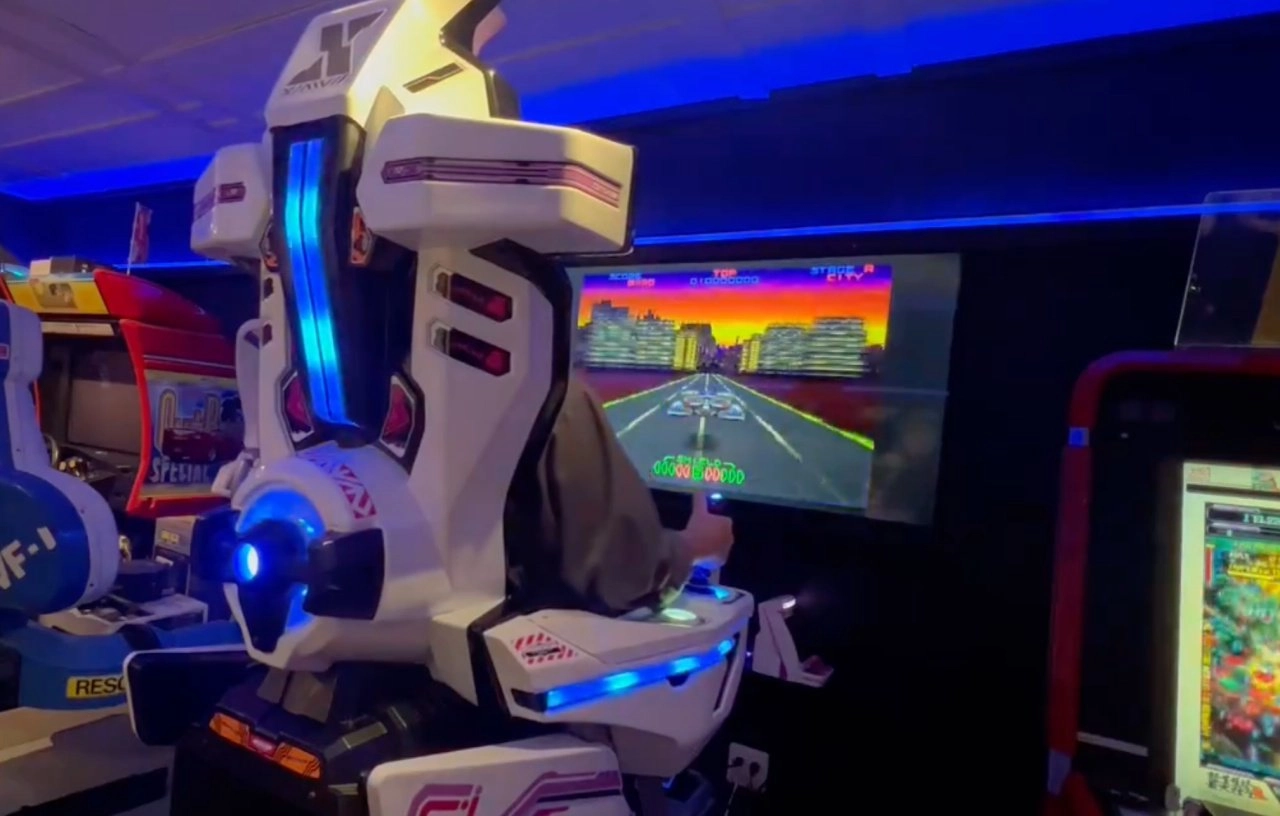
Their setup involves a play chair that's far from ordinary. The 'moving gaming chair' is a modified rig that integrates components from a defunct Square Enix arcade game, Starwing Paradox. When the Twitter handle @_rcd33 shared images and videos of the chair, it wasn't just any piece of furniture. It had the ability to tilt and move in sync with the gameplay, and it was decked out with flashing warning lights to mimic the dynamic feel of an actual arcade cabinet. This “moving chair” is not some factory-spec product you could just buy off the shelf; it's been custom-built to deliver a specific experience.
To complete the illusion, After Burner II is projected onto a domed screen, seemingly transporting the player into the heart of the game, with the screen tilting in unison with the chair for a fully synchronized playing experience. Even in an era where virtual reality offers intense immersion, there's something uniquely compelling about a physical setup that responds to gameplay.
Moreover, this customization isn't limited to just After Burner II. The innovator has also adapted the same technology to play another Sega classic, Space Harrier, using the same enthusiastic craftsmanship. Their Twitter posts demonstrate a seamless integration of the 3D game into their personal arcade setup, confirming the chair's versatility for multiple titles.
This delightful contraption has even resonated with other unique gaming installations, such as Taito's Sega-inspired Night Striker, with footage found using the hashtag for the 'moving gaming chair' on Twitter. These clips are not just comments on nostalgia or a display of admiration for the past. They're a demonstration of passion for gaming and a clever blend of bringing old-school vibes into the present-day tech landscape.
For anyone avidly following or involved in the gaming community, this might bring to mind discussions about preserving the history of video games and the experiences surrounding them. The technological evolution in gaming has been rapid and relentless, often leaving behind the ways we used to play. However, as this Japanese gamer's inventive setup shows, those old experiences don't have to be lost to time. They can be reimagined, preserved, and enjoyed with a bit of ingenuity and dedication.
This approach also challenges the financial constraints around collecting arcade cabinets, which can be expensive to purchase and maintain. Through such innovative projects, gaming enthusiasts can bring the essence of the arcade experience to their homes without having to invest in a full-sized, coin-operated cabinet.
The efforts of this particular gamer underscore the community's desire to hold onto the tactile and physical interactions that made early video games so mesmerizing. It serves as an inspiring example for others who might want to undertake similar projects, showing that the tools for immersive play aren't restricted to expensive VR sets or cutting-edge consoles but can also be created through creative engineering.
As the gaming world looks to the future with new consoles, cloud gaming, and ever-improving VR, remembering and honoring our past experiences can give us a unique appreciation for where we've come from and where we're going. It's through the lens of innovative recreations like this that we continue to enjoy the blend of retro and modern gaming, allowing the new generation of gamers to catch a glimpse of the past while being firmly planted in the present. This Japanese gamer’s project is not just a fun homage to the arcades of yore; it’s a statement about the vibrant and enduring culture of gaming across the world.

You must be logged in to post a comment!
