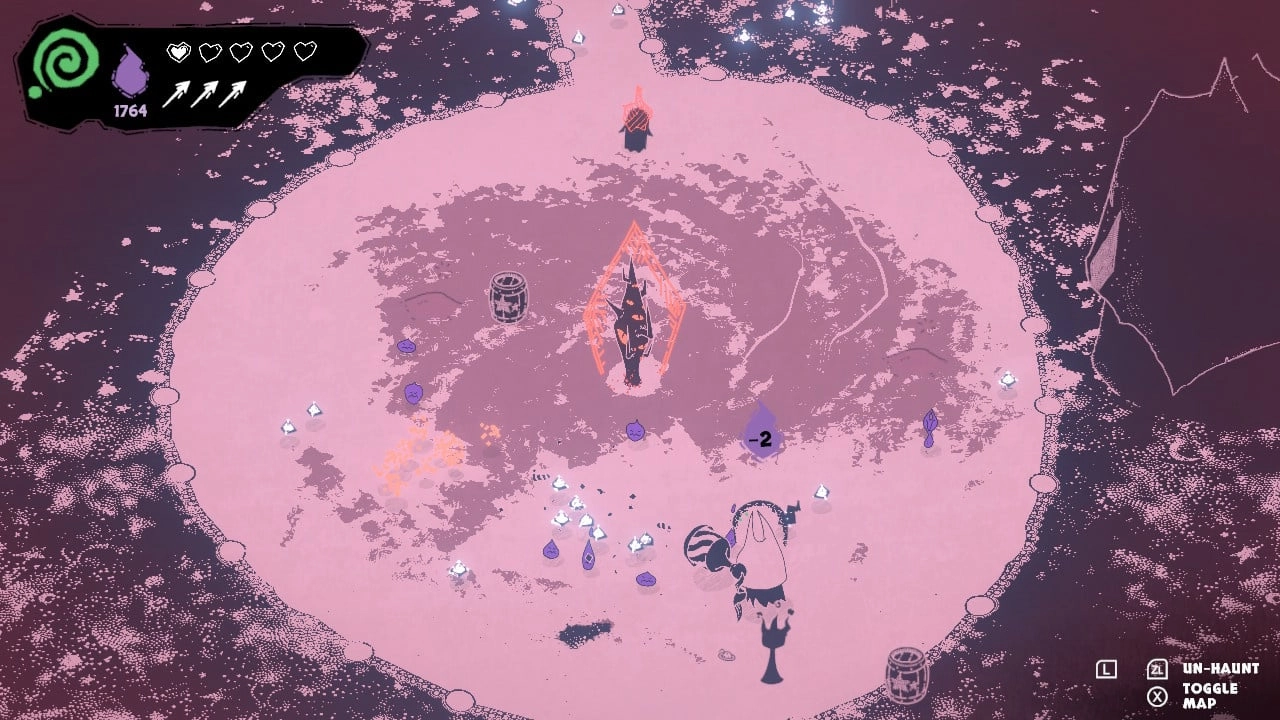
Hauntii, developed by the small indie team at Moonloop Games, promises an intriguing combination of gameplay styles and artistic influences. As players wake up in a monochrome world as a wisp-like ghost with no memories, they are quickly introduced to a mechanic reminiscent of Super Mario Odyssey’s hat possession. This allows them to possess objects and creatures around them to solve puzzles and progress in their journey through the afterlife. The narrative, tinged with Pixar-like emotional undertones, aims to engage players with a story of self-discovery and redemption.
The game is notably inspired by various popular games and genres. The possession mechanics, which are central to the gameplay, draw direct influence from Odyssey, allowing the ghostly protagonist to navigate the world in inventive ways. These mechanics are cleverly linked to the twin-stick shooter element of the game, where players must shoot watermelon-seed bullets at enemies and objects. Each object or creature that can be possessed offers unique abilities necessary for overcoming the environmental puzzles and challenges scattered throughout the game.
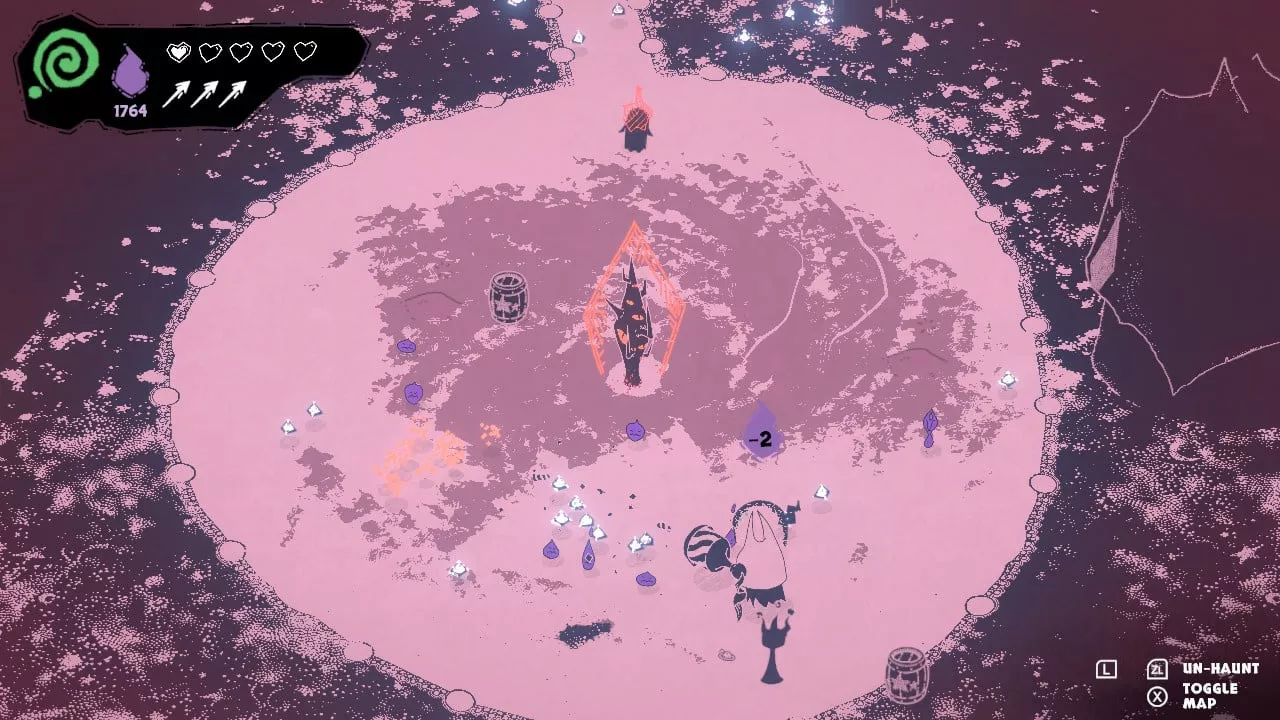
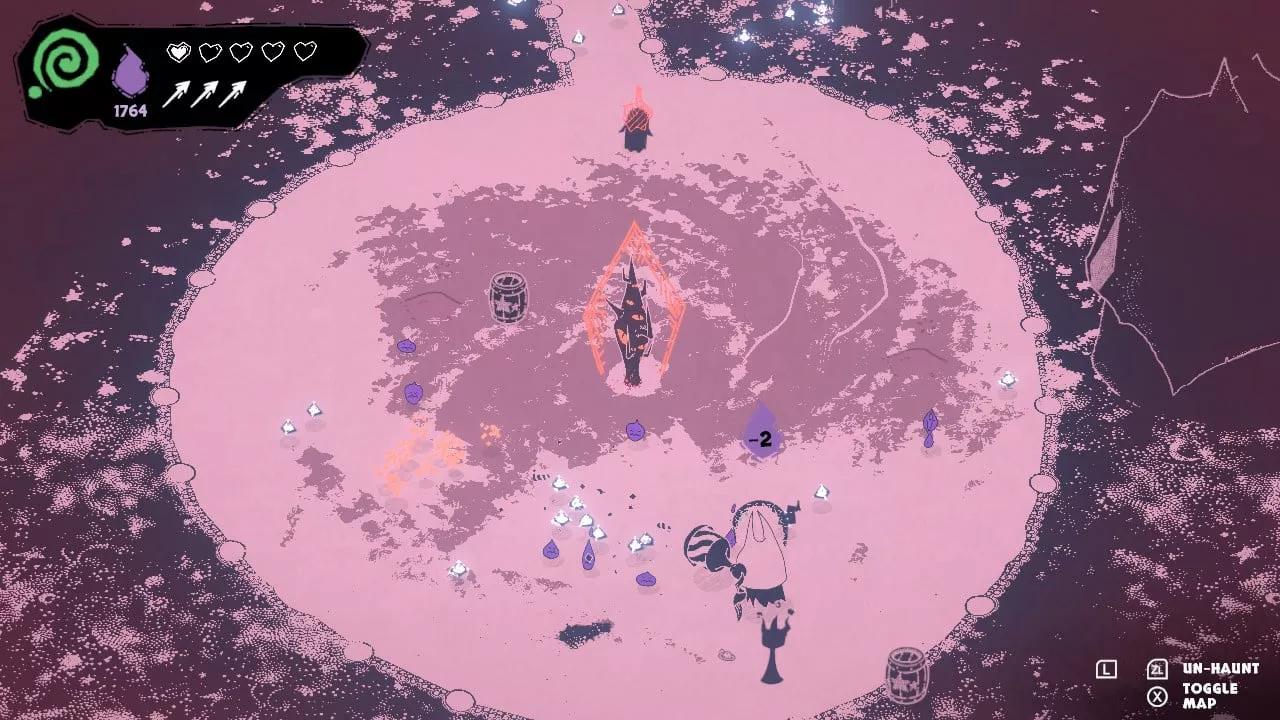
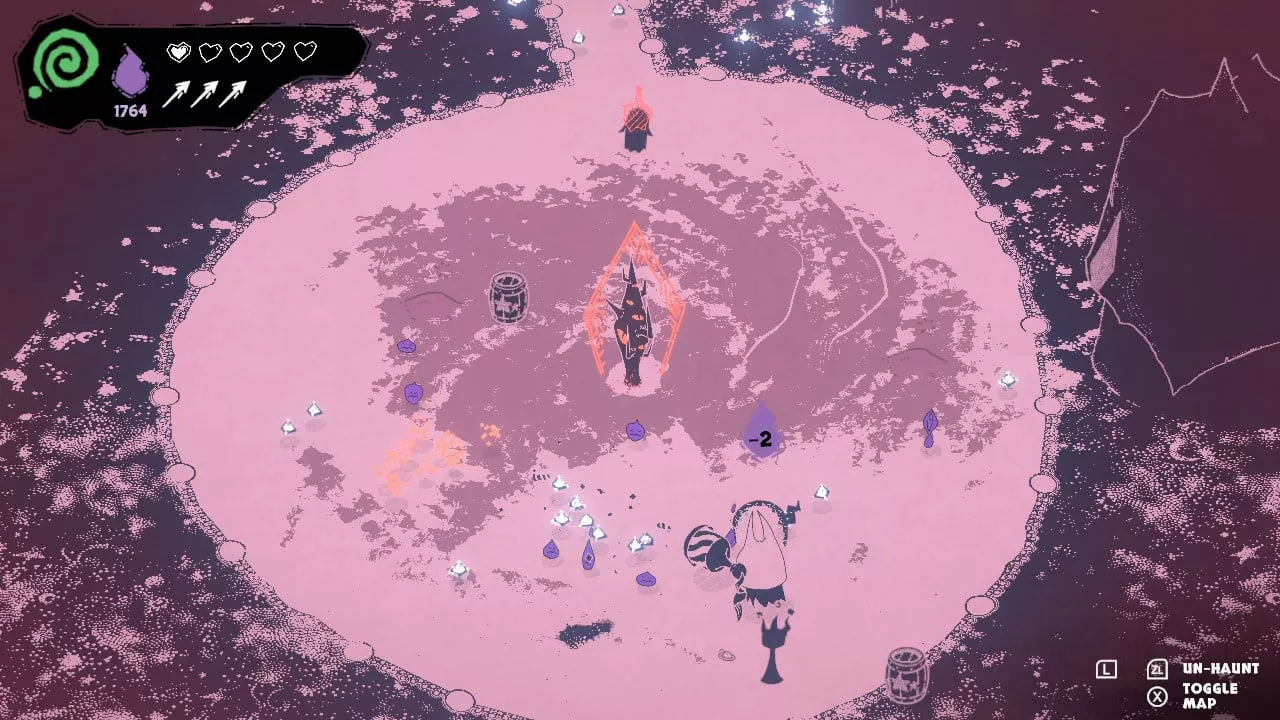
Graphically, Hauntii is portrayed in a stark yet visually striking style. The game utilizes a high-contrast monochromatic palette, accentuated with splashes of color to highlight interactive or significant elements. This artistic choice contributes to the game's eerie and otherworldly atmosphere, making exploration both mesmerizing and unsettling. The environments are beautifully crafted, featuring intricate backgrounds with organic, flowing designs that blur into more structured, geometric shapes in the foreground.
However, the visual aesthetics occasionally hinder gameplay. The small scale of objects and characters on the Nintendo Switch's screen can make it difficult to navigate and interact with the environment, especially in frantic moments of twin-stick shooting action. This issue is exacerbated when the game camera zooms out, making the player's character hard to distinguish from the surroundings.
Despite the appealing art style and innovative gameplay, Hauntii is marred by technical flaws. Throughout the experience, there are frequent crashes and bugs that significantly disrupt gameplay. Some players have reported issues like invisible bullets and stuttering audio, which make the already challenging game frustrating. Although a launch day patch addressed some of these issues, numerous bugs persisted, detracting from the overall experience.
The design of the game also presents some challenges. The level design sometimes leads to confusion and aimlessness, with a world map that offers little useful guidance for navigation. This, combined with infrequent and unforgiving save points, can lead potential players to repeated failures and frustration. Hauntii demands precision and patience, often without rewarding them adequately.
Furthermore, the game introduces elements that may remind players of less favored aspects of other games, such from other retro classics, with difficult timed challenges and intricate platforming sections. These sections, which require precise depth perception, are particularly tough due to the game’s visual style and camera issues.
Overall, Hauntii is a game with a lot of heart and artistic ambition. It presents a unique blend of styles and gameplay mechanics that set it apart from many other indie games. Unfortunately, its technical issues and design choices often overshadow its more innovative and engaging aspects. For players who are willing to overlook these flaws, Hauntii offers a beautiful, if sometimes frustrating, journey through a hauntingly rendered world. Yet, for those looking for a smooth and polished gameplay experience, Hauntii might not meet expectations. The game is a vivid example of how crucial thorough testing and design refinement are to the success of a genre-blending indie title. Despite its potential, Hauntii ultimately struggles to consistently deliver the compelling experience its intriguing premise promises.

You must be logged in to post a comment!
