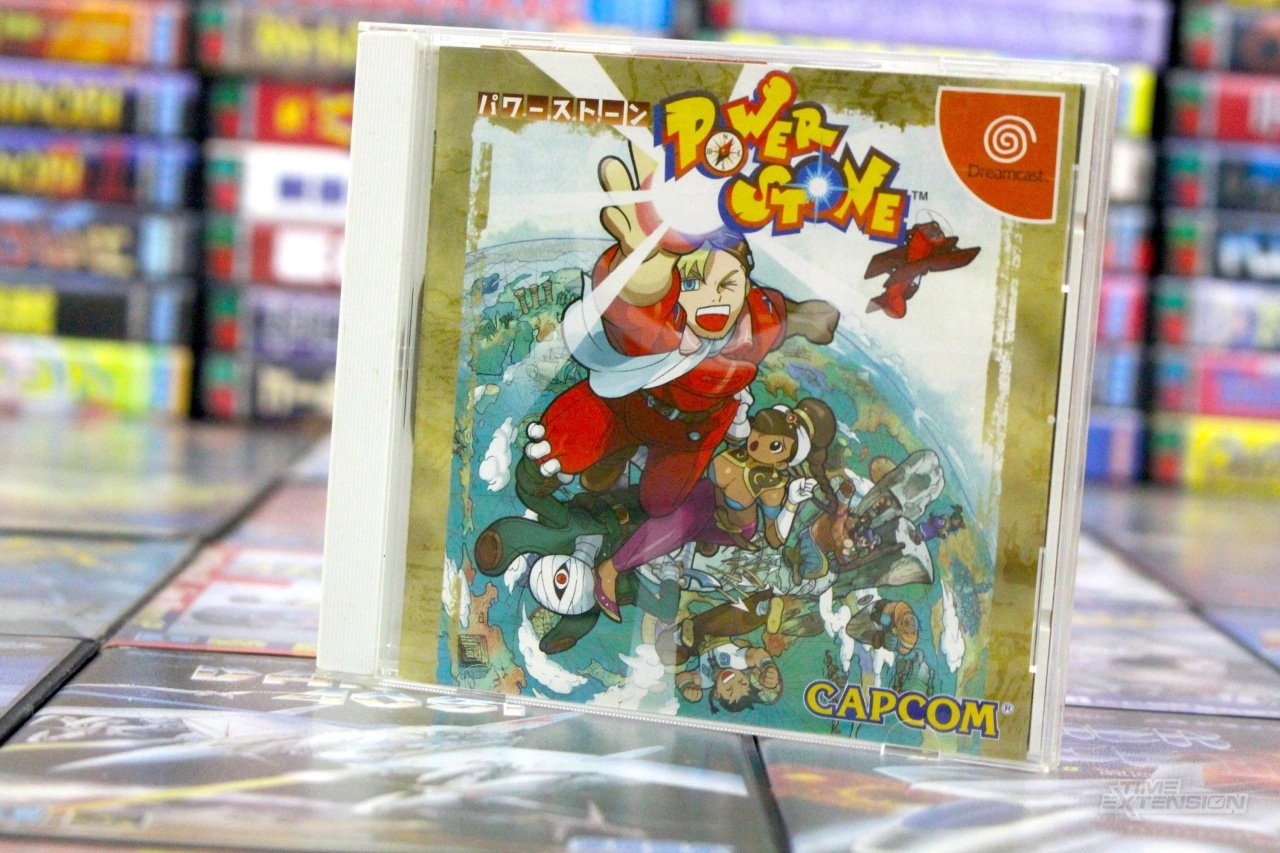
Twenty-five years ago, in the midst of the gaming revolution of the late 90s, Capcom, a renowned video game company, introduced gamers to an innovative fighting title that would leave its mark on the industry. This game was Power Stone, an arena-based fighter that challenged the conventional norms of its genre. Released on the Sega Dreamcast on February 25, 1999, the same month it also graced arcade screens, Power Stone emerged as a leading third-party exclusive that signaled the potential of what was then a state-of-the-art gaming console.
What set Power Stone apart was its delightfully chaotic gameplay that appealed not just to fighting game enthusiasts but a broader audience seeking an engaging multiplayer experience. Players were dropped into interactive 3D arenas where they could utilize not only their combat skills but also the environment and various weapons to gain the upper hand. The vibrant and striking character designs added another layer of appeal, resonating with an audience eager for fresh and innovative gaming experiences.
Despite its accolades from critics and players alike, Power Stone's initial sales in Japan did not live up to Capcom's expectations. This underperformance was significant enough that Capcom issued an apology, acknowledging the game's less-than-expected commercial performance. This did not deter the development team, and in the year 2000, Power Stone 2 was released. The sequel built on the foundation of the original, enhancing the single-player mode and allowing for up to four characters on screen simultaneously. This turned Power Stone 2 into one of the go-to party games for the Dreamcast, fostering a competitive and communal gaming atmosphere that was perfect for gatherings.
The fervor around the Power Stone franchise led to a compilation release in 2006, when both Power Stone and Power Stone 2 were re-released for the PSP as the Power Stone Collection. This was a nod to the enduring interest in the titles from the fans who cherished the chaotic battles and colorful arenas. Despite the re-release and the dedicated fan base, the franchise has lain dormant since then, not seeing any new entries or major overhauls in recent years.
The legacy of Power Stone reflects a time in the gaming industry when innovation was heavily rewarded, and risks were taken to create something entirely new. Rooted in the Dreamcast's era of creativity, Power Stone is an exemplar of how a game can win hearts through its mechanics, design, and the sheer fun it offers. The game speaks to the mindset of the late '90s, where the possibilities of 3D gaming were just being explored, and developers like Capcom were at the forefront, pioneering new ways to play and engage with video games.
Power Stone may not have evolved into a long-standing series like some of its contemporaries, but that does not diminish its impact. Gamers who experienced the rush of hurling objects at their opponents or activating the titular Power Stones to unlock powerful transformations speak fondly of the frenzy and excitement that characterized each match. It was a game that encouraged spatial awareness, tactical play, and a touch of luck, resulting in a fighting game that stood out from the crowd.
As Power Stone reaches its 25th anniversary, it's a perfect moment to look back at the innovative contributions that this title brought to the gaming world. For many, it remains a beloved memory of the Dreamcast era, a representation of the fun and imaginative elements that gaming can bring into our lives. While the Power Stone series remains in a state of hibernation, its spirit of creativity and enjoyment continues to resonate with gamers who remember the gem that Capcom introduced a quarter of a century ago. The anniversary serves as a reminder of the joys of digital combat and the timeless appeal of picking up a controller and losing oneself in a fantastical battle among friends.

You must be logged in to post a comment!
