
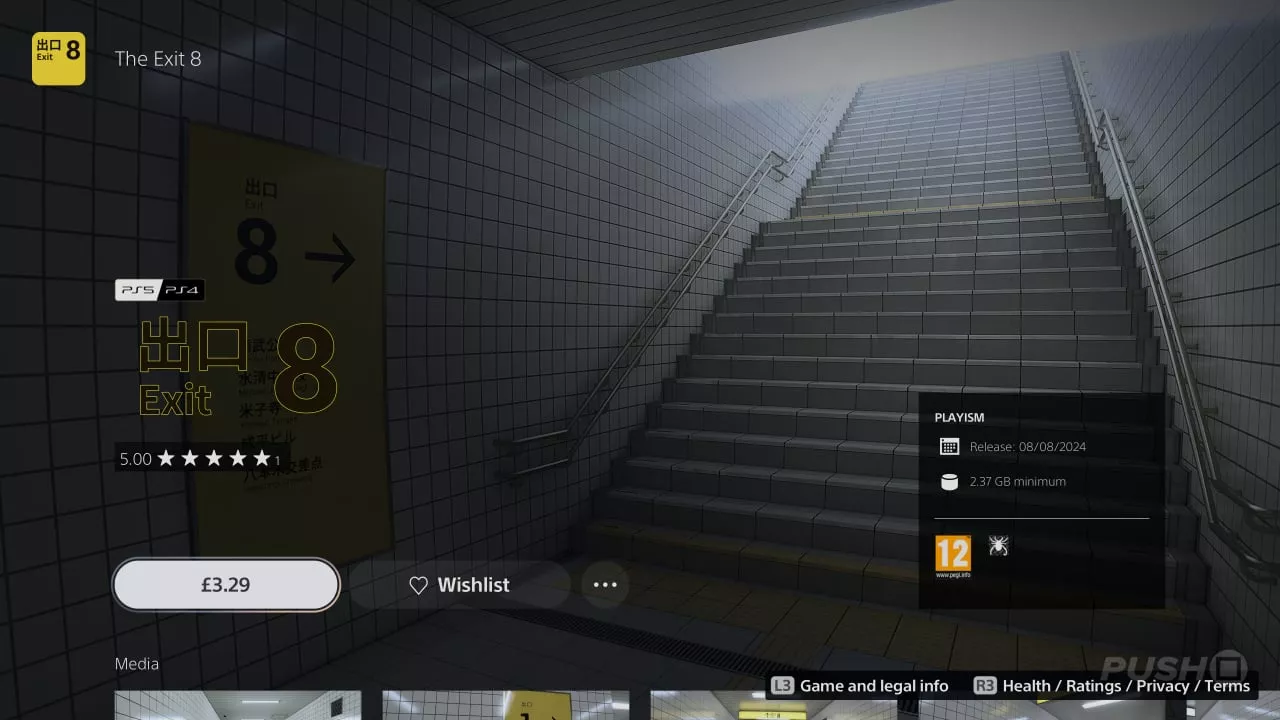
The gaming community on PS5 and PS4 recently experienced a case of deceptive titling and branding that caused confusion among its users. The original game, called The Exit 8, is a horror-tinged walking simulator that enjoyed positive ratings and reception upon its release. Not long after its launch, another game appeared on the PlayStation Store, named The Exit 9. This game bore a striking resemblance to The Exit 8, not only in name but also in visual presentation, utilizing almost identical logos and color schemes.
The Exit 9's launch seemed timed to capitalize on the popularity and anticipation surrounding The Exit 8. It was clear that the developers of The Exit 9 intended to mislead consumers into believing their product was associated with or similar to The Exit 8. This tactic appeared to work initially, as The Exit 9 showed up directly in search results ahead of The Exit 8 on the PlayStation Store. However, this confusion did not last long, as the community quickly noticed the discrepancies and the misleading nature of The Exit 9.
Users on platforms like Reddit and Steam began to point out that The Exit 9 was a clear imitation, intended to deceive the audience looking for The Exit 8. This led to a significant backlash against The Exit 9, reflected in its poor user ratings and negative reviews.
Barely 24 hours after the release of The Exit 8, the developers or publishers behind The Exit 9 took measures to distance their game from the original. They changed the name to Exit 9 Metro and altered the previously yellow logo. It’s unclear which parties exactly—be it Sony, the publisher PLAYISM, or the developer KOTAKE CREATE—initiated the changes. However, these actions served as an attempt to alleviate some of the initial confusion and reduce accusations of plagiarism.
The situation highlights ongoing issues within digital marketplaces like the PlayStation Store. Similar cases have occurred, where lesser-known developers release games with titles, graphics, and promotional materials that closely mimic popular titles. This strategy is often used to leverage the visibility and search algorithms of the platforms to boost sales of derivative or lower-quality games.
The gaming industry faces a significant challenge managing these incidents. Marketplaces like the PS Store become cluttered with what is often referred to as "shovelware" - games made cheaply and quickly, without much originality or care. This not only misleads consumers but also makes it harder for genuinely innovative and high-quality indie games to get the attention they deserve.
Platforms like Sony’s PlayStation Store need robust systems to prevent such confusion and protect consumers from misleading content. The community’s role is also crucial, as vigilant gamers can spot these discrepancies and alert others, helping to uphold standards of clarity and honesty in the gaming marketplace.
As digital storefronts continue to grow, they must balance openness with oversight to foster an environment where creativity and originality are visible and not overshadowed by deceptive practices. This incident serves as a reminder of the vigilance required from both consumers and platform holders to maintain trust and integrity within the expansive world of digital gaming.




You must be logged in to post a comment!
