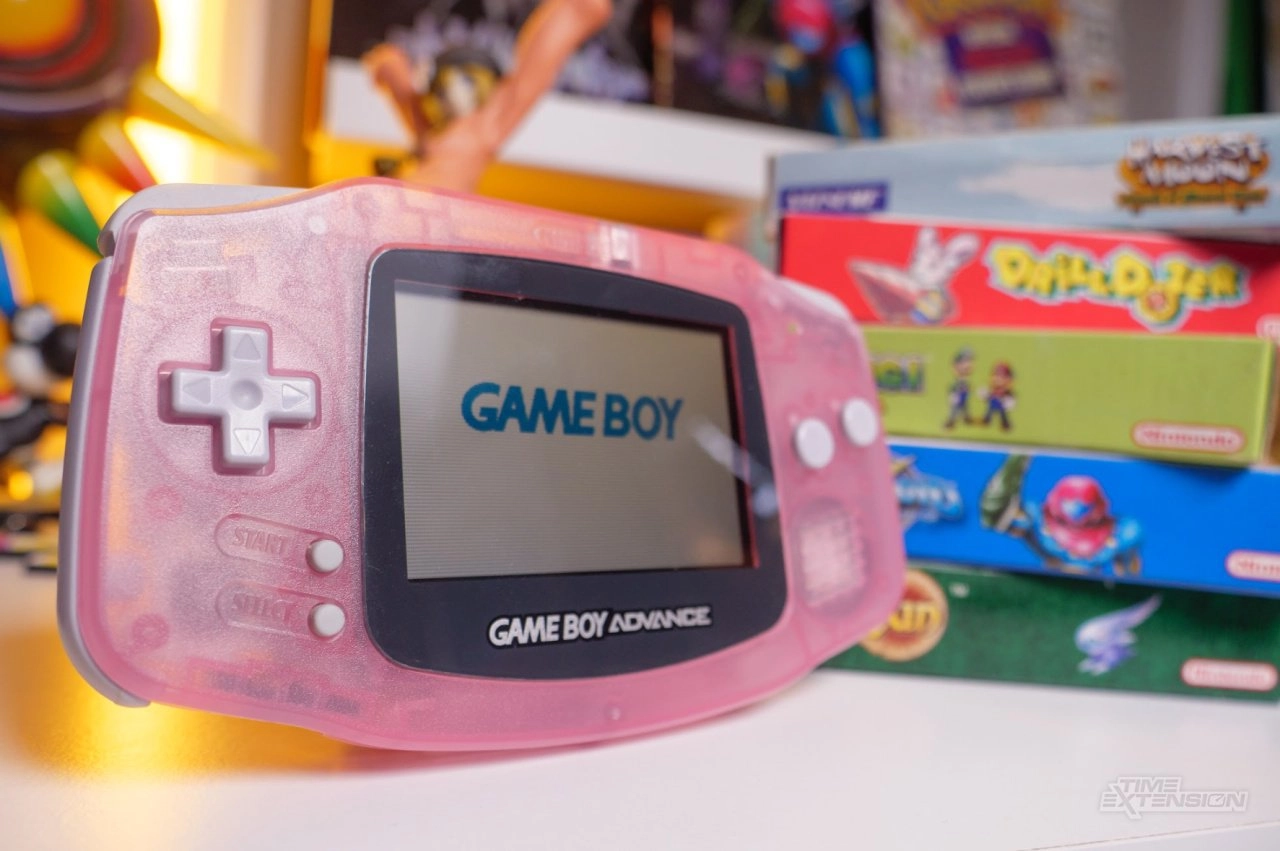
In the thriving universe of video game modding, a new and surprising technique has emerged, showcasing the ingenuity and resourcefulness of the modding community. An individual known as TheZZAZZGlitch has unlocked a method to dump and recreate a Game Boy Advance (GBA) ROM through an unconventional process—the capture of audio emitted by the handheld console after a crash.
The GBA, a beloved portable console by Nintendo, features a wide variety of games that have charmed players worldwide. However, the process of recreating these game ROMs is typically not an easy feat, often requiring specialized software and hardware tools. But TheZZAZZGlitch pushed the boundaries of what's possible by exploiting a crash scenario to reconstruct game data.
It all starts with deliberately crashing the GBA system. Following a crash, if one waits patiently for about an hour and a half, the console reportedly begins to output data through its speakers unexpectedly. This data, bizarrely enough, manifests as audio—a cacophony that hides within it the contents of the game cartridge itself. Followers of TheZZAZZGlitch's work were both bewildered and fascinated by the discovery, which seemed to pertain to the stuff of urban digital legends rather than practical methodology.
Despite the unusual extraction method, the process is far from simple. The audio capture involves meticulous setup. TheZZAZZGlitch had to create special hardware capable of capturing the audio with sufficient clarity and precision. Once the audio was recorded, it had to be painstakingly converted into usable data. This conversion was no mere straightforward translation; it required multiple recordings and in-depth code tinkering before the modder could achieve a successful and accurate dump of the game data. In essence, the console's crash sounds were not random noise but encoded information that spanned the entire memory and address space of the portable system.
The underlying science is fascinating: the GBA's crash sound is a direct emanation of its address space interpreted as sound data. By obtaining a clear recording, TheZZAZZGlitch deduced that it's possible to convert that sound back into the actual bytes that constituted the game's RAM and ROM. If this process could be refined and standardized, it could theoretically provide a novel way to preserve games for future emulation and study without the traditional need for a ROM dumper or similar device.
But this does not signify a plug-and-play solution for the average user. The technique isn't readily usable without significant technical knowledge and resources. In fact, TheZZAZZGlitch's experiment is a testament to the lengths to which the modding community will go to delve into the mechanics of legacy game systems and repurpose them in creative ways.
The implications of this discovery spark a mix of curiosity and awe. While it might not replace conventional methods of game data preservation, it highlights the hidden capabilities of the GBA and perhaps other systems, inviting hobbyists and tech enthusiasts to further explore the potential of digital data and its various forms of representation.
Meanwhile, other related developments in the retro gaming world continue to surface. Fan translations of never-released-in-English games, like 'Densetsu No Stafy' for the GBA, emerge, shedding light on forgotten classics. Console revivals, such as new interface projects for defunct online stores and fan discussions about obscure gaming hardware, all contribute to the growing historical fabric of gaming.
The advent of such inventive methods of data retrieval and the growing trend of archival projects all serve to underline the vibrant landscape of video game preservation. As technology advances, so does the potential for new discovery methods within the aging tapestry of gaming platforms. While the traditional media for storing video games can become obsolete, the passion for preserving and exploring the depths of gaming history remains cutting-edge, flourishing through endeavors like that of TheZZAZZGlitch and their auditory adventure into the GBA's memory.

You must be logged in to post a comment!
