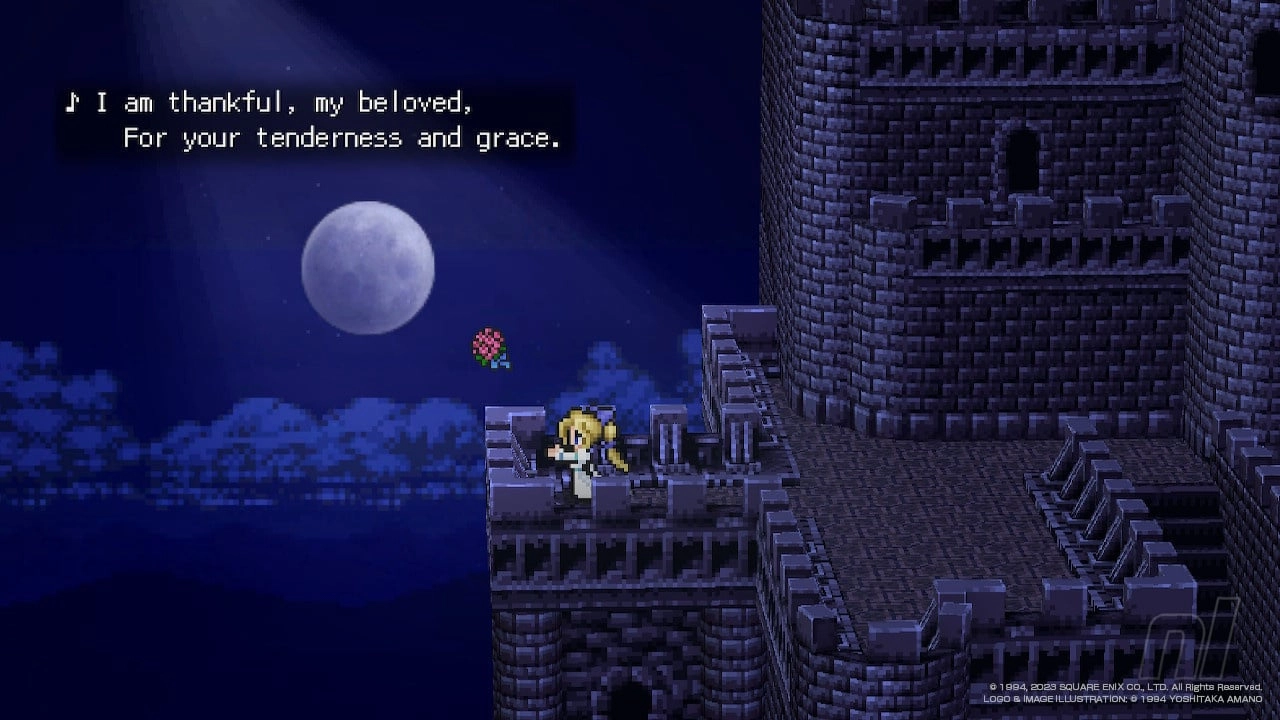
Final Fantasy VI, a game etched in the hearts of countless RPG lovers, is often remembered for its poignant moments and dramatic storytelling. But one sequence stands out uniquely—the Opera House scene. It’s a peculiar gem within the game’s melancholic atmosphere—a scene that combines sublime music, playful humor, and surprising plot development in one memorable package. It transcends being just a plot device to acquire an airship and instead becomes a highlight of the game, showcasing a poignant relationship while introducing a moment of levity before the impending calamity that defines the game.
The Opera House scene, featuring the character Celes impersonating the opera singer Maria, has been held in such high regard that it was the only part in Final Fantasy VI to receive a dedicated remake in the Pixel Remaster series. This decision is a testament to its significance among fans and the original game's storytelling prowess.
What makes this opera sequence so remarkable is its interactive nature—a feature not as common or refined for many games back in 1994. For the players of that time, it was groundbreaking to engage in a set piece rather than merely witness it. Final Fantasy VI cleverly crafted its interactive set piece through the framework of a theatrical play, allowing players to step into the roles of actors on a stage, deepening their immersion.
The task at hand during the opera scene is no small feat. The players must hit their marks, choosing the apt lyrics for Celes to sing, dance in time with the character Draco, collect roses, and perform actions that contribute to the theatricality of the performance. Success in this sequence requires attention and engagement, rewarding players with a sense of achievement and a deeper connection to the narrative.
This active participation is a significant aspect of why the Opera House sequence is so fondly recalled. The convergence of player action with the unfolding story creates an emotional resonance that is harder to achieve in passive viewing. The beloved composer of the series, Nobuo Uematsu, also showcases the breadth of his musical talents here, adding another layer of appreciation for the artistry involved in this segment.
However, if your introduction to Final Fantasy VI is through the Pixel Remaster, you might notice something different about the opera sequence. While visually more striking with advanced camera angles and lighting, the Pixel Remaster adaptation compromised on interactivity. Instead of multiple inputs to orchestrate the myriad actions of Celes, players now simply press the 'A' button at key moments, akin to quick-time events that would become prevalent in later gaming generations. This reduction in interactive elements arguably dilutes the original scene's immersive charm.
Nevertheless, it should be highlighted that this is more an observation than a strong criticism. The HD-2D remade opera scene, even with its simplified controls, is still a feast for the senses, featuring more expressive sprites, enhanced visuals, and vocal tracks that weren't present in the original. The Pixel Remaster's non-interactive segments also contribute to building a more expansive and detailed Opera House environment.
The way the remastered scene fluidly shifts perspectives within the play, particularly during Locke’s race against time to foil Ultros' disruptive schemes, demonstrates the brilliant use of narrative techniques in Final Fantasy VI. As a franchise known for embracing innovation, this is perhaps one of the most thrilling moments where character perspectives are woven into the fabric of gameplay, creating a dynamic and riveting experience.
It's been 30 years since the original release of Final Fantasy VI, and now we witness how the game's legacy has both influenced modern gaming trends and how modern remasters have reshaped it. The Pixel Remaster, despite its subtle shortcomings, offers a tribute to the original by highlighting the creative ways developers in the early 1990s overcame hardware constraints to craft stories that feel alive and interactive. Its minor concessions reveal how abstraction in JRPGs can, counterintuitively, enhance the player's sense of participation and reinforce the storytelling magic.
As we celebrate Final Fantasy VI’s 30th anniversary, whether it's for the nostalgic Opera House scene or the various other striking moments throughout the game, fans old and new can find value in both its historic significance and continued reinterpretations for new generations. It's a dance of nostalgia and modernity, one inviting players to both look back fondly and to dance madly once again, albeit to a slightly different tune.

You must be logged in to post a comment!
