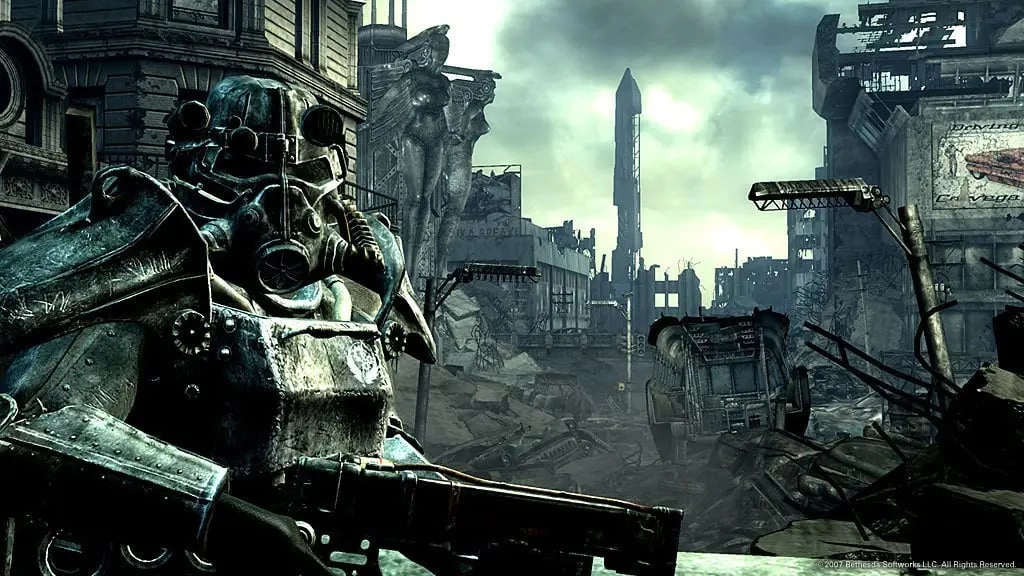
The video gaming world often witnesses spikes in game sales following adaptations into movies or TV shows, and the Fallout series is no different. Recently, following Amazon's adaptation of the franchise into a popular television series, the Fallout games have seen a remarkable increase in sales across the United States.
Over the past month, several titles within the Fallout series have skyrocketed in sales rankings. Notably, Fallout 4 and Fallout 76 have reached the fourth and eighth positions, respectively, among the best-selling titles of the month. This is a significant leap from their positions just a month earlier, where Fallout 4 jumped from 87th to 5th, and Fallout 76 from a distant 159th to 8th. The increase in popularity and sales is not only limited to the more recent games, but also affects older titles in the series. For instance, the cult favorite Fallout: New Vegas soared to the 24th position from a previous 193rd, and Fallout 3 climbed to 37th from 316th.
Even the classic Fallout games that include Fallout, Fallout 2, and Fallout: Tactics bundled together made an impressive ascent to the 122nd spot from 668th. The notable gains in the sales rankings underscore the potent impact that successful TV adaptations can have on associated video game franchises.
Sales data analyst Mat Piscatella highlighted these shifts on Twitter, underscoring the remarkable upward trend in the Fallout series' sales. The spike in sales is indicative not only of the renewed interest in the Fallout world but also the synergistic relationship between visual media adaptations and original video game content. Such adaptations reintroduce and reinvigorate interest in games, drawing in new players while re-engaging those who might have played the games years ago.
It’s worthwhile to consider the broader context and the phenomenon that linking video games with popular culture through other media has had in recent years. Successful examples are not uncommon with The Last of Us and The Witcher, both of which were also given life on-screen and subsequently saw significant boosts in their respective game sales. This pattern suggests a strategic opportunity for other video game franchises that could be adapted into films or television series, potentially reaping similar benefits in terms of increased visibility and sales.
Piscatella's data not only encapsulates the immediate financial benefit in terms of month-on-month sales increase but also sparks a dialogue about the wider economic and marketing implications of such media cross-overs. The Fallout series, published by Bethesda Softworks, has enjoyed a formidable reputation for its immersive post-apocalyptic world and engaging gameplay, and now it has reached an even broader audience thanks to its successful adaptation.
For fans and newcomers alike, the surge in Fallout’s popularity provides an enriching entry point into its expansive wasteland adventures. Beyond just playing the games, the community engagement and discussions about the games have also seen a revival. From game reviews to guides on navigating the wasteland, both veteran players and new enthusiasts are contributing to a revitalized community atmosphere surrounding the Fallout series.
The resurgence of Fallout's popularity is a testament to the enduring charm and appeal of its world-building and storytelling. As consumers continue to show interest in rich, narrative-driven content both on-screen and through interactive media like video games, the relationship between the two industries seems poised for further collaborative successes. This trend also affirms the significant role that visual storytelling can play in extending the lifecycle of a game franchise, making its universe accessible and appealing to a diverse new audience. As more franchises consider similar paths, the potential for growth in the gaming industry, fed by multimedia storytelling, is promising and exciting.

You must be logged in to post a comment!
