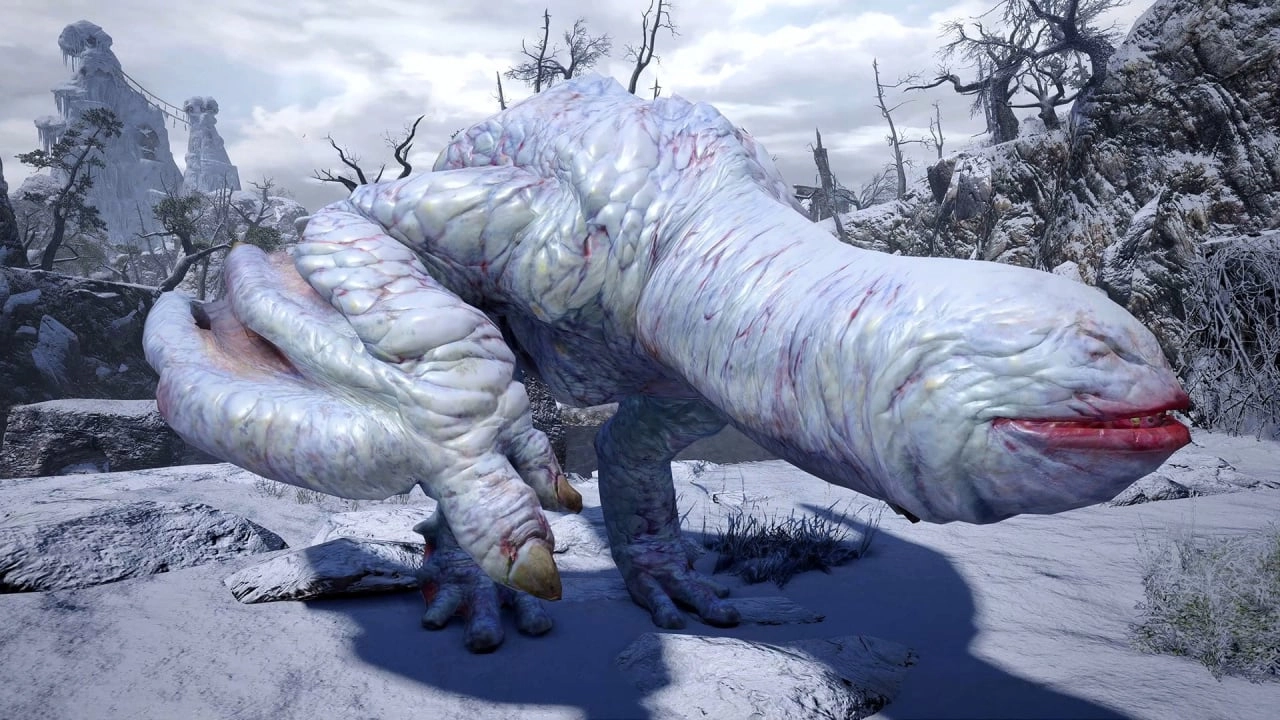
In a fascinating turn of events in the world of arachnology and gaming, a new species of spider has been discovered in the dark recesses of China, and it has been named after one of the most notorious creatures from the video game series Monster Hunter. This eyeless spider, now known as Otacilia khezu, shares its name with the Khezu, a monster that has appeared in nearly every game of the Monster Hunter series since it began. The Khezu itself is a grotesque, blind wyvern with a pale, rubbery skin that needs to remain moist, embodying a truly nightmarish visage.
The discovery of Otacilia khezu presents an interesting intersection between real-world science and the imaginative realms of video gaming. By naming the new spider species after a fictional monster, the scientist responsible has bridged the gap between these two fields, sparking interest and perhaps even a bit of amusement within both the scientific and gaming communities.
Interestingly, the scientist behind the discovery is also credited with incorporating various pop culture references into biological nomenclature. This includes nods to Jojo's Bizarre Adventure characters like Funny Valentine and Gyro Zeppeli, and another reference to Monster Hunter with the name Rathalos, showing an evident pattern of blending personal interests with scientific discovery. This method of naming not only adds a splash of creativity and personal flair to the naming process but also makes the new species more memorable and engaging to a broader audience.
The naming of new species after elements of popular culture is not entirely new in the scientific world. It is often done to pique the interest of the public, making the science of taxonomy more relatable and exciting. In this instance, the name Otacila khezu not only highlights the spider's lack of eyes, reminiscent of the Monster Hunter's Khezu, but also draws attention to the newly discovered species in a fun and innovative way.
On the technical side, the discovery of a new species such as Otacilia khezu is crucial for the field of biology. It adds to the understanding of biodiversity and the ecological dynamics of the area in which the species was found. Each new species provides valuable information about the genetic and ecological makeup of its habitat, which can be critical for conservation efforts. Moreover, understanding its characteristics, behaviors, and how it interacts with its environment can provide insights into evolutionary biology and the adaptive processes of life forms in secluded environments.
The choice of naming the spider after such a hideous monster also raises questions about the perception of spiders in general. Often, spiders are viewed negatively by the public due to their appearance and the fear they commonly evoke. By naming a newly discovered spider species after a monster known for its repulsiveness, there is a slight risk of reinforcing these negative stereotypes. However, it also opens up a dialogue about the importance of all creatures, regardless of their appearance, in the biodiversity of the planet and the ecosystem.
The news of the Otacilia khezu has also been shared across various platforms, including social media and gaming forums, where it has sparked discussions among Monster Hunter fans and wildlife enthusiasts alike. The integration of a gaming element into scientific nomenclature has made the discovery accessible and interesting to a wide range of people, demonstrating that science can be both rigorous and fun.
The discovery of the Otacilia khezu is a testament to the continuous surprises that nature has in store and the creative ways in which scientists can engage the public with new findings. Whether or not one is a fan of spiders, or the Monster Hunter series, the discovery of this new species is a fascinating example of how science and popular culture can interact to increase engagement and interest in the natural world.

You must be logged in to post a comment!
