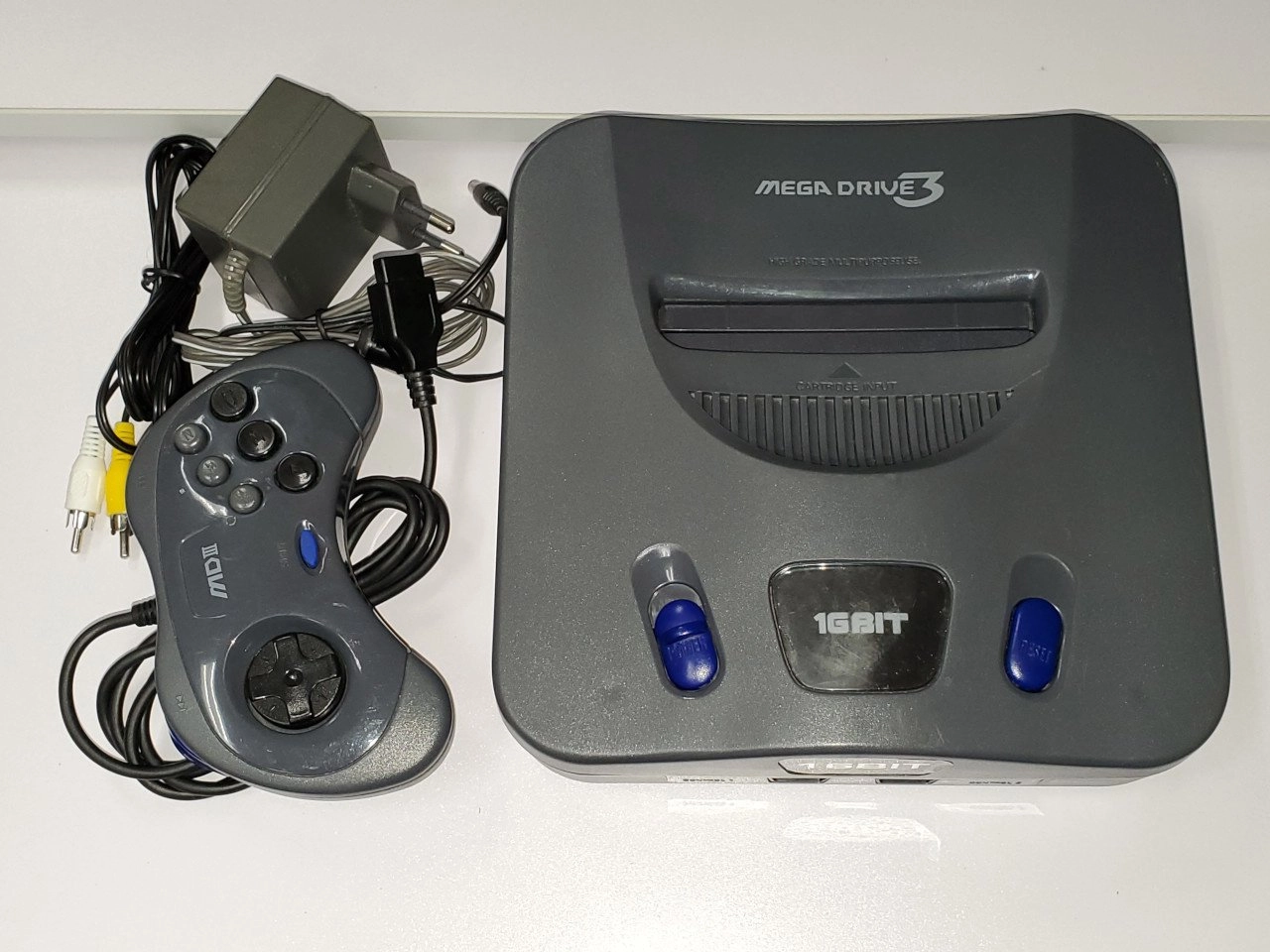
The world of video game consoles has seen numerous official releases and countless clone systems over the decades, each trying to carve out its own place in the gaming history. A particularly intriguing entry in the realm of clone consoles is the Songa Mega Drive 3. This device stands out not only because of its function as a Sega Mega Drive clone but also due to its unusual design that closely resembles the Nintendo 64 console.
Originating from Argentina, the Songa Mega Drive 3 has its roots in a collaboration between China's Dongguan Dewei Electronic Co., Ltd or Zoga, and in some versions, the Kin Wai Investments Limited. Despite the geographic and cultural distances, these companies have managed to create a product that both confuses and delights the gaming community.
The Songa Mega Drive 3's design is a clear throwback to the 90s, mimicking the Nintendo 64's iconic shape. This choice is interesting given that the internals of this device are engineered to play Sega Mega Drive games. It's like a visual mishmash that represents an alternate reality where perhaps Sega and Nintendo might have collaborated on a console, whimsically dubbed by some fans as the “Mega 64.”
In terms of controllers, the Songa Mega Drive 3 does not stick to one strict design. Depending on the iteration, it might come packaged with PlayStation 1-style control pads or even a control pad reminiscent of the Sega Saturn—a decision that further enhances its hybrid appeal. Such a mix-and-match approach might seem bewildering on paper, but it adds to the quirky charm of the clone console.
Technically speaking, the Songa Mega Drive 3 operates on a 50Hz (PAL) signal. According to gaming enthusiasts who have had the opportunity to experiment with it, such as Twitter user @Akino_R11NOR, the console generally performs well. However, they noted that the sound output is in mono and sometimes prone to distortion depending on the software used. There are aspirations among the community to enhance these features, potentially upgrading the audio to stereo for a better gaming experience.
Despite the Songa Mega Drive 3's unique position in the market, it's unlikely to become a mainstream success. The curiosity it generates is more aligned with collectors and gaming historians who are fascinated by the oddities of console development and the strange pathways companies took in their attempts to capture market share.
The allure of clone consoles like the Songa Mega Drive 3 lies in their backstory and the ways in which they reflect broader trends in technology, globalization, and market demands of their times. These devices tell a story of a simpler era in gaming hardware production, where the barriers to entry were lower, and the market was flooded with imitations. Each clone, with its unique quirks, offers a glimpse into the efforts of lesser-known manufacturers to mimic and partake in the booming video game industry.
Beyond its technical specifications and performance, the Songa Mega Drive 3 serves as a symbol of ingenuity and ambition. It represents an era where creativity in gaming took various forms—not all of which were entirely legal or ethical by today’s standards—but that nonetheless contributed to the vibrant tapestry of video game history. For those who cherish gaming's past and enjoy exploring its obscure corners, the Songa Mega Drive 3 is a fascinating artifact, a reminder of the days when the lines between imitating and innovating were blurred in the pursuit of entertainment.

You must be logged in to post a comment!
