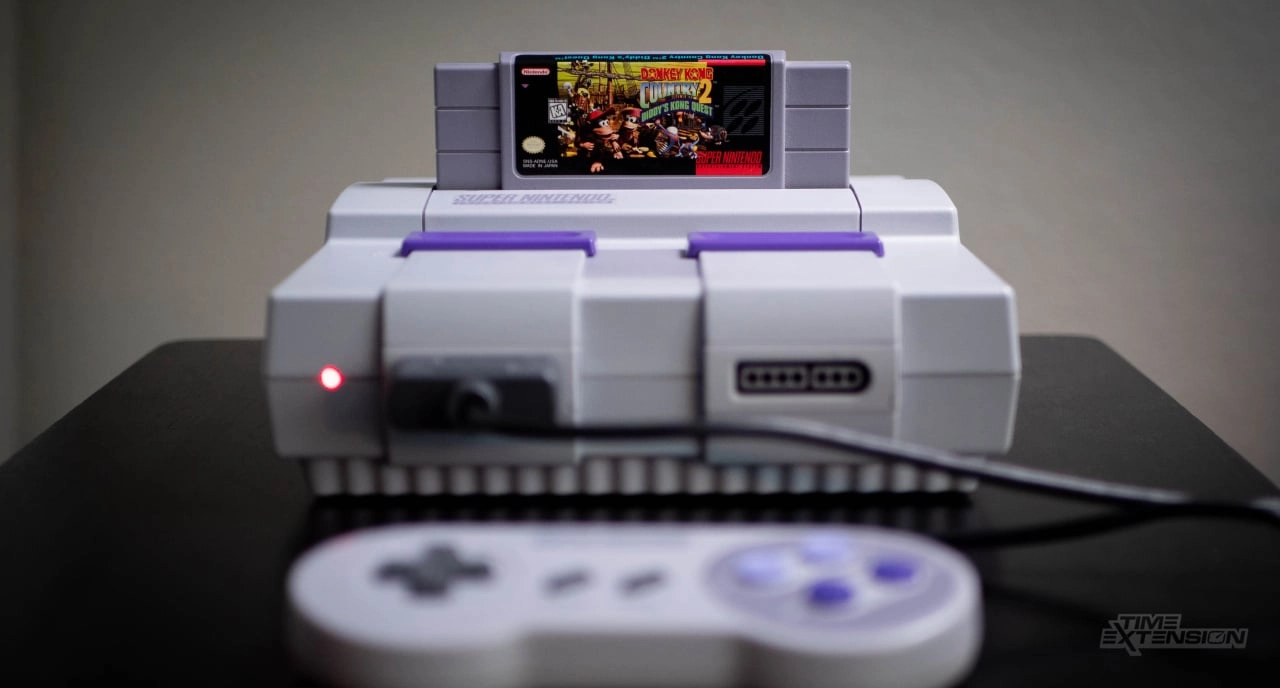
The Super Nintendo Entertainment System (SNES) remains a beloved console among gamers, particularly those who appreciate the nostalgia and timeless classics of the '90s. However, not all SNES consoles were created equal. Throughout its production life, the SNES underwent several internal revisions, leading to significant variations in video output quality among different models. Two of these models, the 2CHIP and the 1CHIP, have been at the center of ongoing debates regarding which offers superior performance.
The debate primarily revolves around the transition Nintendo made in 1995 from using a two-chip video processing setup in the SNES to a more streamlined single-chip (1CHIP) configuration. Retro gaming enthusiasts often seek out the 1CHIP consoles due to their reputation for providing sharper and clearer video outputs compared to their 2CHIP predecessors. The difference lies in how the video signal is processed and outputted by the console, affecting how games are displayed on a screen.
Voultar, a well-known modder in the retro gaming community and creator of the SNES Edge Enhancer, recently shared insights that challenge the prevailing wisdom that 1CHIP consoles are categorically superior. According to Voultar, both models have their specific advantages and drawbacks that should make them equally valid choices depending on individual preferences and priorities.
Voultar pointed out that the 1CHIP, while generally producing a sharper image, does not necessarily guarantee a perfect output. He noted that the 1CHIP consoles often exhibit a 'ringing' effect, a sort of visual echo that can distort the clarity of the image. Conversely, the 2CHIP consoles, despite having a darker image output (referred to as a 'dark shadow'), do not suffer from the ringing issue.
To illustrate his point, Voultar shared comparative images showing how the visual output differs between the two chip setups. He also explained that many of the perceived issues with the 2CHIP consoles could be mitigated or tuned out with proper adjustments, much like one would adjust settings on a modern television.
Essentially, Voultar's argument is that the choice between a 2CHIP and a 1CHIP SNES should not be based strictly on the perceived superiority of one over the other in terms of output quality. Instead, it should consider what each version offers and how it aligns with what the user values most in their retro gaming experience.
For instance, if a gamer prioritizes a brighter, sharper image and is willing to handle some minor visual artifacts, a 1CHIP SNES might be the way to go. However, if a gamer prefers a consistently smooth image without the risk of ringing, even if it means a slightly darker picture, then a 2CHIP console would be more appropriate.
In promoting this view, Voultar encourages the community to move away from a polarizing perspective of pitting one model against the other as inherently superior. Instead, he advocates for a more nuanced understanding that respects personal preference and the unique qualities each version of the SNES brings to the table.
Ultimately, whether one chooses a 2CHIP or a 1CHIP, the most important factor is the enjoyment and satisfaction derived from revisiting the games and experiences that defined a generation. Both models are capable of delivering high-quality performance that can satisfy any retro gaming enthusiast's desires, making the SNES a timeless console regardless of its internal configurations.
This more inclusive and open-ended approach not only fosters a healthier, less contentious community atmosphere but also enables individuals to make more informed choices based on their specific needs and expectations from their retro gaming setup. Whether you’re a collector, a casual player, or somewhere in between, understanding the subtleties and capabilities of each SNES model empowers you to optimize your gaming experience.

You must be logged in to post a comment!
