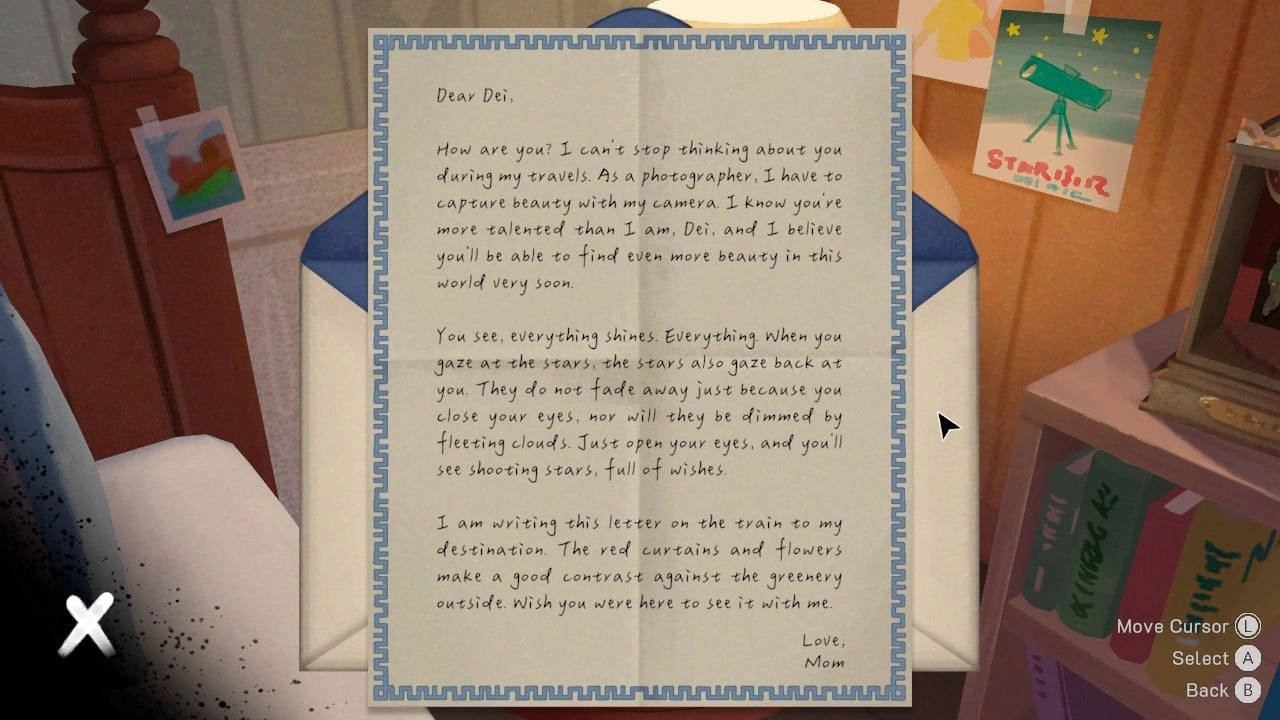
The Star Named EOS serves as an excellent demonstration of how video games can use their medium to tell compelling stories in unique ways. Created by Silver Lighting Studio and published by PLAYISM, this game is available on the Nintendo Switch platform, where it uniquely blends puzzle solving with an emotional story about memories and the bond between a mother and her son.
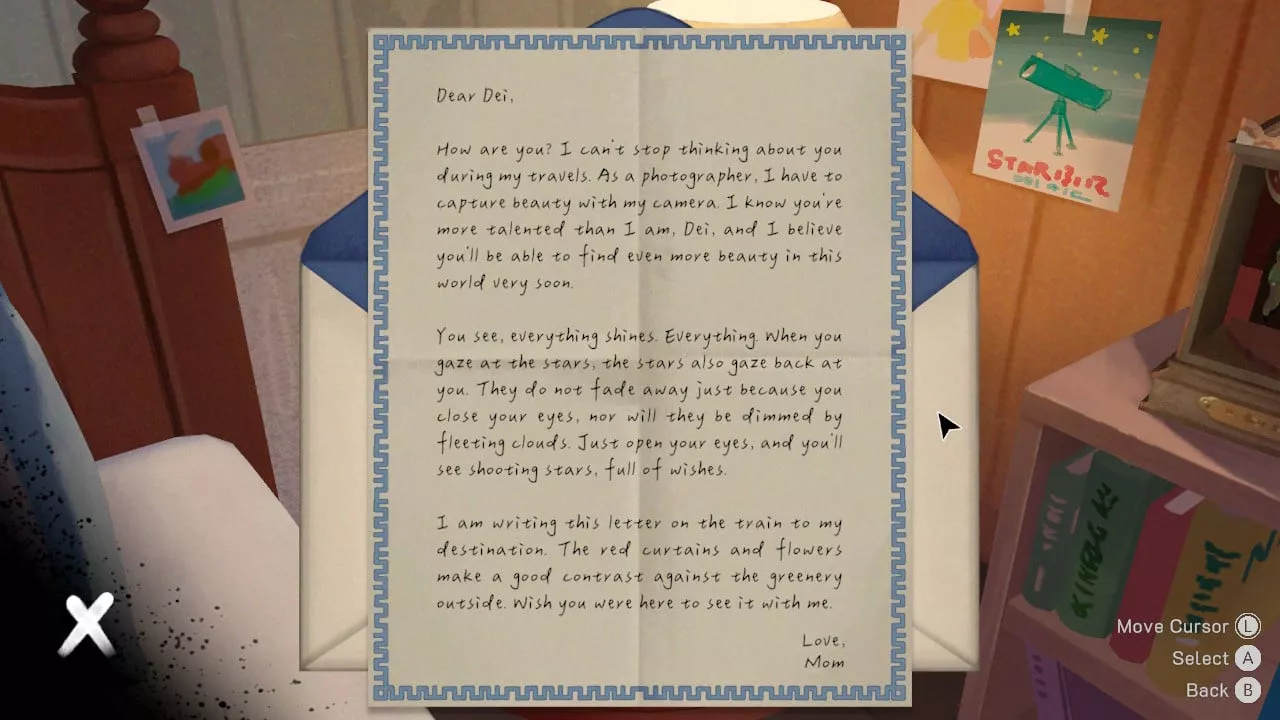
From the outset, The Star Named EOS captivates with its premise: you step into the shoes of Dei, seeing the world from a first-person perspective as he revisits cherished and painful memories in a series of chapters set in familiar yet forgotten places like his childhood bedroom, a train, and a café. Each new chapter kicks off with his mother's voice reading a letter laden with sweet, melancholic sentiments, setting the emotional tone for the experience.
What stands out immediately in The Star Named EOS is its gameplay, which revolves extensively around photography. Dei shares this passion with his mother, who has given him her old Polaroid camera. The primary puzzle element involves recreating his mother's old photos, starting with simple scenes requiring items like a rose and curtains. This mechanic is more than just capturing images; it involves interacting with and manipulating the environment to match the memory perfectly.
The locations in the game are more than just settings; they are narrative vessels, each densely packed with nostalgic elements crafted to trigger both Dei’s and the player's memories. Dei's bedroom, covered with peeling posters and aged books, along with the café's abandoned half-drunk coffee cups and disarrayed chairs, contribute significantly to the storytelling. This focus on detail enriches the game’s ability to make players feel embedded in Dei's world.
Moreover, the developers have skillfully integrated the theme of astrology throughout the narrative, which shifts and evolves as one progresses through the game. Without revealing too much, the story expertly addresses profound themes such as memory, trauma, and belonging, creating a rich narrative fabric that is both engaging and moving.
The puzzle mechanics themselves are intelligently designed, involving a mix of mazes, jigsaw puzzles, and others that require logical and spatial reasoning. The mechanics often make creative use of the in-game camera, enhancing immersion and interaction with the game world. Clues are subtly spread through the environments, encouraging thorough exploration and attention to detail, which rewards players with both solutions to puzzles and deeper insights into the story.
Despite being primarily designed with PC players in mind, The Star Named EOS still offers a commendable experience on the Nintendo Switch, particularly in handheld mode. The touch screen and physical controls enable direct interaction with the game’s elements, though occasionally it might feel less precise than desired. The game does not utilize the Nintendo Switch’s gyroscope, which could have added another layer of immersion to the photography-centric gameplay.
Visually, the game is stunning. It boasts hand-drawn graphics with soft textures and warm lighting, creating an inviting and home-like atmosphere that complements the game's emotional core. The visuals are beautifully complemented by a soundtrack featuring poignant acoustic music, enhancing the overall soothing yet emotionally resonant atmosphere. Players are advised to use headphones for a more intimate auditory experience, although the speakers provide adequate sound quality as well.
Despite a relatively short runtime of about seven hours, The Star Named EOS manages to deliver a fulfilling experience. It avoids becoming tedious, instead offering a constant sense of discovery and emotional engagement that keeps players intrigued from beginning to end.
Ultimately, The Star Named EOS is a testament to the power of video games as a medium for storytelling. It combines engaging puzzle gameplay with a heartfelt narrative, all within a beautifully crafted world that resonates with themes of memory and the indelible bonds of family. This game is a must-play for those who appreciate a story well-told through layers of interaction, exploration, and puzzle-solving.

You must be logged in to post a comment!
