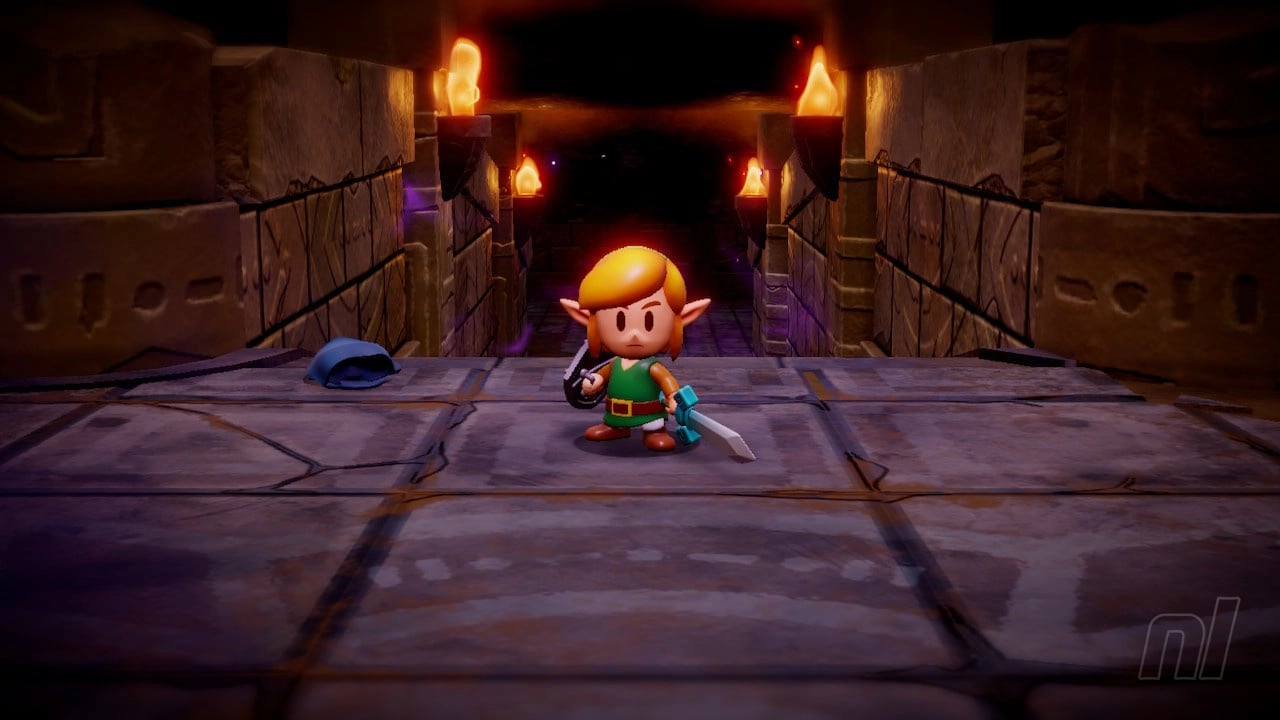
The Legend of Zelda series has introduced a revolutionary new game, "Echoes of Wisdom," which, for the first time, features Princess Zelda as the main playable character in a mainline title. This shift in protagonist roles has brought with it several intriguing changes and explanations regarding the traditional silence of the series' usual hero, Link.
Typically, Link is known for his lack of spoken dialogue, communicating instead through grunts and action-driven expressions. In previous titles, this aspect of his character was mostly accepted without in-depth explanation, contributing to his mysterious, stoic hero persona. However, in "Echoes of Wisdom," developers have taken a unique approach by providing a contextual backstory to why Link cannot speak, diverging from the norm seen in earlier games.
At the beginning of "Echoes of Wisdom," Link is only briefly playable. During this time, he expresses himself in the usual manner—through noises and physical gestures. However, the game later reveals a compelling reason behind his muteness which aligns with the new storyline. This explanation is found within the depths of Lueberry’s basement, a character whose diary holds secrets of past events in the game. According to Lueberry's diary entries, children who were trapped in mystical rifts across the game's world lost something personal as a consequence. For Link, that loss was his voice.
This twist to Link's character is a fresh addition to the narrative, enhancing the depth of the game's world and the experiences of its characters. Such rifts do not only provide a physical challenge but also leave lasting impacts on those who encounter them, illustrating a new level of interaction and consequence within the game's universe.
Other characters in "Echoes of Wisdom" also face various afflictions after escaping these rifts, suggesting that these phenomena impact many within the game, each in different ways. It’s a clever method of explaining not only Link’s muteness but also of enriching the story by showing that actions and events have real repercussions in the game’s world.
While Link's silence is explained in "Echoes of Wisdom," it's important to note that in other titles in the series, he is often given dialogue options and can communicate non-verbally to a full extent. This indicates that while Link can "speak" in terms of making decisions or expressing preferences through player choices, his literal voice is never heard. The developers, Nintendo and Grezzo, have creatively woven this characteristic into the storyline of the new game, giving fans a lore-friendly reason behind a long-accepted trait of this beloved character.
The explanation of Link’s silence in "Echoes of Wisdom" not only forms a more cohesive narrative but also engages players who have long wondered about this peculiarity. It serves as both a nod to long-time fans of the series and an invitation to newcomers to dive deep into the rich lore of the Zelda universe. Whether this explanation will carry over to future games or remain unique to this title remains to be seen. However, it certainly presents an amusing and thoughtful addition to the series, showing that even well-established characters can still surprise and captivate audiences with new facets of their stories.
Overall, "Echoes of Wisdom" stands out not only for its gameplay innovations and shift in protagonist but also for its deeper narrative exploration into the reasons behind a character’s silence—a small but significant detail that adds layers to the game’s storytelling.

You must be logged in to post a comment!
