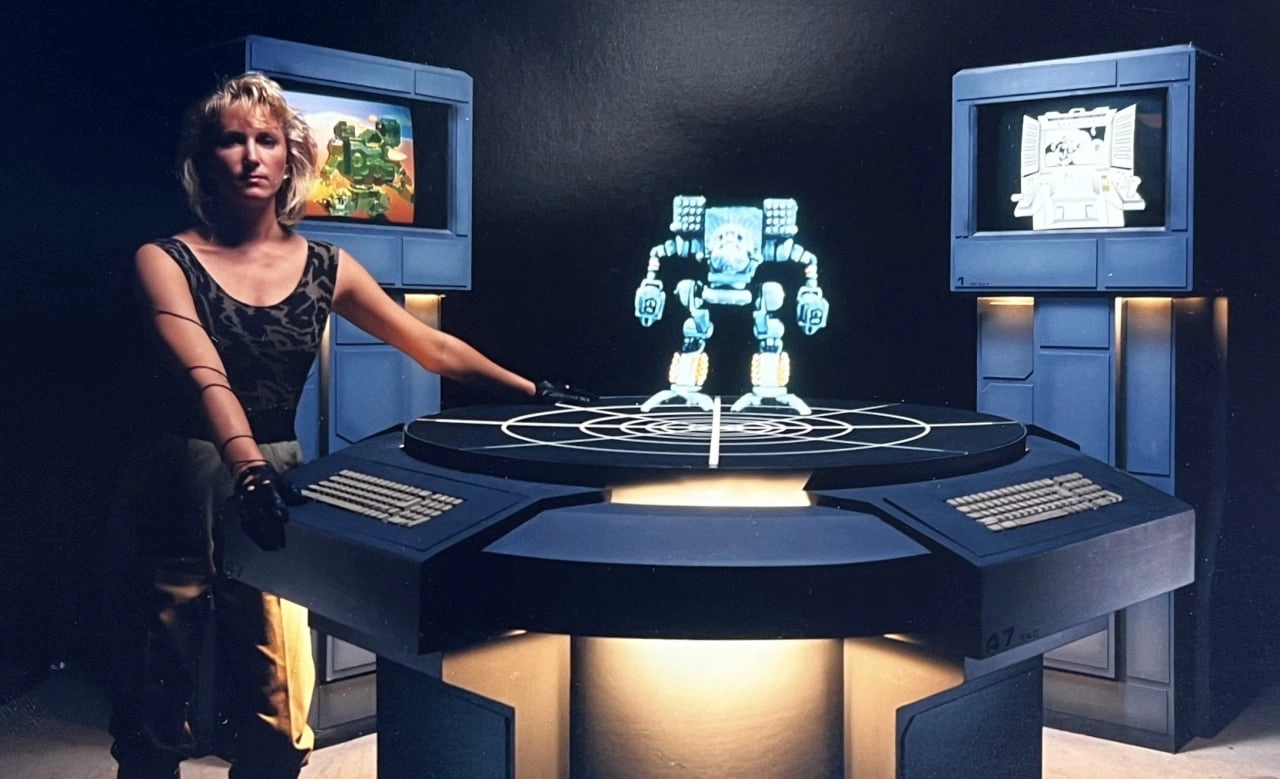
In the early '90s, an innovative concept emerged that seemingly pulled the future into the present: BattleTech Centers. These venues were akin to theme parks for gamers, delivering an experience far ahead of its time. They appeared across various locations in the United States, Canada, and Japan, intriguing those seeking the thrill of simulated 3D mech battles.
Jordan Weisman, the mastermind behind this futuristic idea, was both a serial entrepreneur and a devotee of theme parks. This devotion is evident in the intricate design of BattleTech Centers that made them reminiscent of Disney's magical experiences. His journey began at the US Merchant Marine Academy, where a $50 million bridge simulator sparked the idea that immersive simulations were the future of entertainment.
Weisman left the academy determined to harness the power of networked microcomputers to create immersive simulations. He envisaged a game design where different people would manage distinct stations within a ship's bridge, collaborating to navigate virtual challenges. Despite the complexity and the skepticism he faced when seeking venture capital, his determination didn't waver.
Instead of pursuing the starship simulator directly, Weisman transitioned his innovations to the world of tabletop RPGs. With Ross Babcock III, he formed FASA Corporation, and after a successful stint with a Star Trek RPG game, Weisman redirected his focus to creating original and proprietary content, thus conceiving BattleTech. Using Japanese mecha figures as pieces, an entirely new narrative emerged, leading to the famed BattleTech universe.
The BattleTech board game's debut in 1984 was a triumph and laid the groundwork for the MechWarrior series. With growing profits, Weisman realized his dream of building networked simulations, launching ESP with Incredible Technologies to develop advanced 3D simulators that were initially revealed at GenCon in 1988. However, they were costly, needing $3 million instead of the projected $300k.
In the design of the cockpits, also known as 'pods,' Weisman sought to create an intense experience that forced players to distinguish critical information among a deluge of sensory inputs. The pods featured a multitude of displays, lights, and controls, giving the impression of piloting an actual mech. These pods were initially powered by Amiga computers but advanced through generations, adopting PCs and improving graphics and sound.
The BattleTech Centers were not just about gameplay but also the experience. Following Disney's lead, they introduced a 'pre-show' to set the stage and build excitement before players entered their pods. Following the simulation, a 'bus-crash phenomenon' facilitated interactions among players, who received printouts detailing their in-game achievements.
These centers were more than gaming sites; they fostered community and competition. Initially, players seemed indifferent to the idea of networked battles against distant opponents. However, the introduction of leaderboards and shared content brought personality to online matchups, inadvertently laying the groundwork for what would become eSports. Competitions were held, and some were even broadcasted, a novel concept at the time.
Technological advancements led to refined versions of the pods and an eventual rebranding to "Virtual Worlds." Yet, as they integrated with the arcade chain Dave & Buster's, some of the magic was lost. The elaborate setup and increased costs impacted their business model. While initial traffic was high, it wasn't sustainable with the novelty wearing off, especially for the more expensive centers.
Despite the eventual decline of these centers, their legacy remains influential. Many of today's gaming and virtual reality experiences owe a debt to the path forged by the BattleTech Centers. Some dedicated fans have even kept the original pods operational, showcasing them at conventions. Meanwhile, Weisman continued to innovate, contributing to various sectors in gaming and beyond.
The story of BattleTech Centers is one of foresight, imagination, and unwavering pursuit in the face of skepticism. It stands as a testament to the progress of entertainment technology and its boundless potential. Today, virtual reality and eSports thrive, with their roots traceable to the pioneering efforts of those like Weisman, who dared to dream decades ago.

You must be logged in to post a comment!
