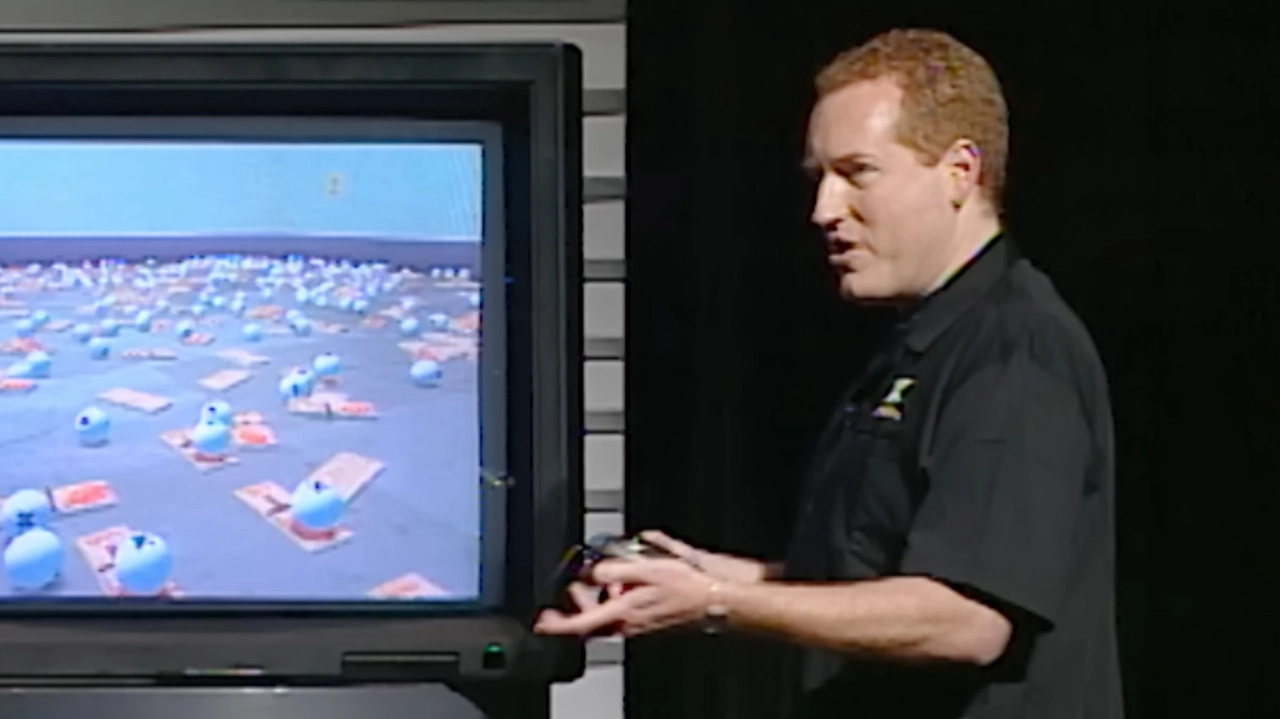
In the tech world, the launch of a new gaming console is always a high-stakes endeavor, filled with anticipation, excitement, and a fair share of anxiety. This was especially true for the original Xbox team in the early 2000s, who were attempting something ambitious: to break into a market dominated primarily by giants like Sony and Nintendo. The story of the Xbox’s first appearance at the Tokyo Game Show, as recalled by Seamus Blackley, one of the co-creators of the Xbox, captures the emotional rollercoaster the team endured during those tense days.
The journey to the Tokyo Game Show was not a smooth one for Blackley and his team. It was an ambitious project that had seen its fair share of difficulties from the very beginning, when the idea was just a rough sketch in the minds of its creators. Blackley and others involved in the project had left secure jobs to venture into uncertain territory, a decision that proved to be both stressful and risky. The development phase was filled with long hours and numerous challenges that often left the team disheartened and doubting their career choices. Blackley himself vividly remembers the nights he spent crying on his drive home, burdened by the weight of what they were trying to accomplish.
Nonetheless, the team pushed forward, driven by a mixture of sheer will and passion for the project. Their efforts were partly culminating at the Tokyo Game Show, one of the largest gaming expos in the world, where the Xbox would have its first major public outing. The importance of this event could not be overstated—it was a chance to introduce Xbox to one of the most influential gaming markets.
Arriving in Japan, the team was exhausted yet hopeful, aware that the success of the Tokyo Game Show could make or break the Xbox's entrance into the global gaming scene. The emotional realign came when Blackley arrived at Odaiba’s train station. Expecting nothing out of the ordinary, he was met with a sight that overwhelmed him emotionally: the entire station was adorned with Xbox logos. This massive visual display had been arranged by the Japan team, a surprise meant to boost morale and make a statement about the Xbox's entrance into the market.
Overcome with emotion, Blackley was brought to tears. The sight of the Xbox logo, representing countless hours of hard work and personal sacrifice, plastered throughout the busy station, was more than just a marketing tactic—it was a symbol of hope and validation for him and his team. It was a tangible manifestation of their dreams and ambitions. As Blackley stood there, he felt a mix of disbelief and profound joy. He was struck by the realization that what had started as casual conversations about building a new gaming console had materialized into a significant presence in one of the world’s most prestigious gaming expos.
This moment at the Tokyo Game Show was pivotal not just for Blackley but for the entire Xbox project. It marked a turning point where the possibility of success seemed tangible. The overwhelming display of the Xbox logo served as a morale booster for the team, reminding them of the potential impact of their work. For Blackley, it was confirmation that they had indeed created something real, something that could stand tall in a fiercely competitive industry.
Today, reflecting on the early days of the Xbox, one cannot help but admire the determination and resilience of individuals like Seamus Blackley and his team. Their commitment to their vision laid the foundations for what the Xbox has become—a key player in the gaming industry with a strong fan base and an innovative approach to gaming technology. For Blackley, and for those who stood with him at Tokyo’s train station, the memory of that day remains a poignant reminder of their journey from uncertainty to a celebrated launch that would mark the beginning of a new era in video gaming. This emotional story underlines the passion and the perils of innovation in tech, showcasing how a relentless pursuit of a dream can lead to historical moments that resonate long into the future.

You must be logged in to post a comment!
