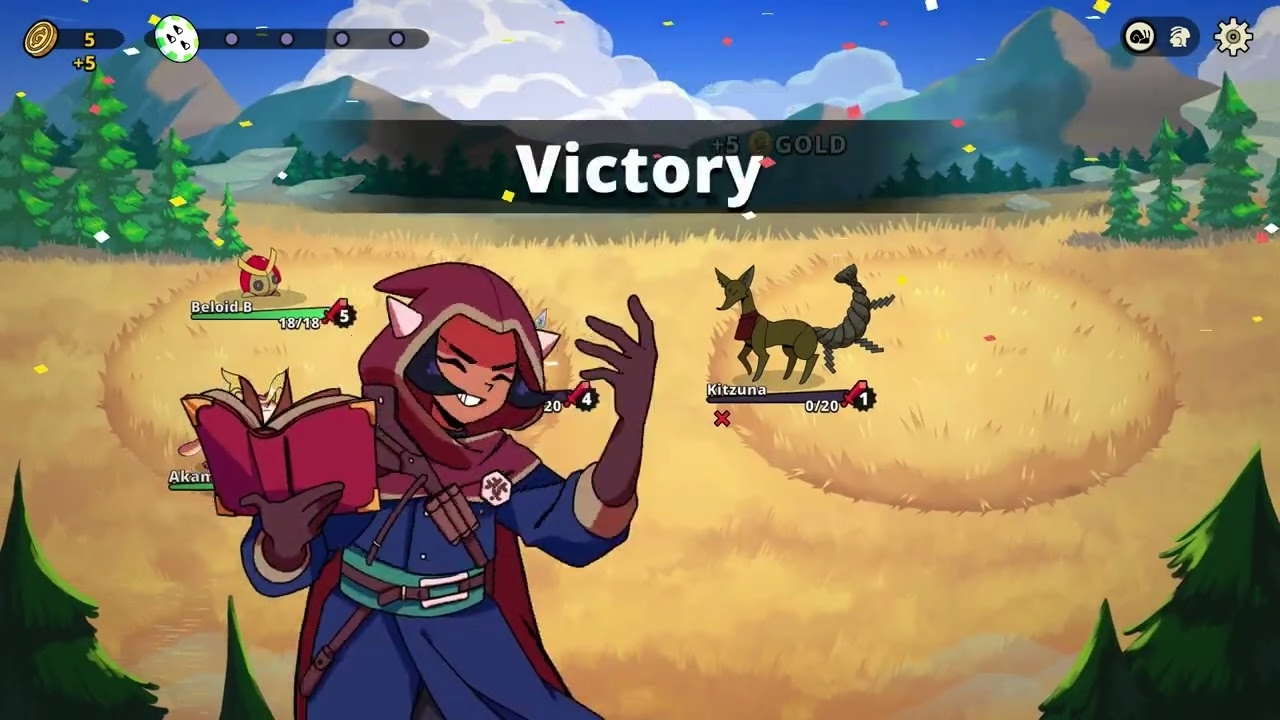
In recent years, the influx of roguelike games and Pokémon-like experiences on platforms like the Nintendo Switch has been notable. From this fertile ground of genre blending arose "Dicefolk," a game that intriguingly combines tactical roguelike elements with dice-based combat and monster-catching mechanics. This game, which launched on Steam and received positive reviews, decided to venture onto the Switch platform, spurring curiosity among gamers and critics alike.
Dicefolk isn't just a single-genre game; it's a multifaceted experience that intertwines elements that might seem disparate at first glance. The game incorporates tactical gameplay reminiscent of Dungeons & Dragons, with the randomness of dice playing a central role not just in determining outcomes but also enhancing the strategic depth.
The development team behind Dicefolk, including individuals from LEAP Game Studios and Tiny Ghoul, infused their game with a distinct flavor by integrating a control mechanism over dice rolls. This mechanic not only adds an element of unpredictability - typical of dice games - but also empowers players to influence their opponents’ actions, providing a unique twist to the tactical gameplay formula.
The mention of monster-catching inevitably draws comparisons to Pokémon. However, Dicefolk diverges from the typical Pokémon formula in significant ways. While it borrows the concept of battling and collecting creatures, known as Chimeras in the game, it introduces novel battle systems, such as rotating battles inspired by Pokémon Black and White. These battles shift the focus from traditional grid-based tactics to more dynamic encounters, where players must continually assess which of their Chimeras should be at the forefront of combat.
Crafting a new voice in the monster-catching genre posed its challenges. The developers were keen on avoiding direct emulation of Pokémon's well-established mechanics, such as the elemental system which did not seamlessly translate to Dicefolk's gameplay. This deviation was not just a necessity but became a strength, allowing Dicefolk to establish its unique identity within a crowded marketplace.
Designing over 100 distinct Chimeras without an evolution system presented another layer of complexity. The team drew inspiration from a rich tapestry of mythological, cultural, and folkloric influences, ensuring that each Chimera was not just a derivative of familiar Pokémon but stood out as an original entity within the game’s universe. This approach extends to the game’s art style, which is deliberately hand-drawn to evoke the feel of a living mythological tapestry.
Beyond the Chimeras and battle systems, Dicefolk incorporates strategic elements appreciated in other roguelikes, such as Slay the Spire and Into The Breach. Players can customize their characters with equipment that modifies their abilities in significant ways, ensuring that each playthrough can offer a new strategic approach.
As for its debut on the Nintendo Switch, the developers focused on optimizing the experience for both handheld and docked play, paying close attention to the user interface and controls. This adaptation was crucial in making sure that Dicefolk's intricate mechanics and detailed artwork were accessible and enjoyable on the console’s various display modes.
Considering its innovative fusion of mechanics, Dicefolk not only serves as a gateway for newcomers to the roguelike genre but also offers enough depth to keep seasoned players engaged. With plans to expand the game through additional content, the developers are keen on nurturing Dicefolk's community and evolving its gameplay further.
Overall, Dicefolk stands as a testament to the creative potential of genre hybridization. By daring to remix established gameplay elements with new ideas, it offers a refreshing experience that respects its roots in the monster-catching genre while establishing a distinct identity of its own.

You must be logged in to post a comment!
