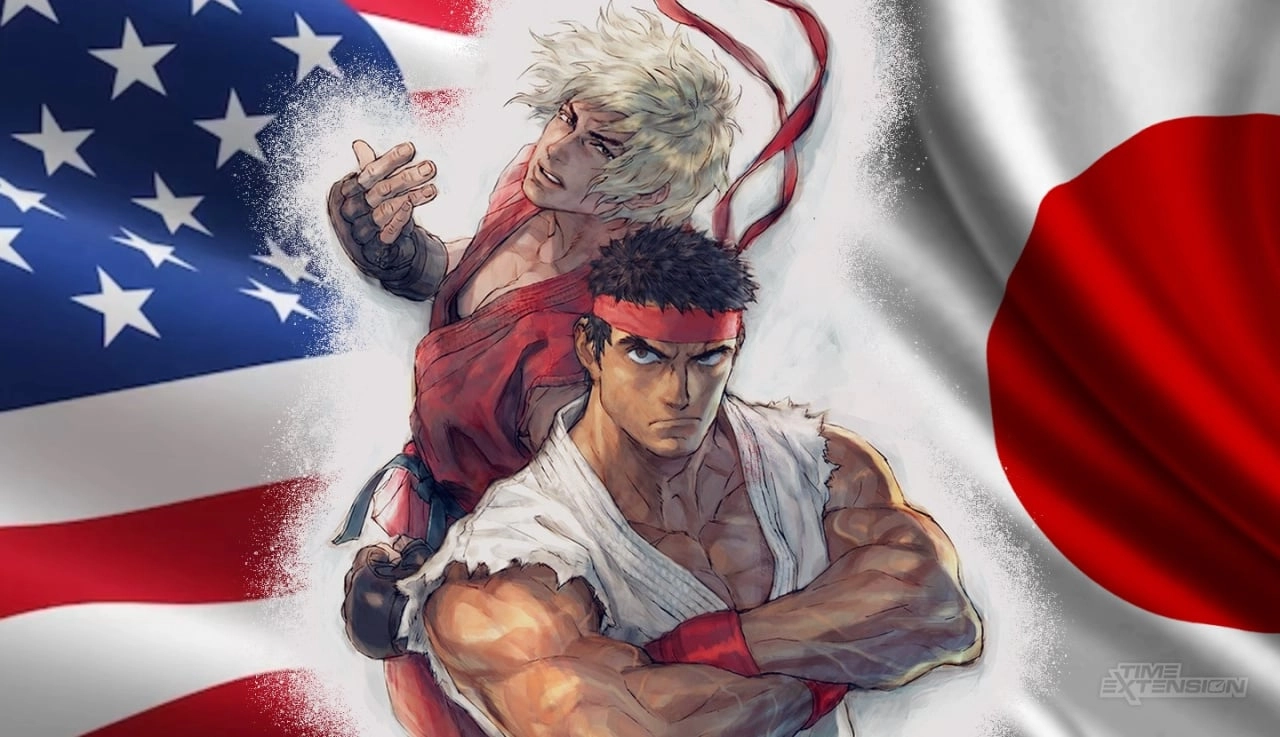
Street Fighter II, a landmark video game developed in the 1990s, continues to be celebrated for its engaging gameplay and dynamic characters. However, the game has recently found itself at the center of a heated debate, not for its gameplay but for its supposed symbolic representation of international relations. According to Rachael Hutchinson, a prominent author who specializes in Japanese culture through video games, the rivalry between characters Ryu and Ken mirrors the commercial and cultural tensions between Japan and the United States during that era.
In the early '90s, Japan was experiencing an economic surge, spearheaded by the global ascent of tech giants like Nintendo, Sega, Sony, and Panasonic. This period is often referred to by historians as a "commercial invasion" due to the strong presence Japanese companies established in international markets, particularly in the United States. According to Hutchinson, who recently spoke on a Japanese TV program, the dynamics between Ryu and Ken in Street Fighter II are not just a simple narrative of competition but reflect a broader conflict between the two nations during a pivotal economic period. Her comments were tweeted by Hardcore Gaming 101, generating widespread discussion online.
This interpretation has not been universally accepted, especially among the Japanese gaming community. Hiroshi Yoshida, a Japanese game researcher and author related to University of Tokyo Press, observed a predominantly negative reaction from Japanese players who experienced the game firsthand when it was released. Many of these players contest Hutchinson’s conclusions, arguing that the in-game rivalry does not resonate with their perception of Japan-USA relations during the gameplay experience. Yoshida emphasized that while Hutchinson's perspective could be seen as an "objective" analysis based on historical, economic, and political contexts, it does not necessarily negate the subjective experiences of individual gamers who may not align with this interpretation.
The discussion points to a larger issue often encountered in media studies: the interpretation versus intent of creators. Unlike other forms of art, video games, particularly older titles like Street Fighter II, often lack comprehensive documentation detailing creators' intentions, making contemporary interpretations prone to debate. Further complicating the discussion is the question of how cultural representation and stereotypes were presented in the game. Street Fighter II, like many games of its time, employed dramatic cultural stereotypes that today might be considered insensitive or inappropriate.
These complexities suggest that video games, despite being a form of entertainment, also serve as cultural artifacts that reflect and contribute to broader societal narratives and understandings. The controversy stirred by Hutchinson’s analysis shows that even decades after its release, Street Fighter II can still provoke thought and dialogue about international relations and cultural representation.
Hardcore Gaming 101, which highlighted Yoshida’s comments and the ongoing interpretation debate, indicated support for Hutchinson's view, proposing that the difference in perspectives might be influenced by regional contexts, particularly Western perceptions of the game. Additionally, the Twitter post by Hardcore Gaming 101 reveals personal anecdotes about the societal context in the US during the '90s, echoing anti-Japan sentiments fueled by economic competition.
Whether the rivalry between Ken and Ryu in Street Fighter II was indeed a direct commentary on Japan-US relations may never be fully resolved, due to the lack of explicit creator commentary and the subjective nature of media consumption. However, the debate underscores the enduring importance of video games as a medium for cultural expression and analysis, prompting us to reconsider how global narratives shape, and are shaped by, the digital worlds we create and engage with.

You must be logged in to post a comment!
