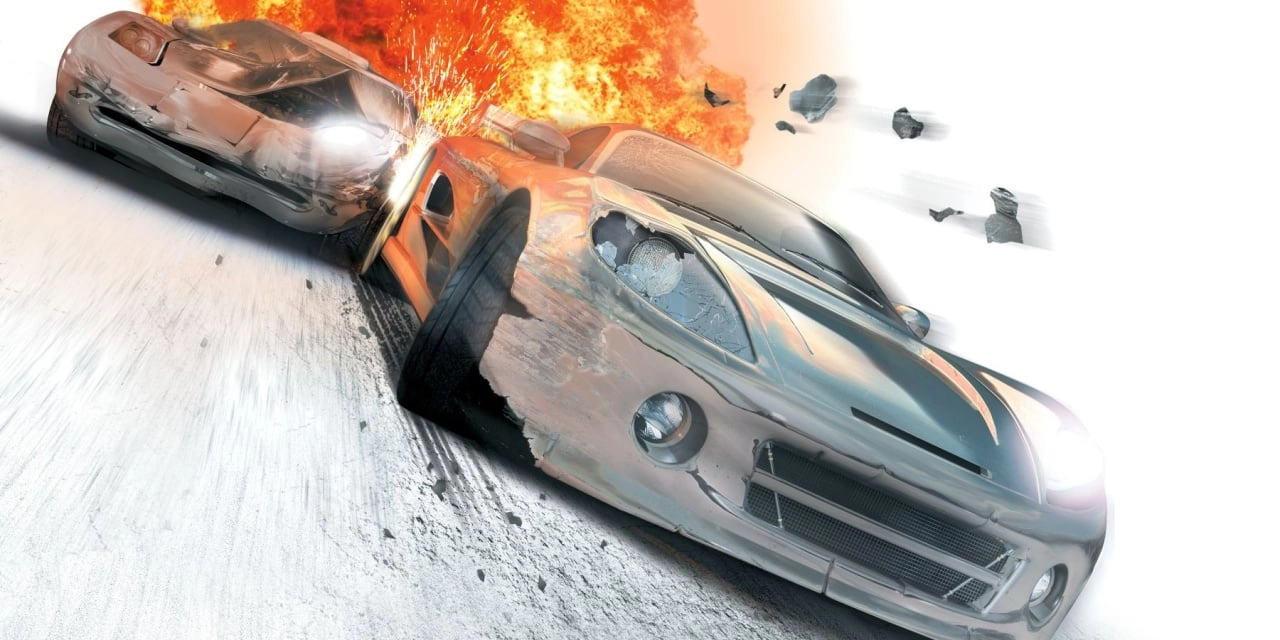
This month marks the 20th anniversary of a landmark in arcade racing games — Burnout 3: Takedown. Developed by Criterion Games under the leadership of Alex Ward, and published by EA, this title not only furthered the series established by its predecessors but also set a new standard for action racing games.
Burnout 3: Takedown was first released on September 8, 2004, for PlayStation 2 and Xbox. It introduced several innovations to the arcade racing genre, with the most notable being the “takedown” system. This feature encouraged aggressive driving by rewarding players for causing their competitors to crash by slamming them into oncoming traffic or trackside obstacles. This gameplay mechanic added a thrilling and competitive element to races, distinguishing Burnout 3 from traditional racing games which emphasised clean, unobstructed racing for position.
The game was also the first in the series to benefit significantly from EA’s partnership, notably through an impressive selection of licensed real-world music tracks. These tracks added a vibrant and engaging auditory layer to the high-speed chases and collisions, enhancing the overall immersive experience of the game.
Burnout 3: Takedown received critical acclaim upon release, winning numerous awards and achieving a legacy as the peak of the Burnout series. Its balance of accessible, exciting gameplay with strategic depth captured the hearts of both casual players and dedicated fans. The success of the game led to sequels, including Burnout Revenge in 2005 and the open-world Burnout Paradise in 2008. Despite newer releases, none have quite captured the magic formula of Burnout 3: Takedown as effectively.
Interestingly, Burnout Paradise received a remaster in 2018, reflecting the enduring popularity of the series. However, there hasn’t been a new entry in the main Burnout series since the 2011 release of the download-only spin-off, Burnout CRASH!. Fans of the franchise continue to hold hope for a new addition that could potentially recapture and innovate upon the cherished mechanics of Burnout 3.
The game's influence extends beyond its direct sequels. Its emphasis on destructive racing and high-speed action can be seen in other racing titles that followed, proving that Burnout 3 had set a precedent in the gaming industry. The takedown system encouraged a more dynamic interaction with game environments, influencing how developers approached in-game physics and player engagement in racing games.
Even two decades after its release, Burnout 3: Takedown continues to be a beloved game, remembered for its exhilarating pace and innovative gameplay. Players who experienced the game during its initial release recall the thrill of executing perfect takedowns and racing through traffic-packed streets at perilous speeds. Its impact resonates in memories shared among gaming communities and in articles reminiscing about the golden age of arcade racers.
As for future prospects, while there is no official announcement of a new Burnout game, the remastering of Burnout Paradise and ongoing fan engagement shows there is still considerable affection and demand for the series. Whether or not a new Burnout title will hit the shelves, the legacy of Burnout 3: Takedown will likely inspire future generations of game developers, much as it has continued to excite and entertain its legions of fans worldwide.
Reflecting on 20 years of Burnout 3: Takedown, it’s clear that the game was not just a transient hit but a seminal release that fundamentally shaped racing games. Its legacy of thrilling crashes and competitive racing arcade action is firmly cemented in video game history, as it continues to inspire nostalgia and admiration from all who had the chance to experience it.

You must be logged in to post a comment!
