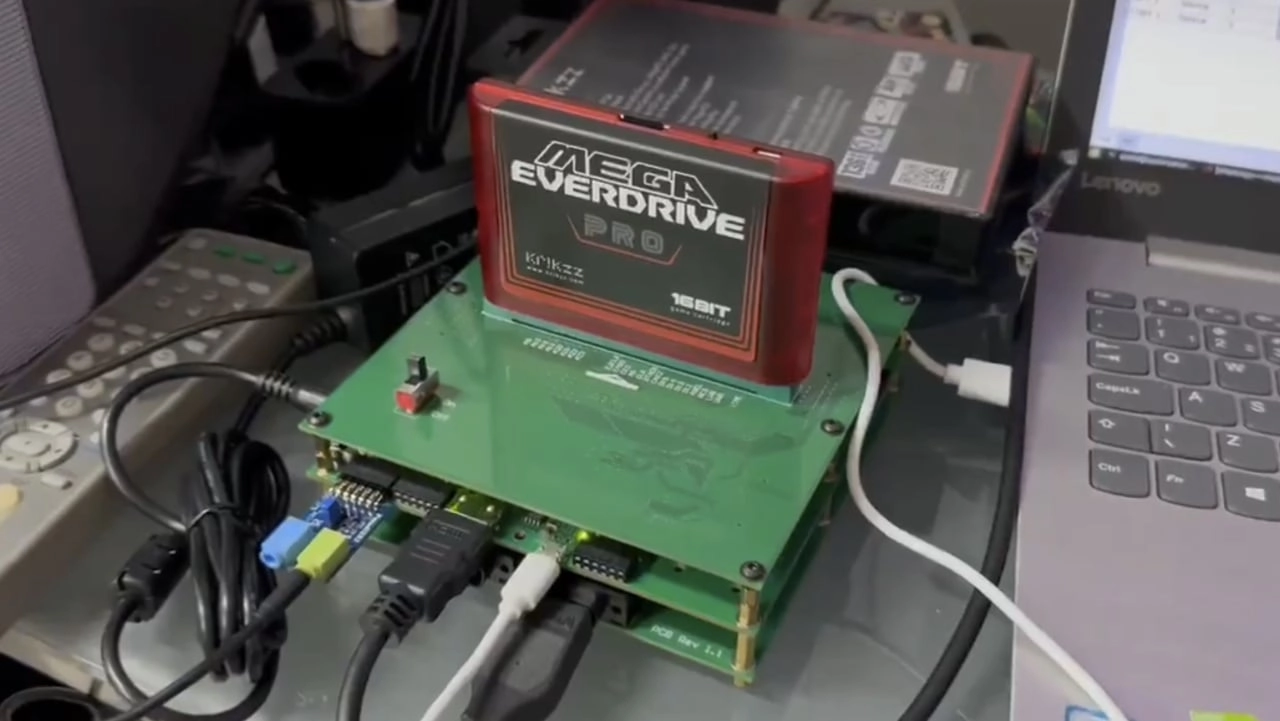
In a fascinating turn of events for retro gaming enthusiasts, the Brazilian company GamesCare has successfully brought a piece of gaming history back to life with its revival of the Sega Neptune, a project that Sega initially cancelled in the 1990s. The Sega Neptune was intended to be a two-in-one console integrating the capabilities of the Genesis (or Mega Drive, as it's known outside North America) and the 32X add-on. However, it never saw the light of day as a commercial product, until now.
GamesCare’s initiative has transformed the once-abandoned project into a modern FPGA-based platform named the GF1 Neptune. The company unveiled the prototype during a special presentation, showcasing it running a pre-alpha version of "Sword of the Apocalypse," which will be the console’s first exclusive title. The emergence of this prototype is not just a nod to nostalgia but a significant leap in respecting the legacy of Sega while forging new paths in the gaming industry.
The GF1 Neptune is set to support a plethora of features that align with contemporary gaming standards but with a retro twist. Noteworthy is its ability to deliver games in full 1080p resolution through HDMI, ensuring that classic games not only feel authentic but look strikingly better on modern displays. Another exciting feature is the inclusion of wireless capabilities, a modern convenience that allows for seamless game play without the traditional tethering limitations of past console generations.
In addition to its impressive hardware features, the GF1 Neptune will also host its own online store. This digital marketplace will support the download of both new and exclusive titles, enabling developers to create and distribute games specifically for this platform. This is a strong selling point, indicating that the GF.big will not merely be a vessel for experiencing a bygone era of gaming but a dynamic platform that continues to grow with new and original content.
The console will also be compatible with the Sega CD add-on, allowing gamers to expand their experience with Sega CD titles, presenting a comprehensive Sega ecosystem that spans multiple generations of Sega’s hardware developments, all encapsulated in one device. The commitment to such backward compatibility is a clear indicator of GamesCare's dedication to making the GF1 Neptune a central hub for retro gaming enthusiasts.
The development of such a console is a significant achievement, reflecting the continued passion within the gaming community for retro consoles and the games that defined them. By merging the technology of the past with modern advancements, GamesCare is creating a unique niche in the market. It’s a daring endeavor to reintroduce hardware that never originally released, and doing so in the FPGA form factor which ensures a high-degree of software compatibility and stability. FPGA, or Field-Programbable Gate Array, is known for its ability to replicate vintage hardware at a nearly identical level, meaning that the GF1 Neptune will not only play older games but replicate the experience authentically.
The demonstration of Sword of the Apocalypse, though still in pre-alpha, offers a glimpse into the potential of the GF1 Neptune as a platform not just for revisiting classics but also for experiencing new titles developed under the constraints and styles of vintage hardware. This approach could foster a unique form of game development, driving creativity through limitation as was common during the early days of game design.
As the GF1 Neptune moves closer to its final stages of development, GamesCare’s project serves as a testament to the enduring appeal of retro gaming and the new possibilities that exist when past and present technologies converge. For both longtime fans of Sega and new players interested in the rich tapestry of video game history, the GF1 Neptune represents an exciting bridge between eras, encapsulating the spirit of old-school gaming while embracing the advancements of the modern age.

You must be logged in to post a comment!