
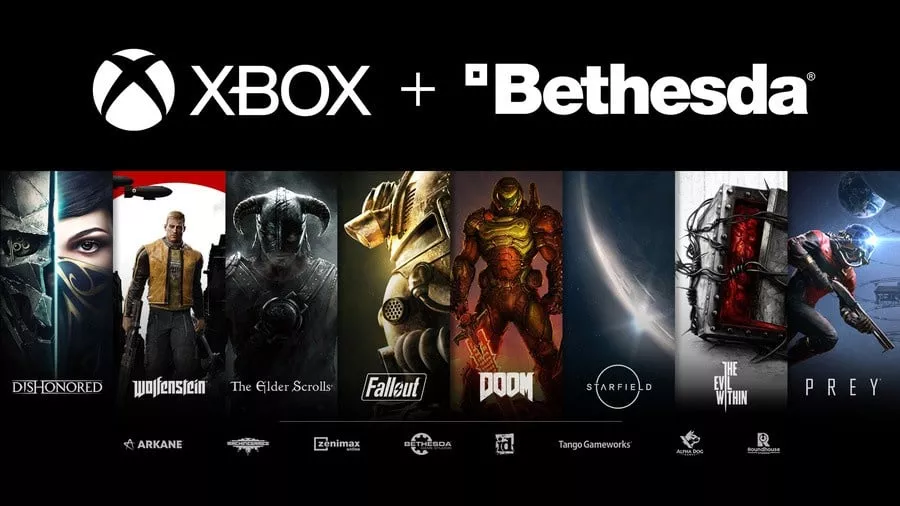
In a significant development for employee rights within the gaming industry, ZeniMax Studios, the parent company of Bethesda, has successfully negotiated a labor neutrality agreement with the Communications Workers of America (CWA). This move, facilitated by Microsoft, the owner of Xbox, marks a positive step toward ensuring better working conditions for employees.
The backstory to this development traces back to the summer of 2022, during a period rife with industry news, particularly concerning Activision Blizzard. It was around this time that Microsoft initially entered into such an agreement. The confirmation and implementation of this agreement were anticipated after the approval of the Activision Blizzard deal at the end of last year. Microsoft had indicated continuous efforts in finalizing the details of the agreement with CWA, leading up to today's announcement.
This labor neutrality agreement is a testament to the commitment of Microsoft and ZeniMax to foster a supportive working environment. According to ZeniMax employee Page Branson, this agreement empowers thousands of ZeniMax-co-workers by providing them with a straightforward and unfettered path to organize and advocate for better working conditions collectively. Branson highlighted the transparent process and the absence of management interference in decision-making and voting processes under similar agreements, underscoring the trust and non-obstructive stance adopted by the management.
Branson also touched upon the broader implications of such movements, pointing out the potential collective benefit for employees across the video gaming industry. As more workers join these collective efforts, they not only aim to improve their respective conditions but also raise the standards of employment across the industry. This unity and collective bargaining power, Branson noted, are instrumental in garnering the respect that employees deserve, ultimately benefiting consumers and the companies by promoting industry stability.
This announcement follows a period of significant challenges within Bethesda and broader protective measures implemented by Microsoft. Earlier in the month, Microsoft executed considerable layoffs across Bethesda teams and shuttered studios entirely. Although it's speculative whether the new agreement would have altered these particular corporate decisions, it emphasizes a forward-looking approach to secure better job security and working conditions for ZeniMax developers.
The formation of unions in the tech and gaming industries is often seen as a contentious issue, with varying opinions on its impact on business dynamics and innovation. However, it's increasingly clear from movements such as ZeniMax's that there is a significant push from employees for greater recognition and negotiation power. This aligns with a wider trend in the global labor market where workers seek to balance the scales in corporate environments traditionally dominated by top-down decision-making.
Moreover, the ZeniMax initiative is an example of how traditional labor laws and corporate agreements are adapting to the unique dynamics of modern industries like gaming, which face rapid growth and equally rapid shifts in business needs and workforce dynamics. These developments are not just about immediate benefits for employees but are setting precedents for labor relations in similarly structured industries.
For the gaming community and consumers, these developments are a positive sign. They reflect an industry moving towards maturity, recognizing the importance of the workforce that powers it. The hope is that this agreement and others like it will lead to improved product quality and innovation, fueled by a more motivated, respected, and secure workforce.
Overall, while the immediate impacts of such agreements are focused on employee welfare, the ripple effects could enhance the gaming industry's health and viability. It sets a standard for how large tech companies like Microsoft can play a pivotal role in shaping industry practices, potentially leading to a more stable and sustainable industry landscape for all stakeholders involved.

You must be logged in to post a comment!
