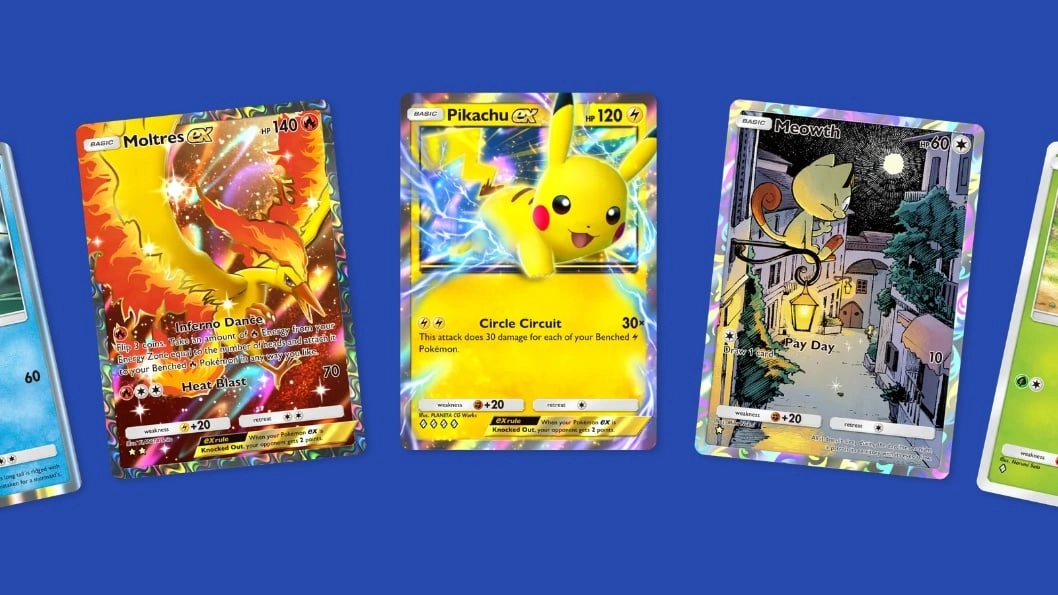
The digital world of Pokémon Trading Card Game Pocket, recently released on mobile platforms, has quickly become a vibrant topic of conversation among its player base. This new addition to the Pokémon franchise combines the classic thrill of card collecting with modern, digital twists. One peculiar phenomenon catching the attention of many players revolves around the concept of booster packs with "bent corners."
When players engage with Pokémon TCG Pocket, they are presented with a carousel of digital booster packs to choose from, some of which appear to have visually distinct bent corners. This has led to a fascinating community-driven hypothesis: these bent-corner packs may be more likely to yield valuable or rare cards, thus better "pulls," as compared to their pristine counterparts.
This theory has swiftly gained traction among users, with various players taking to social media to share their personal experiences and experiments with these packs. Some reported a higher incidence of acquiring rare cards from bent-corner boosters, while others found no noticeable difference, leading to a split in community opinion. Visual evidence and anecdotal claims have fueled discussions, with screenshots and videos circulating widely, showcasing both successful and disappointing outcomes.
Despite the excitement, there is a significant amount of skepticism. Many seasoned players and critics argue that the bent corners could simply be a visual effect added by developers—a red herring to add an element of strategy and superstition to the card selection process. Digital card packs, unlike physical ones, operate based on algorithms and predetermined probabilities. The game itself provides a transparent "offering rates" menu which lists the odds of pulling each type of card from any given pack, regardless of its appearance.
This transparency suggests that each pack's contents are determined at the moment of purchase, making the physical appearance of the digital pack irrelevant to the outcome. This has been corroborated by further testing from various players who have recorded and analyzed multiple openings of both bent and normal cornered packs, often finding inconsistent results that align with random chance rather than a secret advantage.
Adding to the intrigue are the "God Packs"—highly coveted booster packs that are known to contain multiple rare cards. The existence of these packs is well-documented and encourages players to invest more in hopes of obtaining them. However, God Packs also appear randomly and are not specifically associated with bent corners, again reinforcing the randomness of digital pack contents.
The divided opinions on the bent corner theory reflect broader discussions in the gaming community about randomness, reward systems, and player superstitions. It is a reminder of how game mechanics and player psychology intertwine, creating myths and beliefs that can enhance the gaming experience, whether or not they are grounded in factual game design.
Pokémon TCG Pocket continues to generate excitement and debate among fans, showcasing the enduring popularity of Pokémon and card collecting. As players delve deeper and the game evolves, it will be interesting to see how these myths hold up and what strategies or beliefs might emerge next. Whether the bent corner phenomenon is a true hidden feature or merely a placebo effect, it undeniably adds an additional layer of intrigue and engagement to the ongoing digital card battle.

You must be logged in to post a comment!
