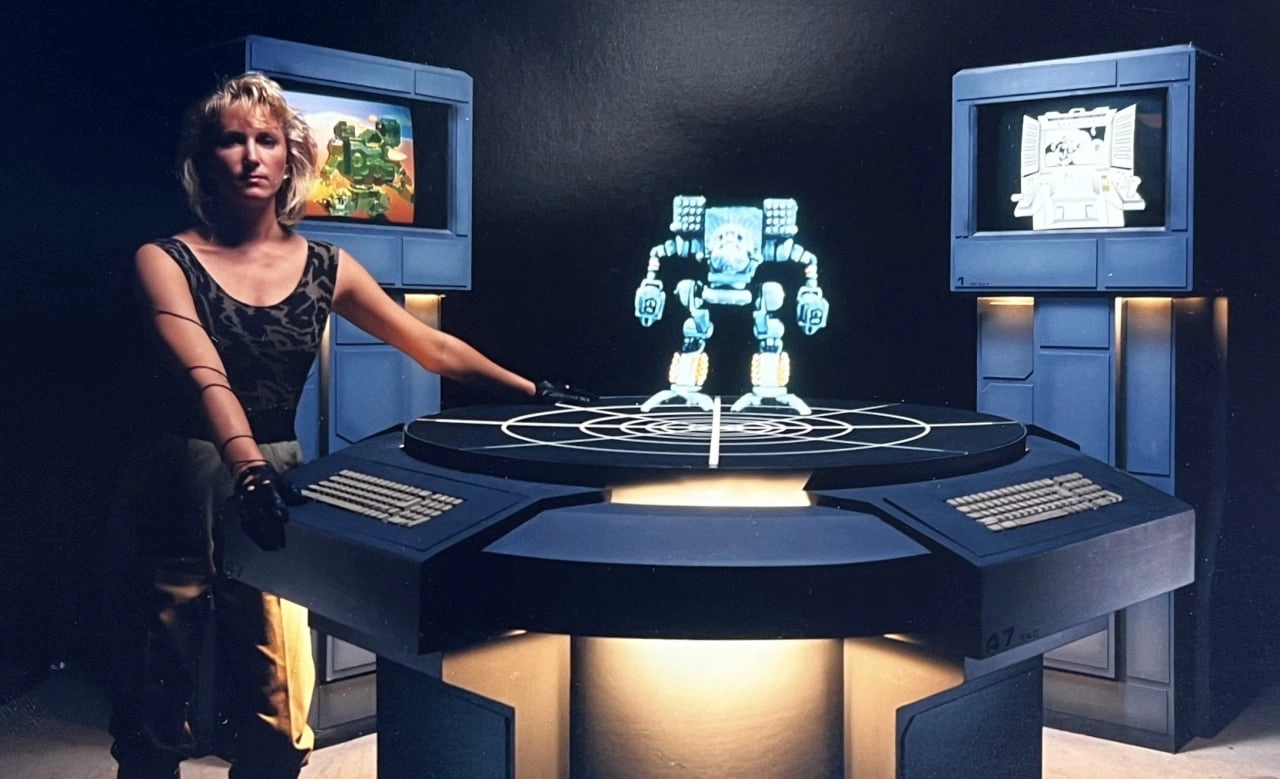
In the 1990s, a revolutionary gaming concept emerged that would set the stage for the future of immersive play and competitive gaming. These were the BattleTech Centers—high-tech arcades that offered players the chance to step into the cockpit of a Mech, a giant robot, and engage in intense, simulated battles. Think of it as virtual reality meets laser tag, with a sprinkle of what would become online gaming and eSports.
This was an era when the home gaming experience was primarily found through 16-bit consoles. The idea of combining high-end simulation with networked multiplayer gaming was not just ambitious but revolutionary. Players would find themselves inside hyper-realistic Mech cockpits, complete with joysticks, monitors, pedals, and a wide array of switches and flashing lights. These battles could happen between players in the same room or, astonishingly for the time, with players halfway around the globe.
This futuristic gaming experience was conceived by Jordan Weisman, a visionary entrepreneur and creator of various successful franchises including Shadowrun and Crimson Skies. Weisman stumbled upon the idea while attending the US Merchant Marine Academy. There, a multi-million dollar ship simulator inspired him to attempt creating his own version for a starship on his Apple II at home, which unfortunately ended in a fried computer.
But the setback didn't deter him. To gather funds for this dream project, Weisman co-founded FASA Corporation and started creating tabletop RPGs. A successful line of Star Trek RPGs led to the creation of BattleTech, originally a board game, which quickly sprouted into a broader franchise featuring novels and video games.
FASA Corporation capitalized on the unexpected availability of inexpensive Japanese mecha figures originally from popular shows like Super Dimension Fortress Macross. Weisman cleverly repurposed these as game pieces for the BattleTech board game. This savvy move planted the seeds for what would become the vast BattleTech universe.
FASA began selling its new tabletop game in 1984, under the initial name of Battledroids. A lawsuit from Lucasfilm later prompted a change to the now-famous "BattleTech" brand. The game's success provided FASA with the capital needed to pursue Weisman’s original vision: the BattleTech Centers.
As the BattleTech universe grew, so did the ambition to create more than just a space for players to gather and play. Weisman was inspired by his experiences at Disney theme parks, noting the power of anticipation and theatrics in creating a memorable visitor experience. This idea translated into an elaborate set-up with pre-show briefings that contextually immersed players in the BattleTech world before entering their Mech simulators, known as 'pods'.
The pods themselves were sophisticated. An Amiga computer powered a radar screen, while custom-built hardware processed a pre-rendered 3D visual experience. Early simulations were sprite-based but later upgrades introduced full, non-textured 3D polygon graphics, which at the time represented cutting-edge technology.
Beyond pure gameplay, Weisman envisioned a place where excitement could carry over after the battle ended. Thus, the post-game phase was crucial, where players would receive printouts detailing the actions of their session, encouraging discussion, and deepening the social aspect of gaming—an early form of gameplay statistics tracking.
The BattleTech Centers were a unique social and gaming hub, featuring linked battles across continents. Initially, global connectivity didn't excite players as much as expected since they were mostly playing against strangers. The solution was to foster recognition and competition through leaderboards and content showcasing players' achievements—elements common in today's eSports.
Throughout the 1990s, the BattleTech Centers went through various upgrades, notably transitioning to the 'Tesla pods' with more advanced graphics and surround sound. These changes enhanced realism and immersion but came at a steep production cost.
The high financial demands of maintaining such advanced facilities ultimately led to their decline. The BattleTech Centers, despite their innovation and influence on gaming, were unsustainable. Nonetheless, they served as a blueprint for contemporary online gaming, eSports, and immersive entertainment experiences.
Today, remnants of this pioneering era live on. Dedicated fans maintain the original pods, touring with them at gaming conferences, and the BattleTech universe continues to grow with new games and novels. Weisman's legacy, however, goes beyond BattleTech, influencing his further ventures into tabletop games, ARGs, and even theme park design.
The BattleTech Centers were a glimpse into the future of gaming. They introduced many to networked play, immersive simulation, and gaming as a social event long before these became industry norms. The undeniable impact of these centers can still be felt in today's gaming culture, serving as a testament to innovation and the ever-evolving quest to bring fantasy worlds to life.

You must be logged in to post a comment!
