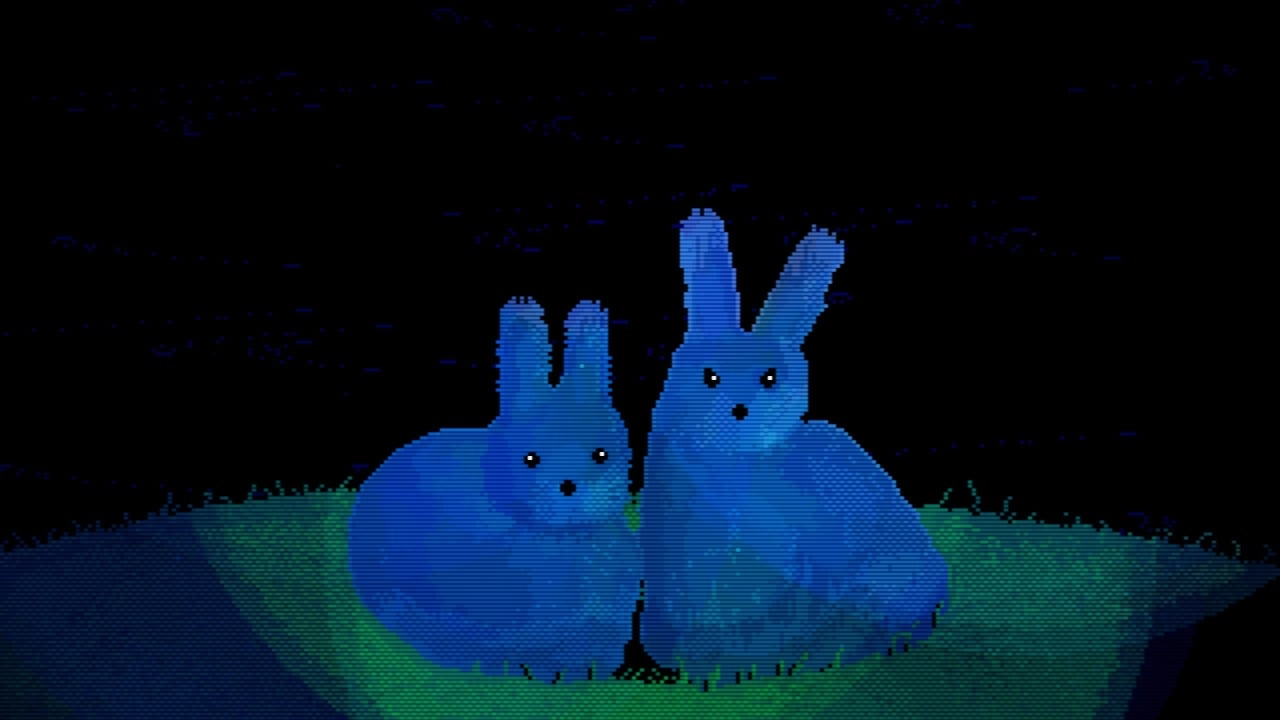
Animal Well, a recent surprise-hit indie game, has captivated the gaming community with its beautiful pixel graphics and a world brimming with mysteries. Released just last week, the game, although primarily a single-player experience, incorporates an unexpected twist—a complex puzzle that necessitates the collaboration of 50 players to unlock its secrets.
In Animal Well, players are drawn into a Metroidvania-style adventure, rich with intricate puzzles and hidden treasures. The primary objective seems straightforward at first: collect four flames located in various regions of the game. However, this task only scratches the surface of what Animal Well has to offer. After collecting the flames, the game elevates the challenge, requiring players to find and place 64 Easter Eggs into specific slots. Successfully completing this task unveils a special item necessary for triggering the game’s “true ending,” adding layers of depth to the gameplay and rewarding those who delve deeper into its secrets.
The puzzle that has the gaming community buzzing, however, emerges in the third phase of the game. Early in their journey, players encounter a 40x10 pixel mural depicting mid-hop rabbits. This mural, initially seeming only decorative, is revealed post-game to be a crucial part of a larger puzzle. Each player must solve their individual 4x4 grid of tiles, which later turns out to be a fragment of this much larger image. Herein lies the twist: each grid solved by a player represents only 1/50th of the entire picture, implying an unusual need for mass cooperation rarely seen in single-player games.
The challenge presented here is formidable, bordering on the unimaginable for an average player alone. Fortunately, dedicated gaming communities and resources like TechRaptor have taken the initiative to organize and share solutions, enabling players to collectively piece together the grand mural and progress to the subsequent secrets of the game.
Animal Well not only tests individual player’s puzzle-solving skills but also their ability to work as part of a larger collective, each contributing a small but significant piece of the larger puzzle. This design choice signifies a bold step in the gaming industry, blurring the lines between single-player and multiplayer experiences. The developers have ingeniously crafted a scenario where players must occasionally step out of their solitary gameplay bubbles and engage with the community at large to achieve a common goal.
This approach fosters a sense of community and shared purpose, traits often reserved for multiplayer games. Here, even as players navigate the enigmatic world of Animal Well alone, the puzzle serves as a reminder of the interconnectedness of the gaming community, turning an individual quest into a collaborative endeavor.
The game’s reception has been largely positive, with players and critics alike praising its innovative design and the layers of mystery stacked throughout its gameplay. Animal Well represents a unique experiment in game design, combining the introspective, solitary nature of single-player games with the collaborative complexity of multiplayer puzzles.
Such a convergence of gameplay styles raises intriguing questions about the future of indie games and whether more developers will attempt to integrate similar community-driven challenges into their titles. This could lead to a novel genre of hybrid games that offer a fresh twist on traditional gaming narratives and mechanics.
Animal Well’s secret puzzle is more than just a challenging hurdle to be overcome; it’s a testament to the rich, interactive potential of video games. It invites players to become part of something larger than themselves, breaking down the barriers of what a single-player game can be. As the gaming community continues to unravel the mysteries of Animal Well, they are not just playing a game; they are pioneering a new way of thinking about and interacting with the virtual worlds we love to explore.

You must be logged in to post a comment!
