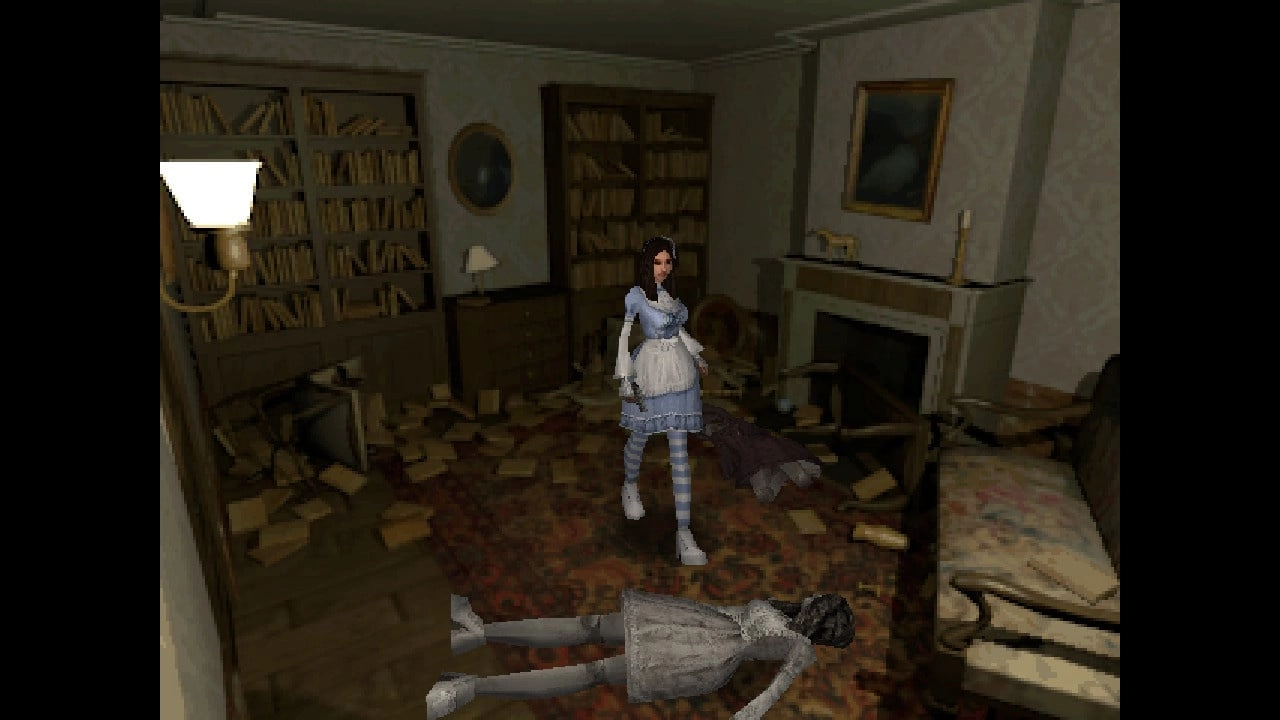
The world of gaming is replete with attempts to recapture the magic of past eras, but few manage to hit the mark as closely as Alisa Developer's Cut, especially for fans of retro survival horror. This title is not merely a game that pulls inspiration from its predecessors; it's a meticulous reconstruction of the genre's golden days—not a carbon copy but a respectful echo that brings its own twists to the table.
Alisa’s adventure starts at a seemingly innocuous chase after a criminal in the 1920s, but it doesn't take long for the game to transport the player to its true setting—a mysterious mansion crammed with danger at every turn. As Alisa, the Elite Royal Agent, players find themselves waking in this mansion, sporting a peculiar doll-like dress and armed only with a simple pistol—a nod to the resource management and weapon progression that defined early genre titles. Your mission is to navigate through this unholy abode, tackle its denizens, solve the conundrums it presents, and ultimately, secure your escape.
The game ensures you are anything but alone in this daunting environment. The mansion is alive with a motley crew of adversaries that are as terrifying as they are beautifully crafted to fit the game's aesthetic. These aren't your standard zombies and monsters; instead, the game uses dolls, clowns, and specters to unsettle the player, providing a fresh dose of unease that stands apart from the gore-reliant scare tactics commonly employed in horror games. Encounters with these enemies are nerve-wracking, their designs and attack patterns dialing up the tension, exemplified by a ghost-like doll that unpredictably appears to harass the player throughout their journey.
In the midst of its horror, Alisa Developer's Cut does not neglect the combat and progression systems. The currency of Toothwheels, earned by defeating enemies, is a subtle encouragement for players to engage in combat rather than stealthily evade threats. These Toothwheels, in turn, open the door to a plethora of weapons and outfits, each enhancing the gameplay with diverse styles and strategies. The option to vary weapons and clothing adds a strategic depth and personalization to the gameplay that keeps each run feeling unique.
Puzzle-wise, Alisa doesn’t disappoint. It delivers an array of challenges that would feel at home among classics of the genre. The puzzles are clever and varied, from pathfinding mazes to the traditional collection and use of unique keys. They strike an admirable balance between being challenging enough to stump the player without causing aimless frustration. Often, they require a keen observation of the environment and the items at the player's disposal, as well as a healthy dose of logic to solve.
What elevates Alisa Developer's Cut is its devotion to the presentation. The visual style is lovingly rendered in the pixelated glory of yesteryear's games, with pre-rendered backgrounds that pop with old-school authenticity. The game's aesthetic pays homage to a time when the limitations of the hardware were surpassed by the ingenuity and artistry of the game designers. The careful camera work, which can occasionally become erratic during tense encounters, predominantly serves to augment the atmosphere of dread and isolation.
The overall look and feel are complemented by the auditory experience: a soundtrack that transitions from subtle creepiness to outright urgency and a save room theme that signals a short reprieve from the surrounding terrors. Although the voice acting might be seen as amateur by today's standards, within the context of the experience it aims for, it's pitch-perfect, adding to the nostalgic charm.
Alisa Developer's Cut achieves what it sets out to do; it pays tribute to the roots of survival horror while still asserting its distinct identity. With roughly 5-7 hours needed for a baseline playthrough—and potentially over 10 hours for completionists or those engaging with speedrunning and additional modes—the game is a condensed, yet rich experience. For survival horror veterans, this is a trip down memory lane that feels as fresh as it is familiar. For newcomers, it's a chance to experience the essence of a genre that has evolved over decades but never lost its core of unsettling environments and gameplay that rewards the bold as much as the cautious. Alisa Developer's Cut stands as a stellar example of how to honor the classics while proudly standing on its own feet—a testament to the enduring appeal of survival horror.

You must be logged in to post a comment!
